
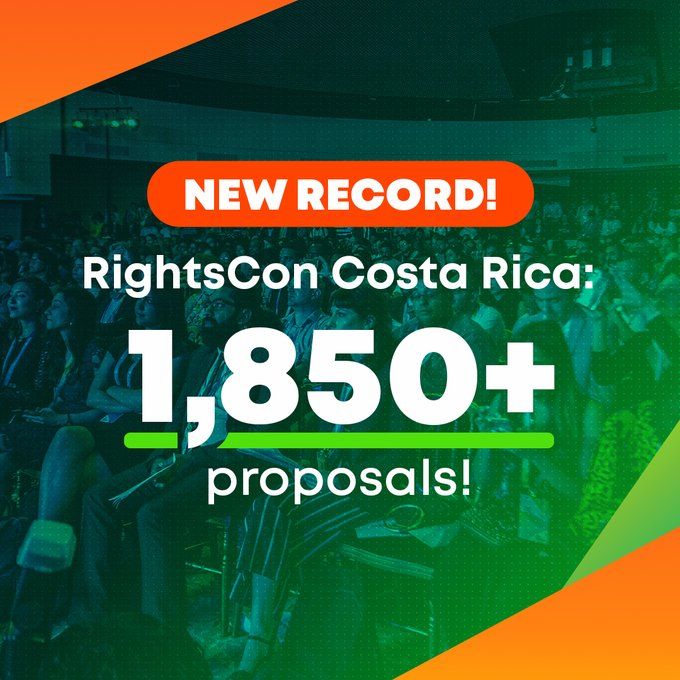
Homo Digitalis speaks for the 3rd consecutive year at RightsCon
Homo Digitalis speaks for the third consecutive year at RightsCon, the largest international conference for the protection of Human Rights in the modern digital age!
This year we are hosting our own session entitled “How to beat a Centaur? A closer look into technology-led border management in Greece”, in which we will talk about the use of new technologies, such as the KENTAYROS surveillance system, in the field of border management in Greece.
More than 1850 applications were received from organisations in 132 countries. The selection of our proposal by the organisers is a great honour and is another important recognition of our actions and our contribution to the protection of digital rights at an international level.
Our Board Secretary, Eleftherios Chelioudakis, will represent us at the session. We would like to thank the organizers for accepting our proposal!
RightsCon2023, organized by Access Now for the twelfth time this year, will take place with a physical presence in Costa Rica, while online participation is also possible. You can register and learn more about the program here.

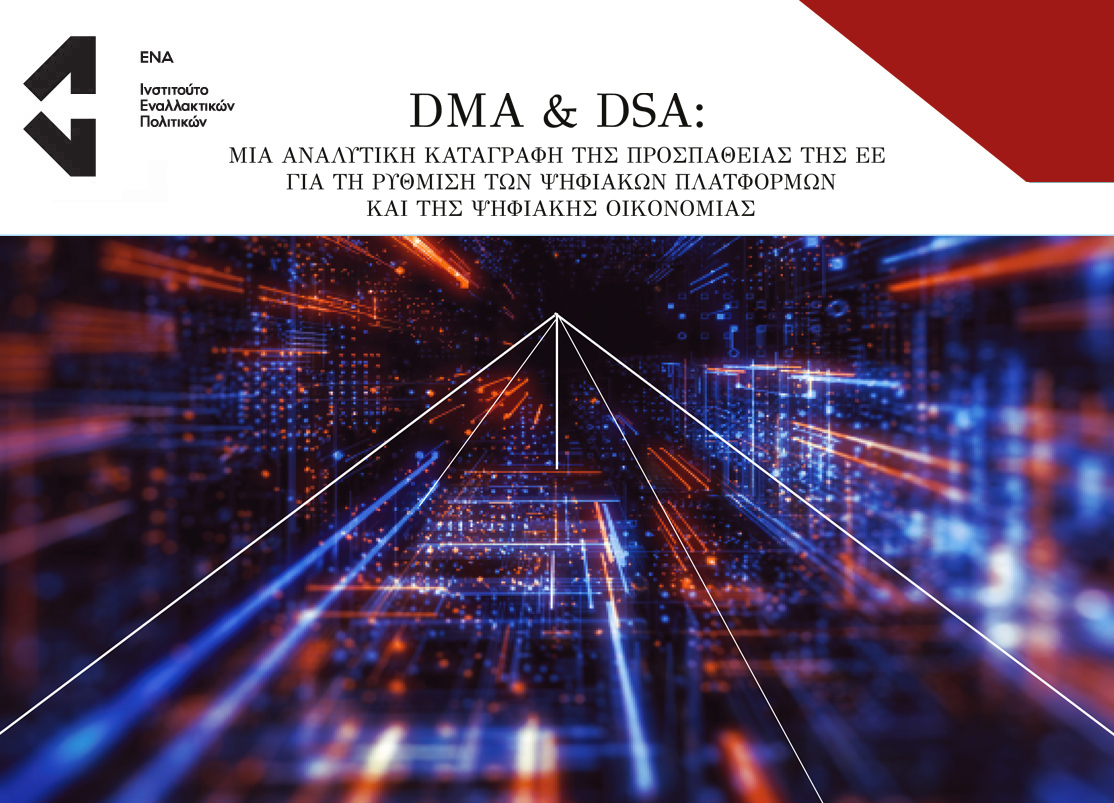
Our participation in the study "DMA & DSA: A comprehensive inventory of the EU's effort to regulate digital platforms & the digital economy"
Yesterday, the ENA Institute for Alternative Policies published the study “DMA & DSA: An analytical inventory of the EU’s effort to regulate digital platforms & the digital economy”, in which Christos Zanganas, Lawyer representing Homo Digitalis and Antonis Bogris, Information & Communications Engineer and Professor at the University of West Attica, participated.
You can read the study here. Thank you very much for your cooperation!
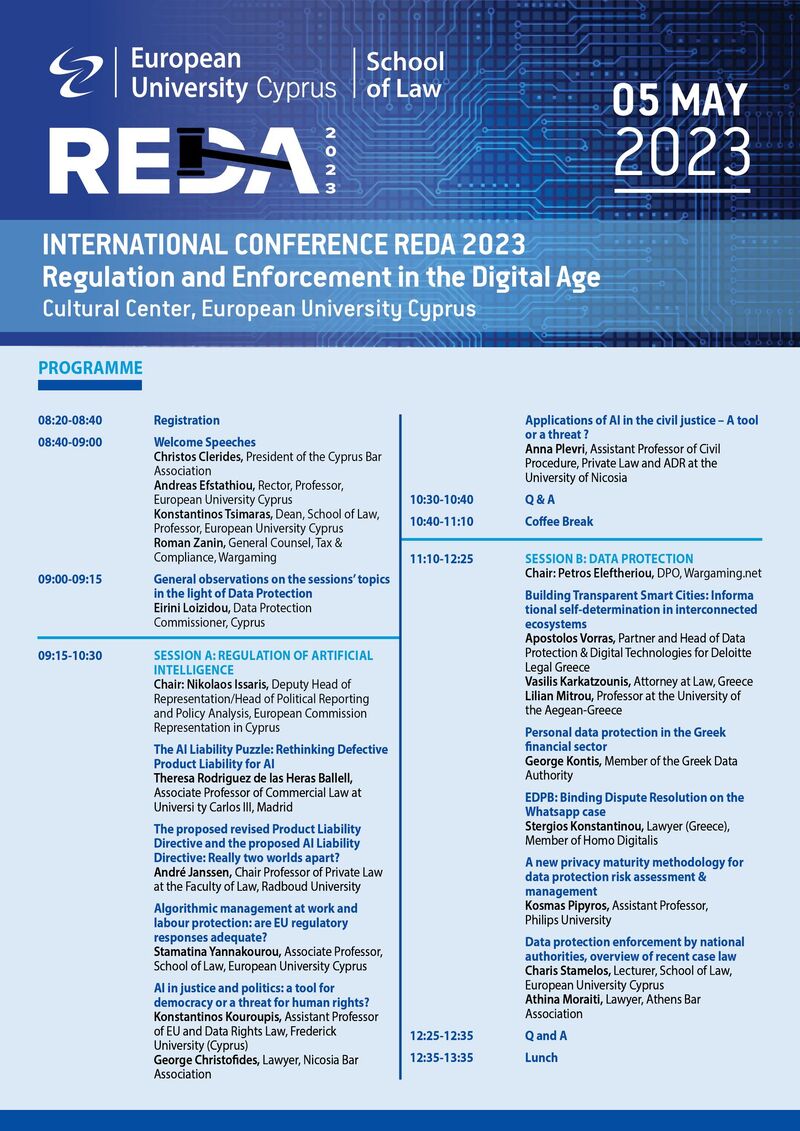
Our speech at REDA 2023 at the European University Cyprus
The important international conference REDA 2023 (Regulation and Enforcement in the Digital Age) is taking place on May 5th at the European University Cyprus!
There our member and lawyer Stergios Konstantinou will participate with a speech in the thematic session “EDPB: Binding Dispute Resolution on the WhatsApp case”.
You can find out more information about the conference programme and the free registration to attend the conference in person here.
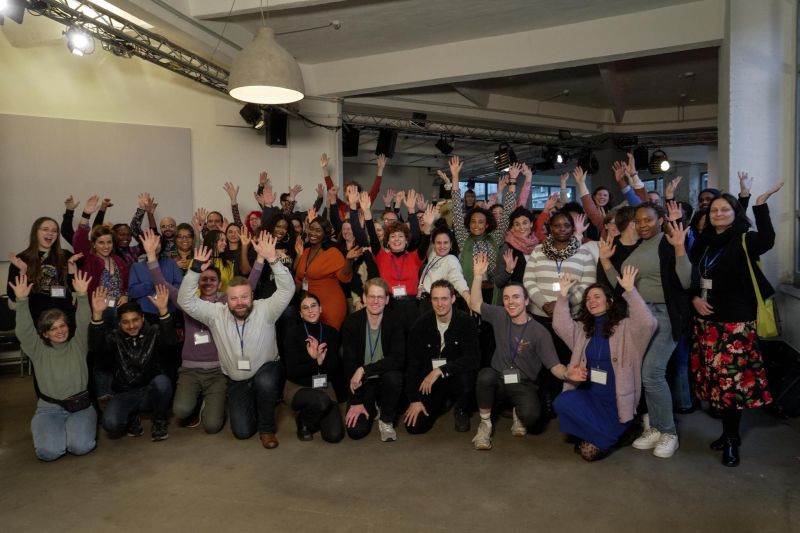
Our participation in the 6th annual DFF strategic meeting
In March we had the great pleasure to take part in the 6th annual strategic meeting of the Digital Freedom Fund in Berlin!
After three years of pandemic, it was finally an opportunity to get together again with a unique community of organisations fighting for the protection of Human Rights in the modern digital age of the information society, to share strategies, ideas and knowledge for future joint actions, to expand our circle of contacts and to develop important bonds of trust!
Homo Digitalis was represented by our President, Elpida Vamvaka.
We would like to thank the organizers for the invitation! You can learn more about the meeting here.
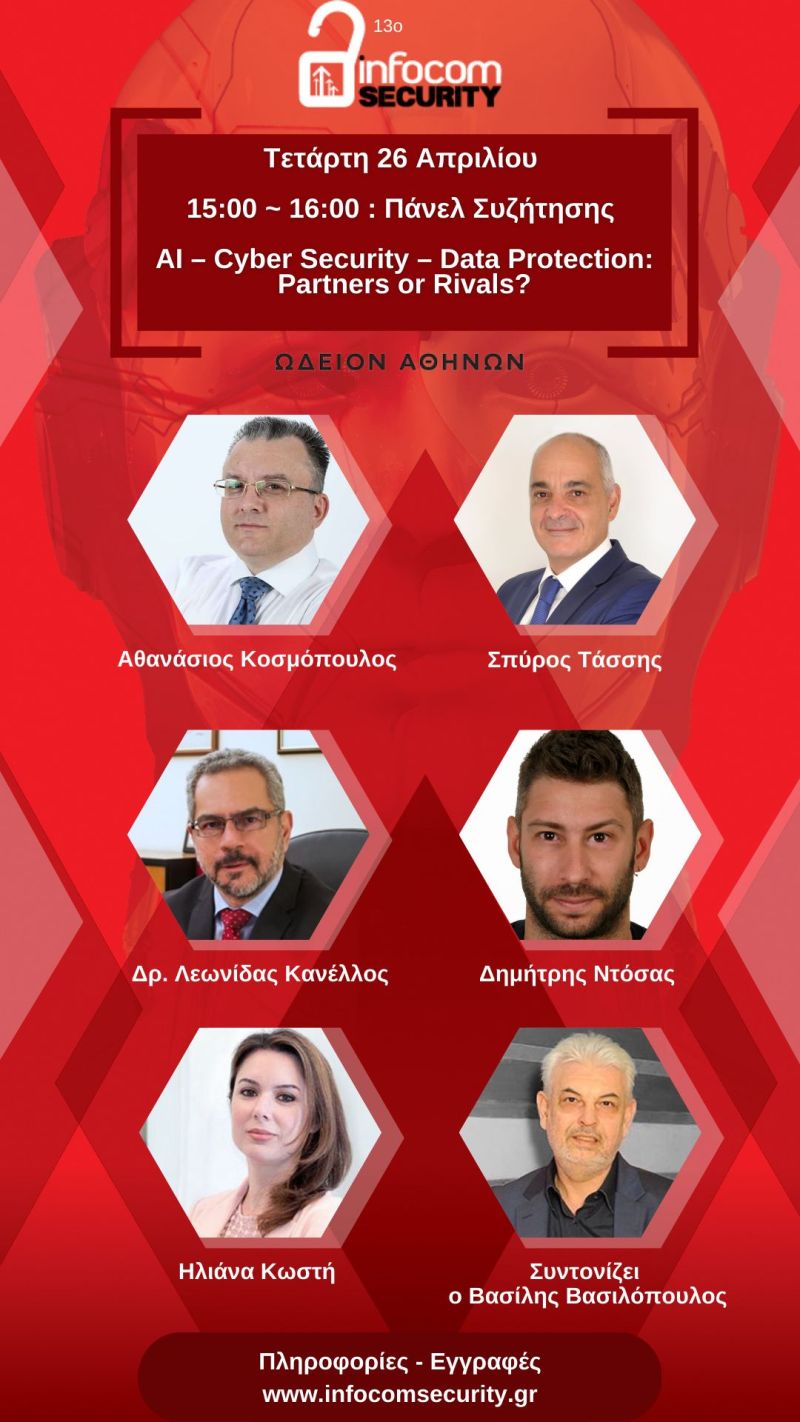
Our speech at the Infocom Security Conference on Artificial Intelligence, Personal Data and Cybersecurity
For yet another year, Homo Digitalis has the great pleasure to be present at the Infocom Security Conference! The 13th edition of the conference, which is a benchmark in the field of information technologies in Greece, will take place on April 26 & 27 at the Athens Conservatory.
Our member, Dimitris Dosas, Infrastructure and Security Engineer will represent us in the 3rd session of the 1st day of the conference in the discussion panel “ArtificialIntelligence – CyberSecurity – DataProtection. where participants will highlight all the challenges and aspects related to AI and its correlation with security and privacy.
The panel includes leading experts, moderated by the excellent Vassilis Vassilopoulos, Journalist & DPO of ERT.
-Iliana Kostis Lawyer, PhD, University of Athens, Greece. Aegean Lawyer, PhD in Personal Data and Artificial Intelligence,
-Athanasios Kosmopoulos – Data Protection Officer of the Ministry of Digital Governance, National Representative at the European Cybersecurity Competence Center,
-Spyros Tassis, President of the Hellenic Association for Data Protection and Privacy (HADPP), and
-Leonidas Kanellos – President DPO Network.
We would like to thank the organizers for their kind invitation! You can register for free and learn more, here.
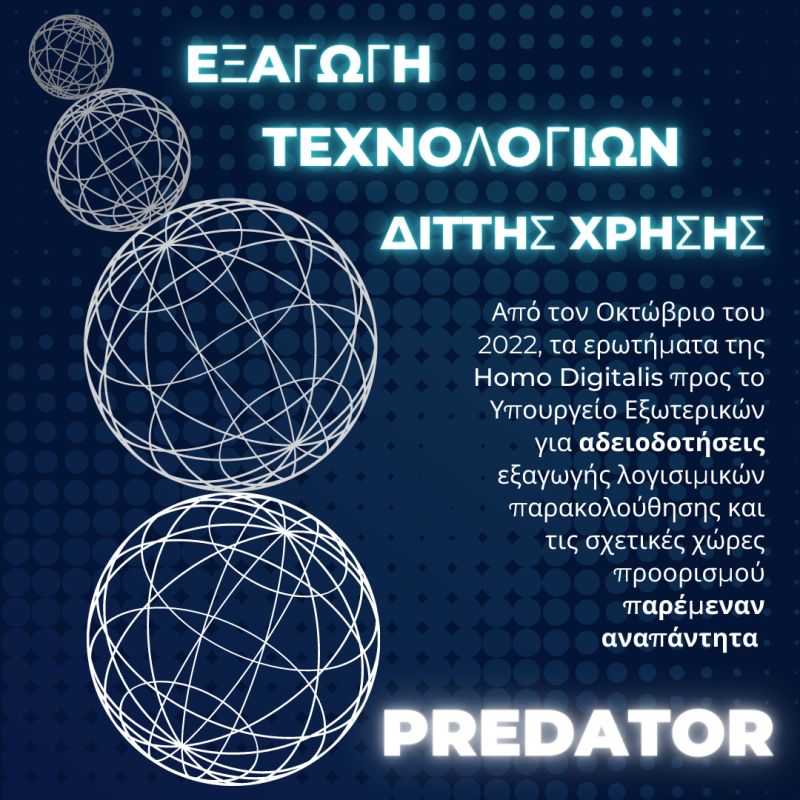
The Ministry of Foreign Affairs does not respond to Homo Digitalis on PREDATOR
On 11 October 2022, Homo Digitalis submitted a request to the Directorate for Multilateral Economic Relations and Trade Policy of the General Secretariat for International Economic Relations and Externalisation of the Ministry of Foreign Affairs.
We sought information on the approval/rejection of dual-use technology export license requests, as well as the country of destination of the end user. It was a strategic action in order to find out with statistical data whether technologies such as PREDATOR had been given the green light for export by the Greek authorities.
We received no response to our request, despite the fact that European legislation, and in particular Article 23 of Regulation 2021/821, provides for the keeping of relevant statistical data by the competent authorities of the Member States.
On 30 November 2022, a months-long investigation, the result of Inside Story.’s collaboration with the investigative journalism organisation Lighthouse Reports and the Israeli newspaper Haaretz brings to light that an aircraft linked to the Israeli PREDATOR tycoon delivered surveillance technology to notorious paramilitaries in Sudan in May 2022.
Yesterday, the deputy foreign minister said in a radio interview with Real FM that “”The export license given to Predator and Sudan has nothing to do with the civil war. The civil war was not caused by it.”
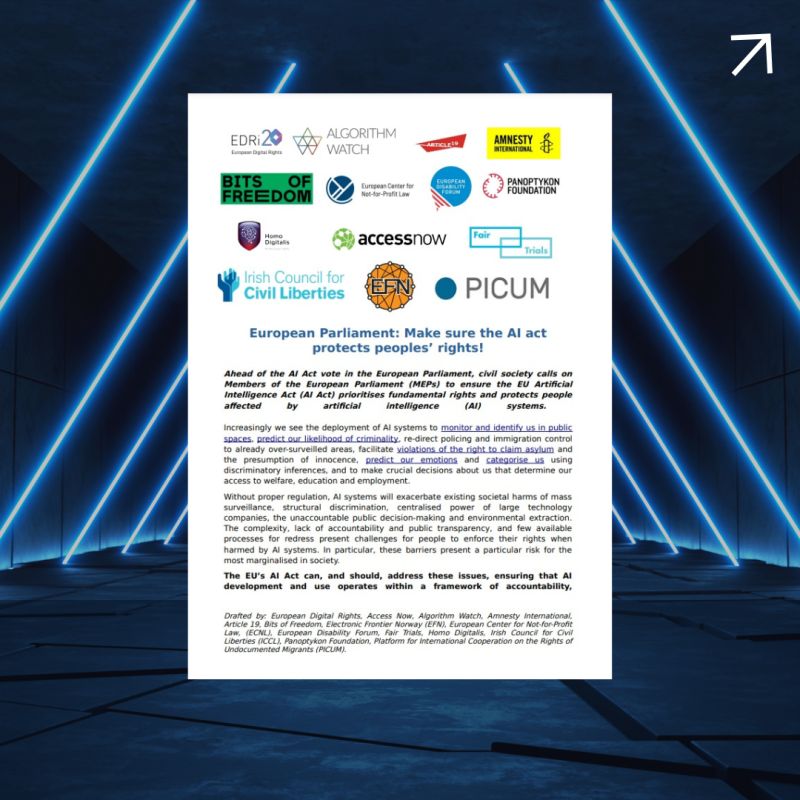
Joint Letter to the European Parliament on the AI Act
The European Parliament is preparing to vote on the proposed legislation on artificial intelligence #AIAct.
In a joint letter today, European Digital Rights and 75 other organisations, including Homo Digitalis, are sending a clear message to protect Human Rights and call on MEPs to pay due attention to the problematic provisions of the proposed text!
In order to do so, MEPs will have to vote:
-to strengthen the framework for the protection of Human Rights,
-on specific accountability and transparency obligations regarding the use of artificial intelligence systems,
-for a ban on the use of AI systems that pose unacceptable risks to the protection of everyone’s rights!
You can read the joint letter here.
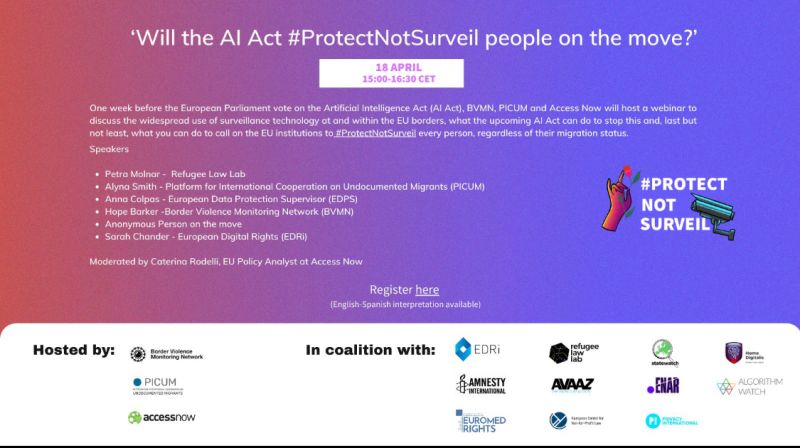
Don't miss the event on AI and migration
The agenda for the upcoming #ProtectNotSurveil webinar organized by Access Now, Platform for Undocumented Migrants (PICUM), and the Border Violence Monitoring Network is ready!
Don’t forget to register in order to learn more about AI, the proposed legislation at the European level, and its provisions related to the border management sector here.
You will have the pleasure of attending a unique line-up of speakers, including Petra Molnar (Refugee Law Lab) Alyna Smith (PICUM), Anna Colaps (EDPS), Hope Barker (BVMN) and Sarah Chander (European Digital Rights)
Find out more here.
Can Education & Games in the Easter holiday go together? Yes!
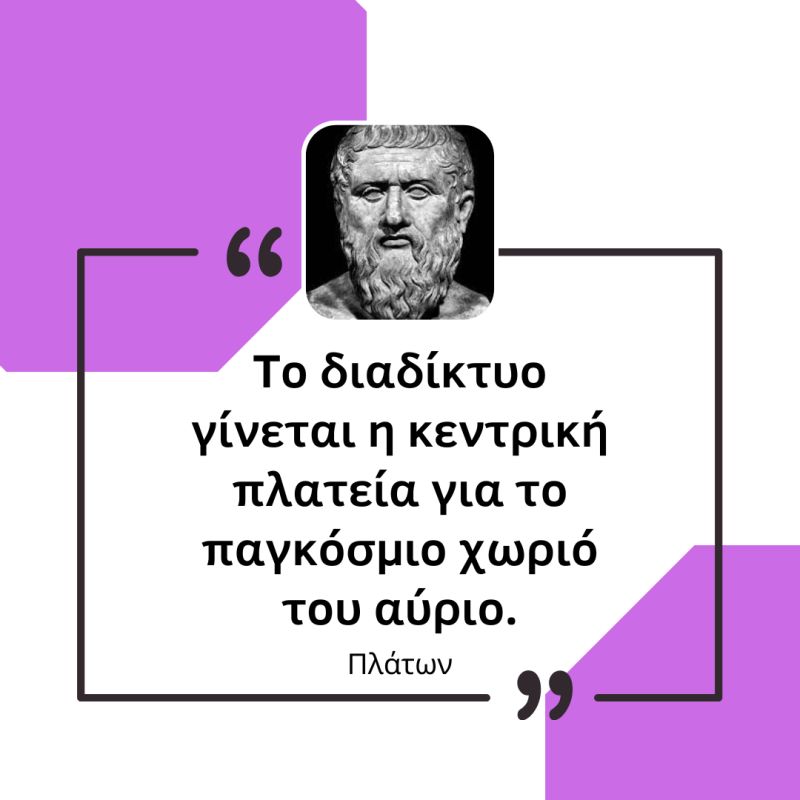
The great ancient Greek philosopher Plato was the first to understand the importance of the internet, saying that “The internet is becoming the central square for the global village of tomorrow”.
Hmm…probably not! Do you easily believe everything you read on the internet without cross checking it out?
Over the Easter holidays, play 3 educational games on your computer or tablet with family and friends to learn how misinformation works in the digital environment.
1.Fake or Real – News Edition
2.Doublecheck
3.Deepfake Lab
These games have been developed in the context of the awareness exhibition #TheGlassRoom – The Misinformation Edition, which has been created by Tactical Tech and which has been successfully brought to Greece by the organizations (in alphabetical order) Digital Detox Experience, Homo Digitalis and Open Lab Athens.
Many thanks to our network of volunteers who pro bono translated the content of the educational games into Greek.