
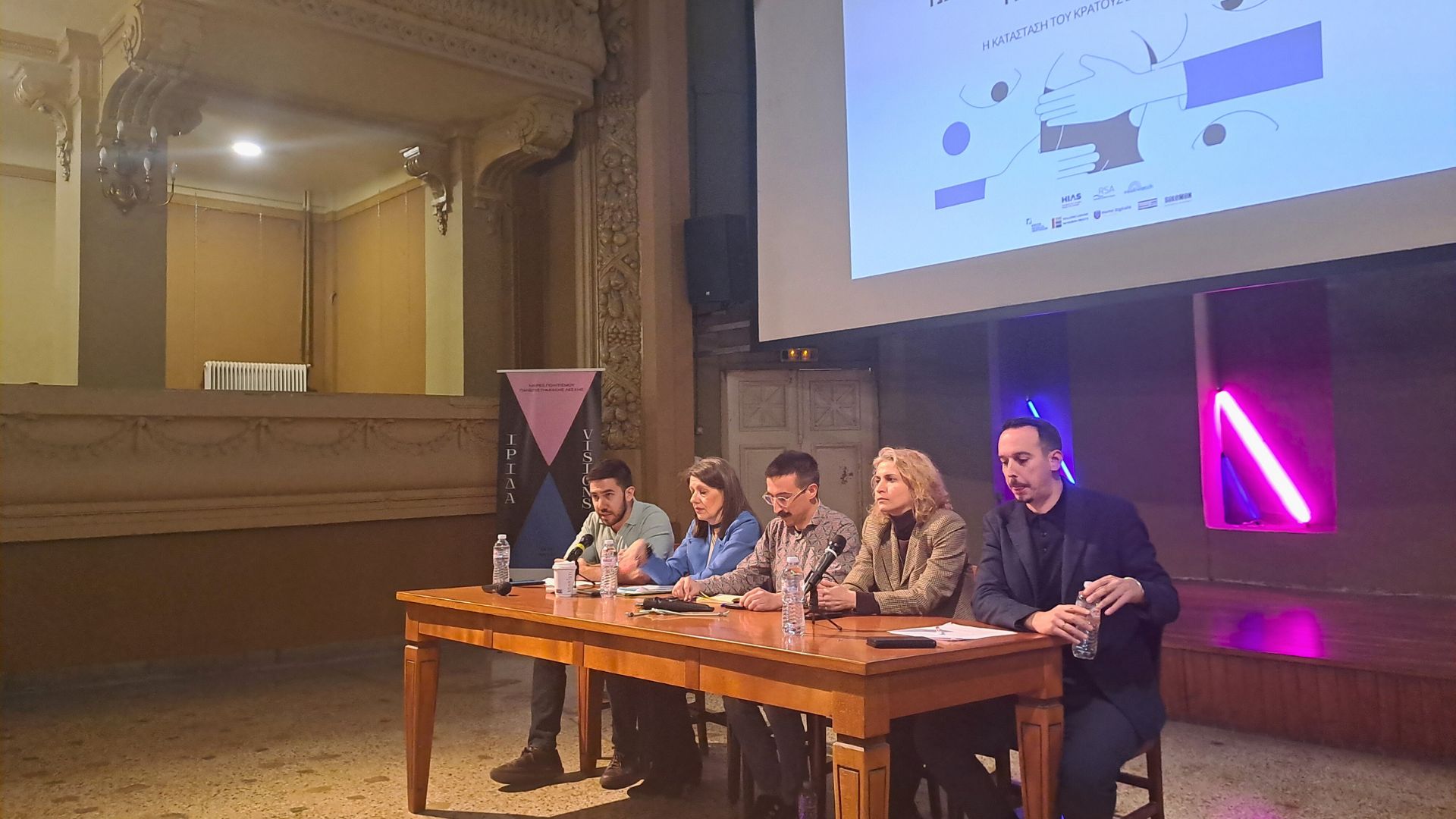
Press Conference on Our Joint Report on the State of the Rule of Law in Greece
On Wednesday, 11 February, a press conference on the current state of the Rule of Law in Greece was successfully held with significant attendance at the Irida Cinema Theatre. The event was organised by the independent organisations HIAS Greece, Refugee Support Aegean (RSA), Vouliwatch, the Greek Council for Refugees (GCR), the Hellenic League for Human Rights (HLHR), Homo Digitalis, Reporters United and Solomon.
You may watch the press conference here.
We would like to warmly thank omniatv for the organisation and online hosting of the press conference, as well as the Photography Department of POFPA for hosting the event at the Irida Cinema Theatre.
Representatives of the participating organisations presented the key findings of the joint submission that we submitted for the fourth consecutive year to the European Commission on the Rule of Law in Greece in 2025, as part of the Commission’s annual monitoring of national systems.
We underlined the now urgent need to address the longstanding rule of law concerns in Greece. The issues documented in the report are interconnected and have nefarious effects on an array of facets of the rule of law, from justice, law-making and transparency rules to press freedom, civil society and data protection.
Our organisations have submitted this report to the European Commission and thoroughly document the pervasive, interconnected issues and deficiencies within Greek institutions as we experience them in our daily work and reality. We will continue to defend the Rule of Law in Greece. We expect no less from the institutions tasked with safeguarding it.

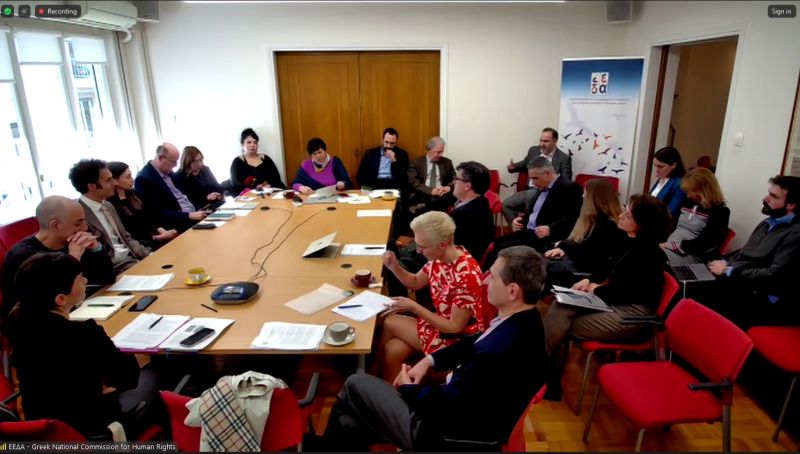

The participation of Homo Digitalis in the 4th In-House Lawyers Forum was successfully completed
The participation of Homo Digitalis in the 4th In-House Lawyers Forum was successfully completed. The event took place on February 4 at the Divani Caravel Hotel and was organized by CLEON Conferences & Communications. The organization was represented by its Co-Founder, Stefanos Vitoratos.
The Forum brought together leading legal minds to explore the evolving role of legal professionals and tackle key topics shaping in-house practice today, from cutting-edge legal issues and AI adoption to cyber resilience, well-being, and leadership perspectives in the corporate setting.
Stefanos talked about ΑΙ Generated Scams, Deepfakes and Voice clones.
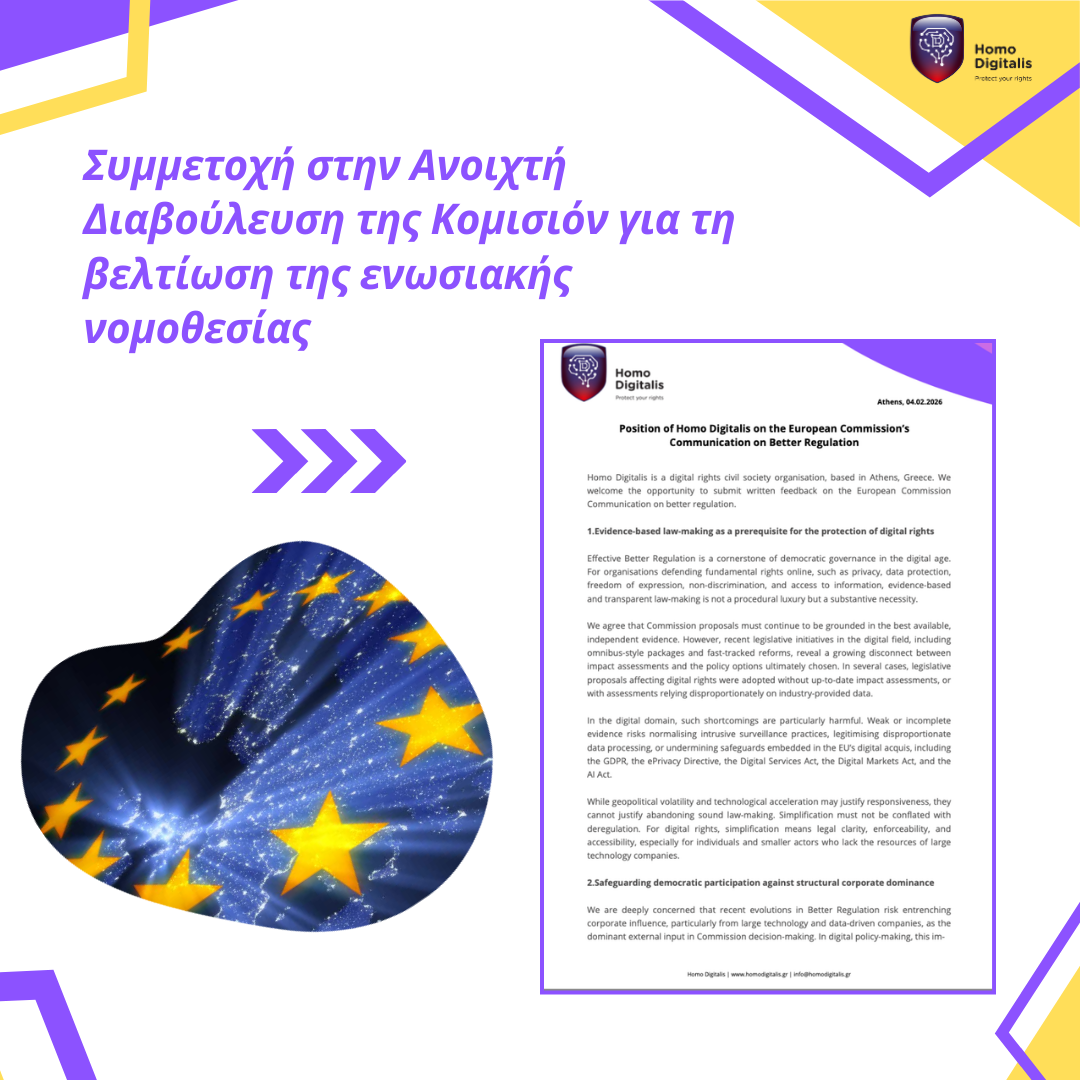
Homo Digitalis participates in the European Commission’s open public consultation on improving EU legislation
Yesterday, 4/2, marked the conclusion of the submission process for contributions to the European Commission’s open public consultation on the “Better Regulation” initiative.
In our detailed submission, we emphasize that evidence-based, data-driven, and participatory lawmaking is a prerequisite for the digital future of Europe and its market.
While we recognize the need for rapid responses in a rapidly evolving technological environment, we highlight a steadily widening gap between evidence-based analyses and final legislative choices. This phenomenon is particularly evident in recent horizontal initiatives of the Omnibus type, as well as in fast-tracked reforms that are launched on uncertain and unclear foundations.
Read here our submission on the Commission’s website.

The participation of Homo Digitalis in an event on the DNA and CAIDA was successfully completed
On January 19, we were invited by Amazon Web Services (AWS) to attend an event focused on legislative initiatives concerning digital policy issues, such as the Digital Networks Act (DNA) and the Cloud and AI Development Act (CAIDA), alongside representatives from institutional bodies and law firms.
During the event, we had the opportunity to express our strong concerns regarding the then-upcoming proposed provisions of the DNA and to put forward the positions of our network. You can read a related commentary on the proposed provisions by epicenter.works here.
The organization was represented by Lefteris Chelioudakis and Konstantinos Kakavoulis. We would like to sincerely thank the organizers for the inclusion and for the opportunity to present our views.

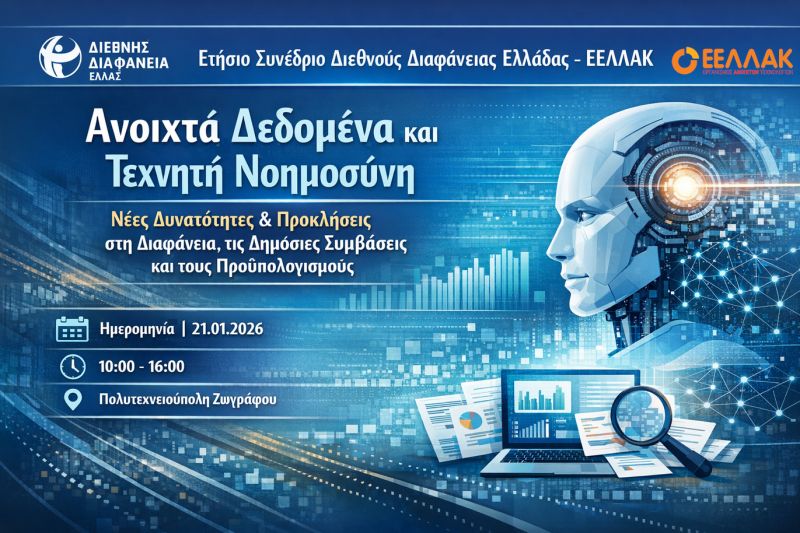
The speech of Homo Digitalis was successfully completed at the Annual Conference of Transparency International Greece and EELLAK.
The participation of Homo Digitalis in the Annual Conference, organized by Transparency International Greece and EELLAK on January 21, was successfully completed. The conference was titled “Open Data and Artificial Intelligence: New Opportunities & Challenges in Transparency, Public Procurement and Budgets.”
Our organization was dynamically represented by our member, Tania Skrapaliοri, who took part in the 3rd panel of the conference entitled “Transparency in Practice: Proposals and Innovation Transforming Governance.”
We would like to warmly thank the organizers for this excellent event and for the opportunity for Homo Digitalis to participate.
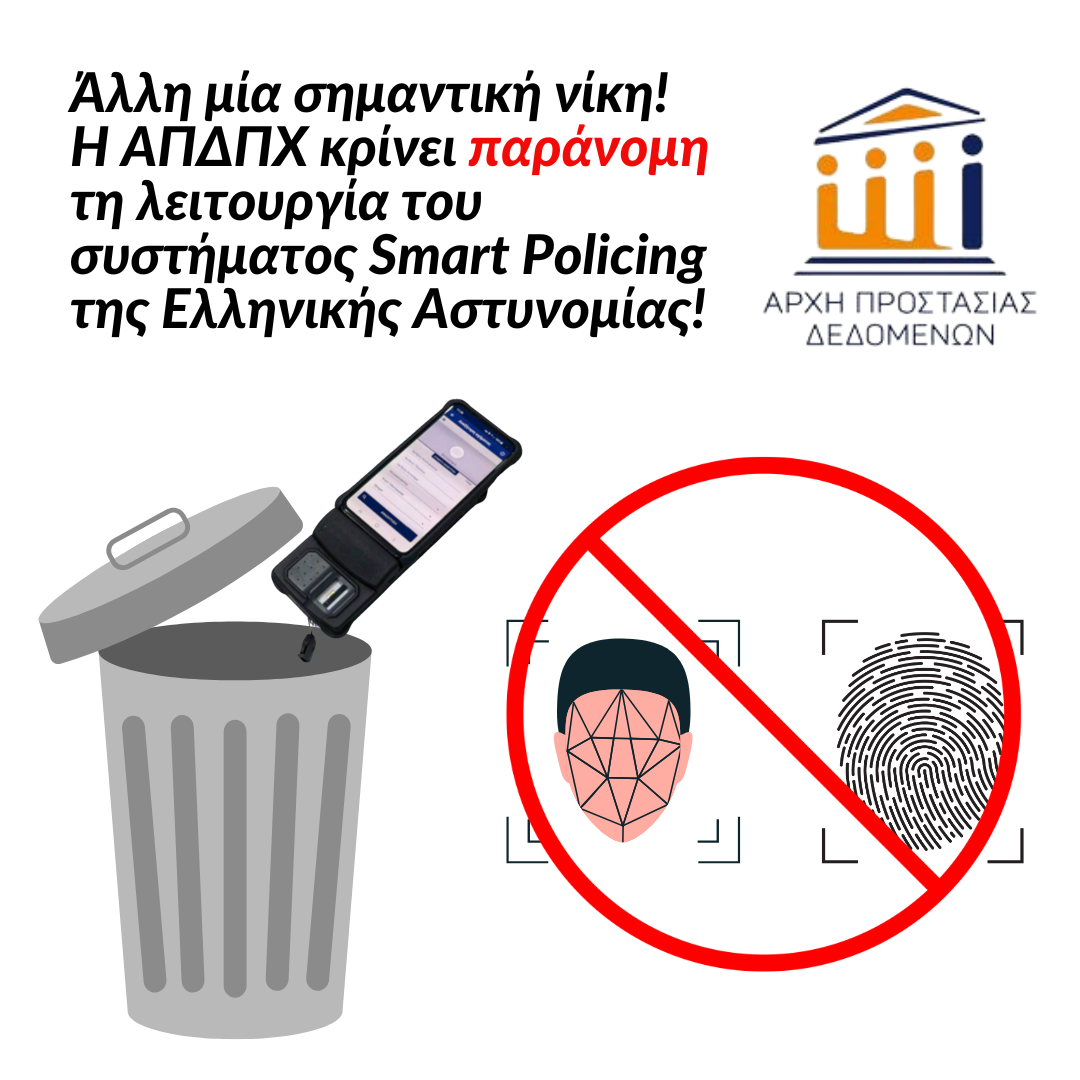
Another important victory! The Hellenic Data Protection Authority rules the operation of the Hellenic Police’s Smart Policing system unlawful
In 2019, the Hellenic Police signed a contract with Intracom Telecom for the implementation of the Smart Policing programme, with a total value of €4 million. The project concerned the procurement of 1,000 “smart” portable devices, intended to enable facial recognition, fingerprint recognition, as well as the scanning of documents and vehicle licence plates.
Homo Digitalis was the first organisation to publicly bring this case to light, through a joint investigative publication with AlgorithmWatch in December 2019. In the same month, we submitted an access-to-documents request to the Ministry of Citizen Protection in order to clarify critical issues of legality and data protection. The response we received failed to provide substantive answers to our questions.
As a result, in March 2020 we filed a complaint with the Hellenic Data Protection Authority (HDPA), requesting that the case be investigated. The Authority accepted our complaint and launched an official investigation in August 2020. In the meantime, the Greek State paid the full amount of €4 million (75% of which was financed through EU funds), while the company duly delivered the devices to the Hellenic Police.
Ultimately, on 31 December 2025, the HDPA issued Decision 45/2025, warning the Hellenic Police not to activate the Smart Policing system, since, under the applicable legal framework, any productive operation of the system would constitute unlawful processing of personal data. The Authority found that there was no legal basis for the intended processing through the system and that the required data protection impact assessment had not been carried out in a timely manner during the pilot phase of the project.
This development gives rise to a strong sense of vindication, as it confirms—six years later—that the serious concerns we raised from the very beginning were fully justified. At the same time, it starkly highlights the waste of public resources on the development and procurement of technologies that could never lawfully operate. Four million euros of taxpayers’ money were spent on a system that, under the existing legal framework, was deemed unlawful before it was ever put into productive use.
This case demonstrates the urgent need for meaningful legality checks, transparency, and accountability before adopting high-risk technological solutions, especially when they affect fundamental rights and are financed with public funds.
You can read Decision 45/2025 of the HDPA here (EL).