
Open letter on net neutrality addressed to the European Commission and BEREC
Two years since the entry into force of the new rules on net neutrality, the European Commission has launched today, the 03.04.2019 their report regarding the implementation of these provisions by the Member States.
Unfortunately, the Commission’s report on open internet doesn’t provide the necessary deep analysis, which one would have expected. Specifically, it comes, in spite of its size, to general and superficial conclusions without addressing any issues of the omissions of the concerned Member States, including our country, concerning the implementation of these provisions.
These shortcomings have been underlined to recent corresponding studies carried out by recognised organisations of civil society, such as of Epicentre.works.
As a reaction to the situation which has been established and in order to express openly the risks that arise in the European Union, concerning net neutrality, 29 organisations of civil society, Homo Digitalis included, sent today an open letter addressed to the European Commission and the Body of European Regulators for Electronic Communications (BEREC).
The letter stresses out the need to ensure in practice the protection of Internet users (natural and legal persons), in order the Internet traffic to comply with the principle of non-discrimination. The letter’s purpose is to reopen the debate with the European institutions for the upcoming revision of BEREC’s guidelines, and shall be an opportunity of improvement in the problematic situation that has occurred.
What we hope is a real digital single market that protects and promotes the open, neutral and non-discriminatory access to the Internet.
The full text of the letter is available here.


Algorithmic transparency and accountability of online service providers: Exercising the right to explanation
The copyright owner of the above image is Any IP Ltd. You can visit their website at https://anyip.io/
Written by Theodora Firingou *
While making use of various online services, one cannot help but notice that we are constantly bombarded with suggestions regarding not only content that we may like, but also products and services of multiple advertisers. YouTube and Netflix, for instance, offer recommended videos and movies; Spotify even provides you with the Spotify Radar to help you discover new music; Facebook and others advertise products according to your previous searches. Common denominator of the use of recommendation algorithmic systems by the various online service providers is their will to “please” the user by enhancing his/her personalised online experience.
However, is this attempt to personalise your interaction with the service really that innocent? How does an algorithm decide what I would like to watch or listen to?
Probably, most of us have experienced having just met someone and then, all of a sudden, receiving a suggestion to befriend this person on Facebook. Or have you ever noticed that a product you were discussing about on the Messenger app is afterwards advertised to you on your Facebook newsfeed? Doesn’t that feel creepy? And what happens if things get serious? For instance, a user could be discriminated when offered a recommended job or could even end up stranded in a filter bubble with limited worldview or choices.
Baffled by this series of unanswered questions, I was motivated to carry out research on the right to explanation. Five months later and after having conducted empirical research by exercising my right to explanation against major online service providers, I received an award for my thesis on algorithmic accountability and the right to explanation. Herewith I would like to share some of my findings.
Problem statement
Due to the complex and opaque nature of algorithmic systems, their extensive use in automated decision-making and profiling has brought up questions regarding issues of transparency and accountability. Algorithms are conceived as a ‘black box’ and thus hinder any attempt to assess the decision-making process and its results.
At the same time, the European data protection legislation, and predominantly the General Data Protection Regulation (GDPR), demands transparency and accountability on behalf of the data controller and lays down relevant safeguards which the controllers must respect. One of these safeguards is the right to explanation, the existence and scope of which have, however, initiated an extensive academic debate.
In this context, whether or not the implementation of the right to explanation in practice reflects its underlying scope, became the main research question of my master thesis. To that end, the following methodology was applied: Firstly, in order to identify the right’s scope, I focused on mapping and analysing the European legislative framework and the relevant legal literature. Secondly, emphasis was given to the conduct of empirical research regarding the implementation of the right to explanation. In particular, the right to explanation was exercised against five different online service providers, who were questioned about the way their recommendation algorithmic systems regarding personalised content and targeted advertisements work.
The legal framework
Despite the lack of a neat, explicit ‘right to explanation’ labelled provision in either the Data Protection Directive or the GDPR, the right derives from Article 22 and Recital 71 GDPR on the safeguards against automated-decision making, Articles 13 (2) (f) and 14 (2)(g) GDPR regarding controllers’ notification duties and, lastly, Article 15 (1) (h) GDPR as well as Article 12 of the Directive 95/46 on the right of access. In particular, according to Article 22 of the GDPR, ‘data controllers shall implement suitable measures to safeguard the data subject’s rights and freedoms and legitimate interests, at least the right to obtain human intervention on the part of the controller, to express his/her point of view and to contest the decision.’
Moreover, as laid down in Articles 13 to 15 of the GDPR, the data subject shall have access to the personal data and the information about ‘the existence of automated decision-making, meaningful information about the logic involved, as well as the significance and the envisaged consequences of such processing for the data subject.’ Additionally, according to Article 12 of the Data Protection Directive controllers must provide data subjects with ‘knowledge of the logic involved’ in any automated decision-making.
Scope and applicability of the right to explanation
Through the analysis of the relevant legal provisions, the academic debate around them and the contradiction of the argumentation against the right to explanation, it was made possible to identify the right’s scope and applicability. It was concluded that a systemic and teleological reading of the provisions -especially in the light of GDPR’s spirit to empower individuals’ data protection- confirms the existence of the right to explanation.
In particular, it resulted from the analysis that the right to explanation entails the provision of meaningful information about the logic involved to the data subject, in the sense that the meaningfulness of the information provided must be interpreted flexibly. Thus, the information may refer to either the system functionality or a specific decision and it can constitute either ex ante or ex post explanation in relation to the timing at which the decision was reached. Moreover, in order to assess whether an explanation is meaningful or not the information provided must be examined in the light of its functional value (especially with regard to enabling the exercise of the data subject’s rights and freedoms). Additionally, the explanation should lead to individualised transparency, in the sense of personalised understanding of information of a meaningful depth. The information should also be intelligible and provided in a clear and plain language, so that a regular data subject (i.e. usually a user with no expertise on technology-related matters) would be able to fully comprehend it.
Regarding the applicability criteria of the right, automated decision-making (including profiling) which results in a solely automated decision being reached without any meaningful human intervention ought to be taking place. Furthermore, the automated decision must have legal or similarly significant effects, which however should be interpreted in a broad sense, including cases where the data subject’s freedoms and rights are endangered or even the case of targeted advertising based on profiling.
Lastly, the right to explanation must be respected regardless of trade secrets and IP rights. This means that they cannot serve as a justification to refuse providing information and that data protection rights overweight trade secrecy or IP rights.
Compliance issues revealed
Taking into consideration the scope and applicability of the right to explanation, my empirical research focused on examining whether the right to explanation fulfils this scope when exercised in practice. In particular, I filed a number of explanation requests regarding recommended content and targeted advertisements before five online service providers, namely Facebook, YouTube, LinkedIn, Spotify and Netflix.
Unsurprisingly, the analysis of the empirical research’s results revealed a great number of compliance issues and a gap between theory and practice.
Filing explanation requests and obtaining meaningful information about the logic involved in algorithmic systems responsible for automated decision-making was actually an extremely challenging procedure; it required legal literacy on the matter, organisation, persistence and patience. In other words, it is doubtful whether a regular data subject would ever manage to efficiently exercise his/her rights after facing such hurdles.
Although privacy policies were easily found, they were often problematic in terms of completeness and clarity. Identifying the right communication means to contact the controllers was even more troublesome.
However, the most worrying findings resulted from the correspondence with the controllers. Various malfunctions, such as organisational and administrative avoidance strategies, lack of awareness, ignorance and denial to address the requests rendered the procedure complicated. Moreover, the explanations provided were not satisfactory; generic, fragmental and misleading information was provided and could thus not possibly fulfil the scope and rationale of the right to explanation since it could not be conceived as meaningful information. Some controllers refused to provide a full explanation and justified their position either on trade secrecy grounds or by arguing that Article 22 GDPR, and consequently Article 15 (1)(h), do not apply since the automated processing does not produce legal or similarly significant effects. However, none of these arguments constitute valid grounds on which data controllers could rely in order to avoid providing an explanation to the data subject.
To sum up, the findings of the empirical research on a limited number of broadly used online service providers indicated that the right to explanation does not fulfil its scope under the European data protection legislation when practically exercised against data controllers. Most worryingly, it was confirmed that the data subjects’ rights are being significantly disrespected in the online environment. Afterall, maybe we should think twice before celebrating this generously ‘enhanced personalised experience’ since the legally provided safeguards to protect us against malicious processing of our personal data, especially during automated decision-making and profiling, do not seem to be implemented by major controllers. It is thus doubtful that we could rely on a transparent and accountable processing of our data.
* Theodora Firingou is a lawyer holding an LLM in Penal Law (LL.M, University of Hamburg) and LL.M IP/ICT Law, KUL. She focuses on data protection & privacy law and mainly on the issues arising from the use of new technologies such as Artificial Intelligence (‘AI’).
The proposed reform on European Intellectual Property Law has been approved
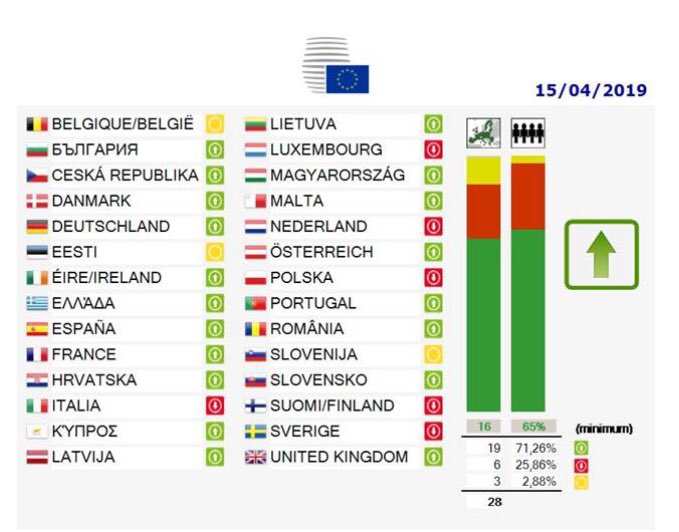
Today, the Member States of the European Union voted in favor of the proposed European Directive on copyright and related rights/neighbouring rights in the digital single market and amending Directives 96/9/EC and 2001/29/EC.
Six (6) Member States voted against the reform (Finland, Italy, Luxembourg, Netherlands, Sweden, Poland), three (3) abstained (Belgium, Estonia, Slovenia), and nineteen (19) voted in favor of the reform, including, unfortunately, Greece.
Our organisation, Homo Digitalis had previously informed in detail about the very significant repercussions of Article 17 through open letters addressed to the competent Ministers, to the President and to the Prime Minister of the Hellenic Republic [click the relevant links to read the open letters in Greek].
EU Member States will have a period of two years to integrate the relevant legislation into their national law.
The new issue of GDPR Today is out
The new issue of GDPR Today was released on 25 March 2019.
It includes many articles concerning the latest developments at Member States and European Union level on issues related to the application of GDPR provisions.
It also includes a section called “GDPR in numbers” with statistical information for the number of complaints and the number of data breach notifications in seven countries of the European Union, including Cyprus.
At this point we would like to give our sincere thanks to the Data Protection Commissioner’s Office of Cyprus and the Hellenic Data Protection Authority for the pleasant collaboration and the concession of the required statistical data.
This issue has been produced by the Open Rights Groups organisation.
The following organisations took part:
- Access Now
- Association for Technology and Internet
- Bits of Freedom
- Data Skydd
- Homo Digitalis
- Panoptykon Foundation
- Privacy International

Homo Digitalis in a meeting with the Secretary General of the Ministry of Justice
Today, 29.03.2019, Homo Digitalis had a very interesting and important meeting with the Secretary General of the Ministry of Justice, Transparency and Human Rights, Mr. George Sarlis, regarding the draft law which implements the GDPR and incorporates Directive 2016/680/EU.
Konstantinos Kakavoulis and Stefanos Vitoratos represented our organization and advocated for the adoption of regulations aimed at providing citizens with more protection. Stay tuned for more details.
Seminar “Regulating Social Media” with the participation of Homo Digitalis
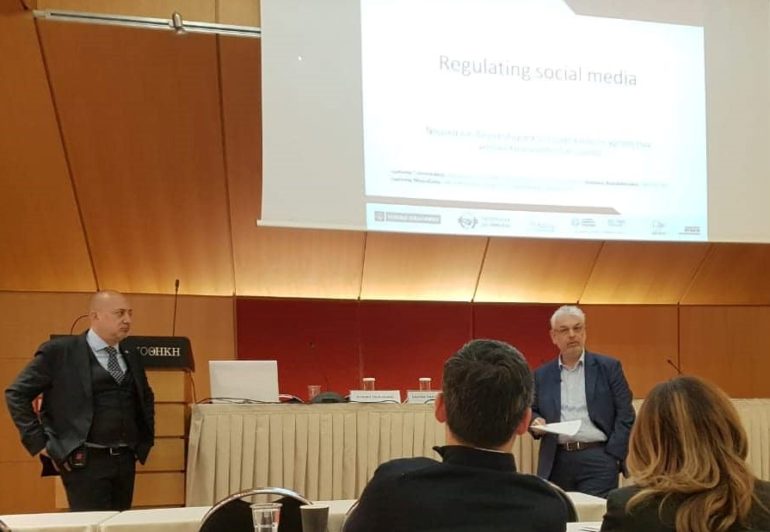
On Tuesday 27.03.2019 the seminar “Regulating Social Media” took place in Nomiki Bibliothiki (Mavromichali 23, Athens). The seminar was attended by young lawyers who were sensitized and informed about issues that arise from the use of social media.
Lecturers were Mr. Ioannis Giannakakis, lawyer, and Mr. Vasilis Vasilopoulos, DPO of ERT.S.A. and member of Homo Digitalis. Mr. Ioannis Marozinis, lawyer, interfered.
Mr. Vasilopoulos who represented our organization, introduced legal and ethical issues concerning the use of social media.
Our members Mary Mouzaki, Maria-Alexandra Papoutsi, Agamemnon Gavrilidis, Haris Kiritsis, Christina Kalogeropoulou, Ioannis Ntokos, Katerina Psichogiou, Stergios Konstantinou, Ifigenia Gaki, Anastasios Arampatzis, Vaggelis Farmakidis, Nikos Giannaros, Konstantinos Kakavoulis participated in the preparation of the presentation.
Each of our members has approached the issues arising from the use of social media depending on his/her specificity.
We sincerely thank everyone who worked for this seminar and particularly Mr. Vasilopoulos for the excellent presentation!

Homo Digitalis at Ionidios School of Piraeus
Today, 27 March 2017, Homo Digitalis conducted a presentation to students of 12-15 years in Ionidios School of Piraeus concerning Cyberbullying and the proper use of the Internet and personal data. Students took a great deal of interest in this matter, while many of them remained after the layoff to discuss with Kimonas Georgakis, Panagiotis Gialis and Konstantinos Kakavoulis, who conducted the presentation for our organisation.
Warm thanks to Mr. Dimitris Zografopoulos, DPO at the Ministry of Health, for the invitation and the exceptional co-presentation!
In the coming months, Homo Digitalis will conduct many school presentations about digital rights and their protection.
Stay tuned!

Homo Digitalis speaks to ΕΘΝΟΣ about today’s vote in the European Parliament
Eleftherios Chelioudakis, representing Homo Digitalis, speaks to ethnos.gr and journalist Mary Tsinu about this disappointing result and its implications for internet users.

Getting closer to the vote on the proposed European Directive on Copyright
Next week is very important for the future of the internet; particularly for freedom of expression and information and the protection of privacy.
On Tuesday 26th of March, the European Parliament will vote on the proposed European Directive on Copyright. In the past we have hosted on our website detailed articles on this specific legislative reformation.
This proposed Directive introduces certain provisions which have a positive nature. However, some other of its provisions raise significant problems; the most important is Article 13, which, during the vote will constitute Article 17, as the text has been renumbered.
Article 13 is supposed to be set up to improve the existing situation and help the creators enjoy intellectual property rights on their works. However, it fails to achieve its scope and mostly assists the interests of major record, publishing and film companies and the interests of companies, which develop software for content control (content-control / filtering software).
Article 13 also does not eliminate, in any case, the serious pathogenesis of the existing regime. Specifically, it lacks a specific provision for combating false claims related to intellectual property rights, while its general, badly written and unclear provisions would lead to a slew of preliminary rulings to the Court of Justice of the European Union.
Article 13 causes new problems and is unable to ensure a reasonable balance between, on the one hand, the right to the protection of intellectual property and on the other hand the rights to freedom of expression, information and respect of personal privacy. Each type of material, which users of the internet upload on platforms of content exchange, as photos, texts, personal messages, videos, etc. will be subject to control and will not be published to the effect that the filtering software deems that there is an infringement.
Numerous experts have been sounding the alarm about the consequences of Article 13 and the uploading filters for Freedom of Expression and Information on the Internet and its diversity:
– The United Nations Special Rapporteur on Freedom of Expression and Information, David Kaye, has substantially expressed his contradiction to Article 13.
– The Federal Commissioner for Personal Data Protection of Germany, Ulrich Kelber, has clearly stressed that Article 13 leads to a tremendous growth of giants of online services and creates challenges for the protection of privacy on the Internet.
– The Minister for Justice and Citizen’s Protection of Germany, Katerina Barley, has invited German Members of the European Parliament to vote down Article 13.
– 169 specialised and prominent academics in the field of intellectual property, have underlined that the provisions of Article 13 are misleading.
Furthermore, the number of Members of the European Parliament committing to vote down article 13 in the vote of Tuesday is constantly rising!
MEPs, which are independent or represent European political parties from every political field, as the Greens/European Free Alliance (GREENS/EFA), the European United Left (GUE/NGL), the European People’s Party (EPP), the Progressive Alliance of Socialists and Democrats (S&D) and the Alliance of Liberals and Democrats (ALDE) have already openly expressed their opposition to Article 13.
Finally, many people are expressing their dissatisfaction with Article 13 and its very serious effects. More than 100,000 people have participated in the demonstrations that took place in many European countries on Saturday 23 March.
Call your representatives in the few days left!
Ask them to vote down Article 13!