
Homo Digitalis participates in DFF event on the strategic litigation opportunities of the GDPR
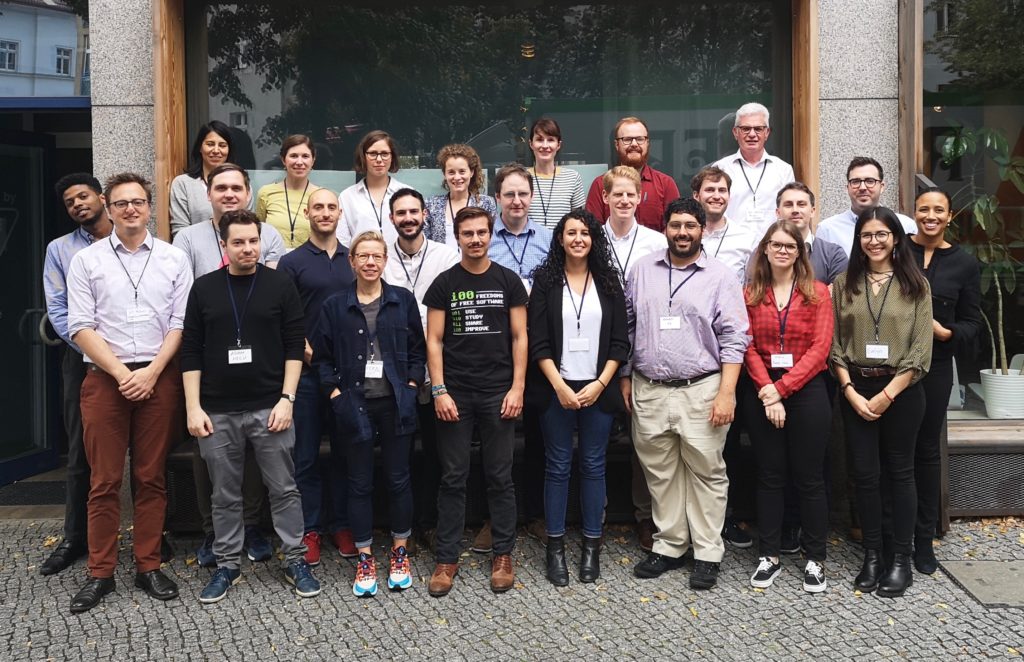
On 26th and 27th September 2019, Homo Digitalis had the great honor and pleasure to participate in a follow-up meeting on the strategic litigation opportunities of the General Data Protection Regulation (“GDPR”).
The meeting took place in Berlin, hosted by the Digital Freedom Fund (“DFF”), and it is a follow-up meeting of a three-day meeting, which took place in Vienna last May.
21 academics, activists and litigators from several European countries discussed many interesting issues and shared experiences and opinions on privacy related issues blended in the modern digital age.
Our organization had the opportunity to forge important alliances for the future and to inform other attendees about the situation in our country.
Mr. Eleftherios Chelioudakis, founding member and secretariat of our organization represented Homo Digitalis at this meeting.
You can learn more details about the meeting here.

Homo Digitalis at the 1st Cyber security Conference organized by KPMG in Greece
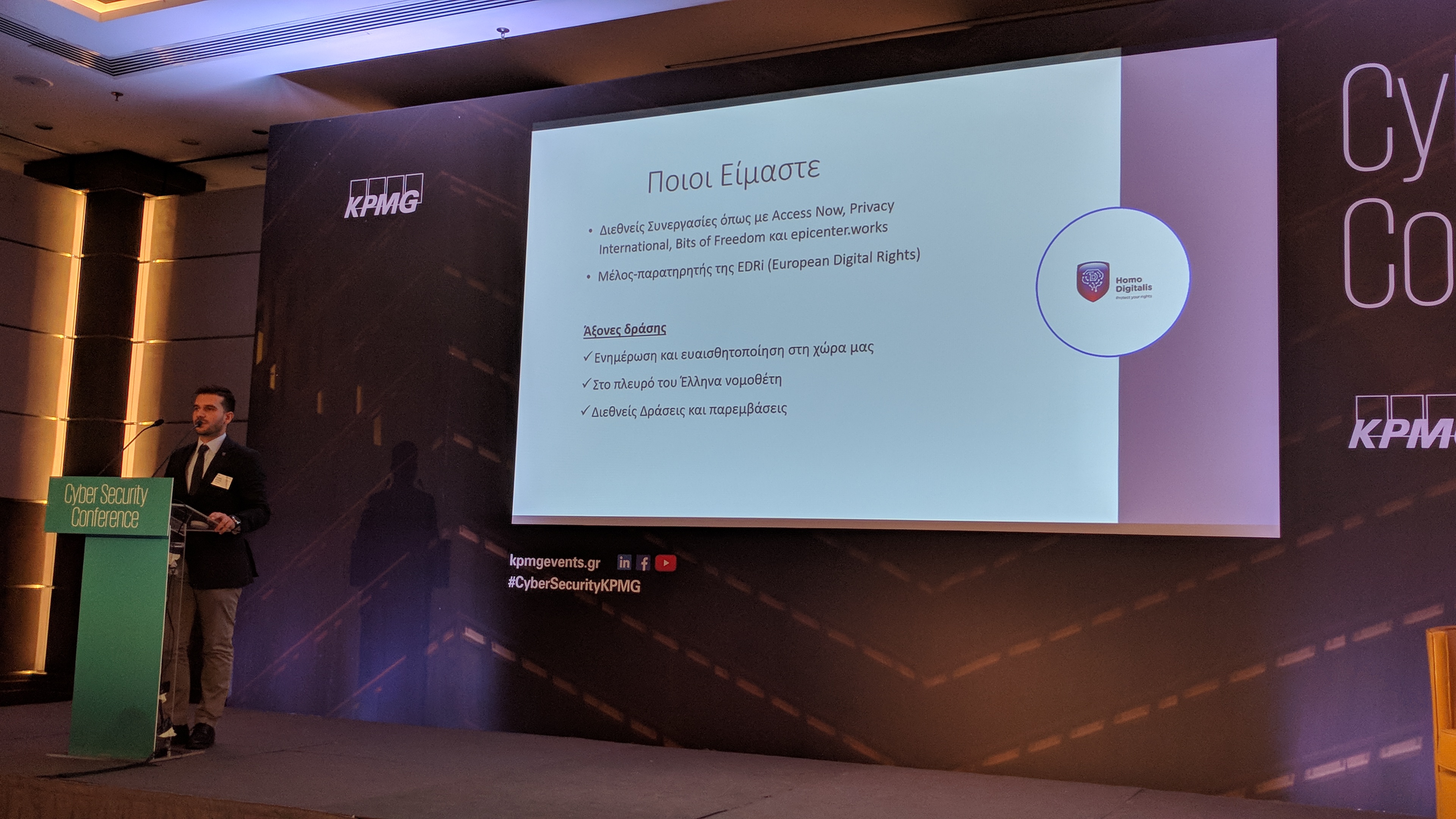
Homo Digitalis’s Stephanos Vitoratos represented our organisation at the first Cyber security Conference organized by KPMG Greece.
The conference was held on October 8 at the Grand Hyatt Athens and many Greek and foreign professionals specializing in the field of cyber security participated in it.
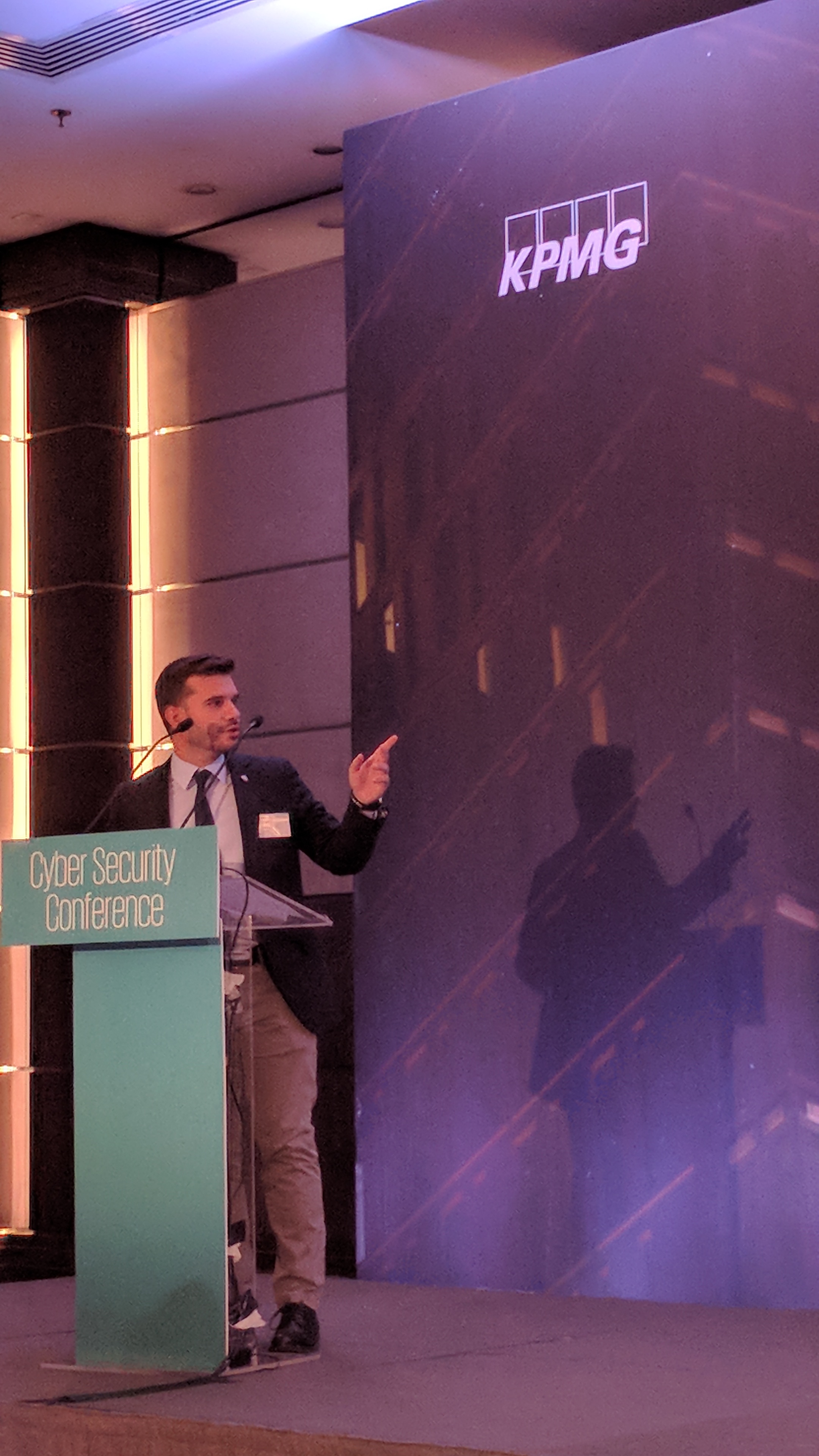
Stephanos Vitoratos at the conference
The conference took place in the context of the European Cybersecurity Month.
Keynote speaker at the conference was Mr Kyriakos Pierrakakis, Minister of Digital Governance, who announced the implementation of the ministerial decision that puts in force the National Cybersecurity Authority’s Internal Rules of Procedure.
We are delighted, as two more members of Homo Digitalis, Mr Vassilis Vassilopoulos and Mr Dimitris Patsos, participated in the conference as speakers with their professional capacity.

Vassilis Vassilopoulos attends panel on the importance of cyber security for businesses.
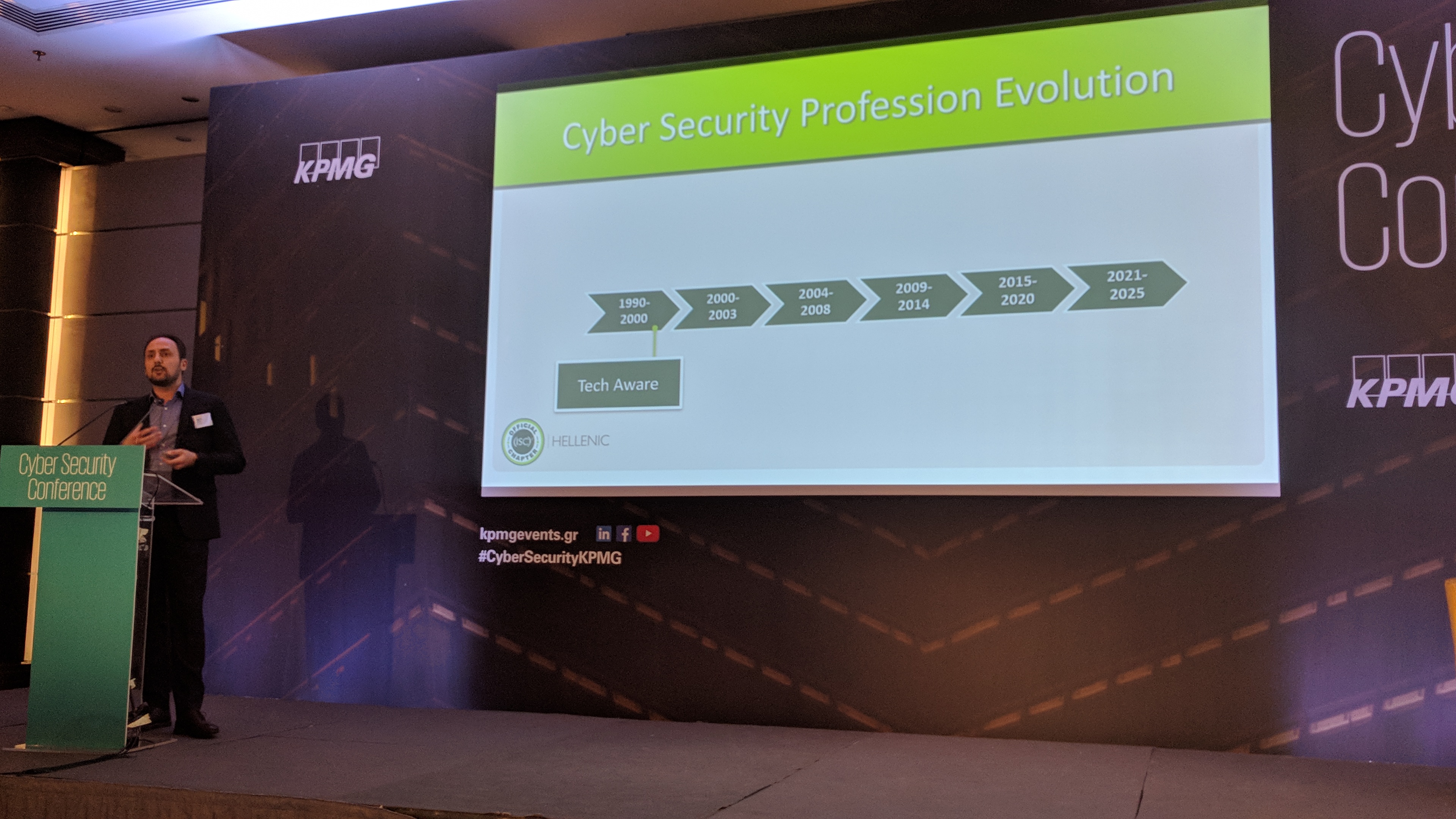
Dimitris Patsos talks about cyber security skills gap and the courses of action for Greece to bridge it.
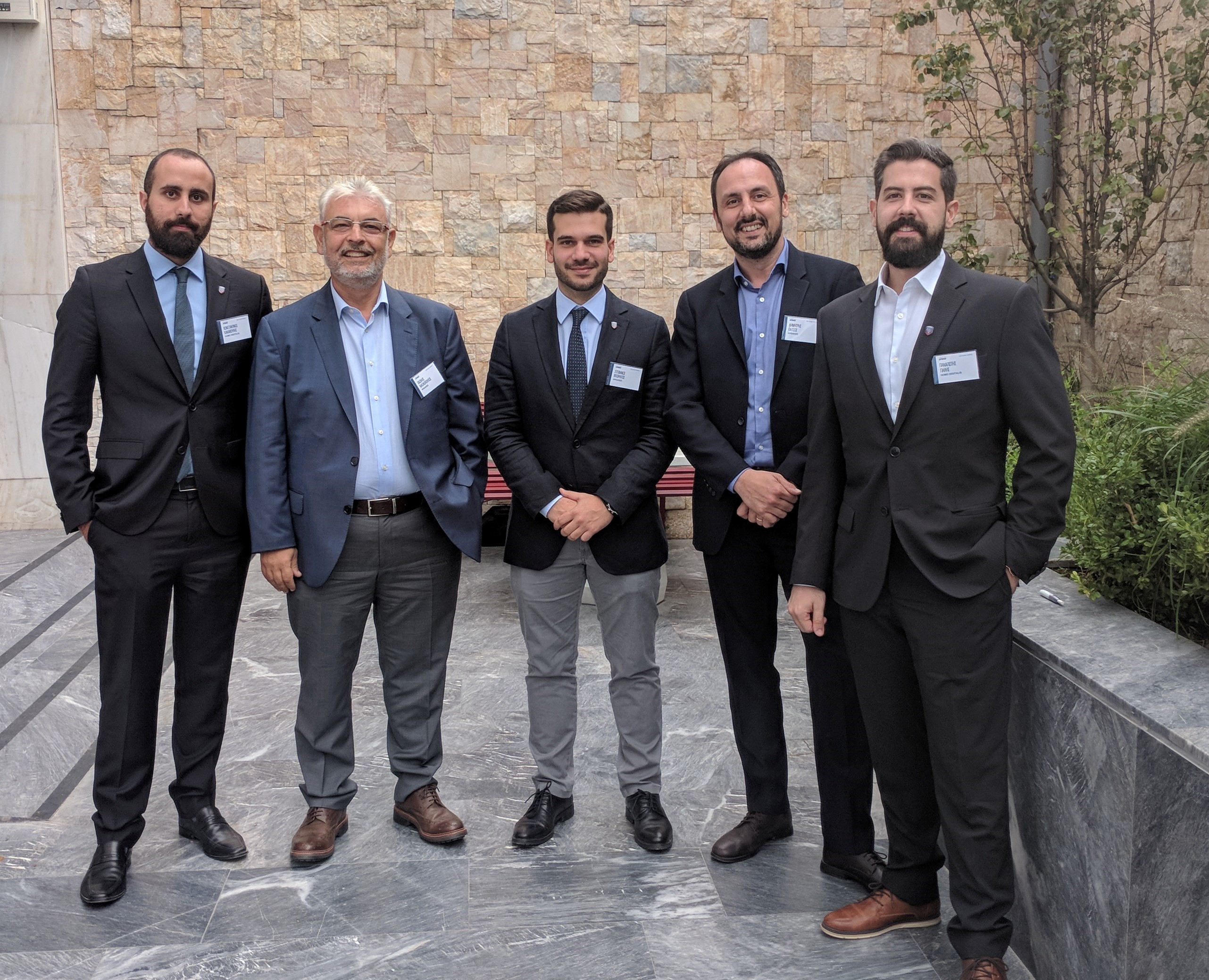
Homo Digitalis’s members at the conference
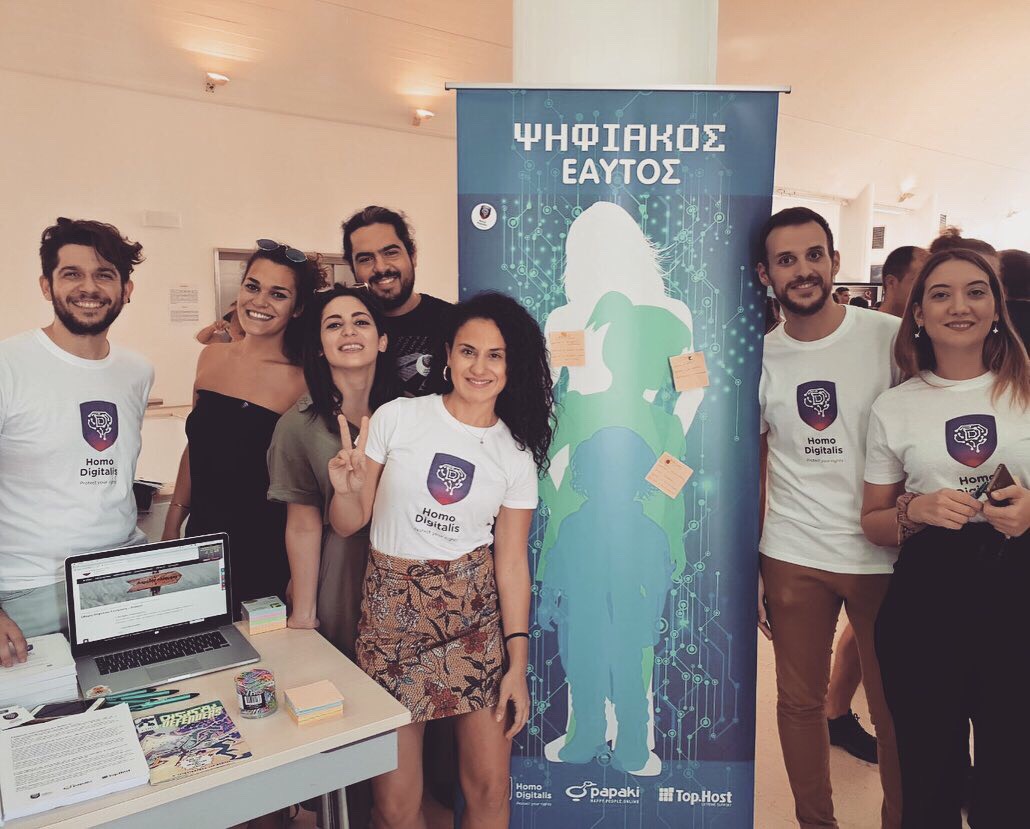
Homo Digitalis at Researcher’s Night 2019
Homo Digitalis participated in Researcher’s Night event for the second consecutive year, spreading information and knowledge to hundreds of adults and youngsters regarding their digital rights.
After our successful participation in Researcher’s Night 2018 in Athens, this year our organization attended Researcher’s Night which took place on Friday 27 September 2019 in Heraklion of Crete and specifically in the premises of the Foundation for Research and Technology – Hellas (“FORTH”).
Our little friends came at our stand and intriguingly met their digital selves. Parents and children had interesting conversations with Homo Digitalis team regarding the safe use of the Internet.
Together with our older visitors we experienced actual examples of public WiFi dangers.
We would like to wholeheartedly thank Papaki and Top.Host for such a productive cooperation.
Homo Digitalis team at Researcher’s Night 2019 consisted of the following members: Ms. Elpida Vamvaka, Mr. Manos Papadakis, Mr. Vyronas Kavalinis, Ms. Myra Kesidou, Ms. Despina Patsiokosta, Ms. Ioanna Spanaki, Ms. Eva Davaki, Mr. Konstantinos Liandroyannakis and Ms. Eleftheria Vamvaka.
We are looking forward to seeing you at next year’s Researcher’s Night.
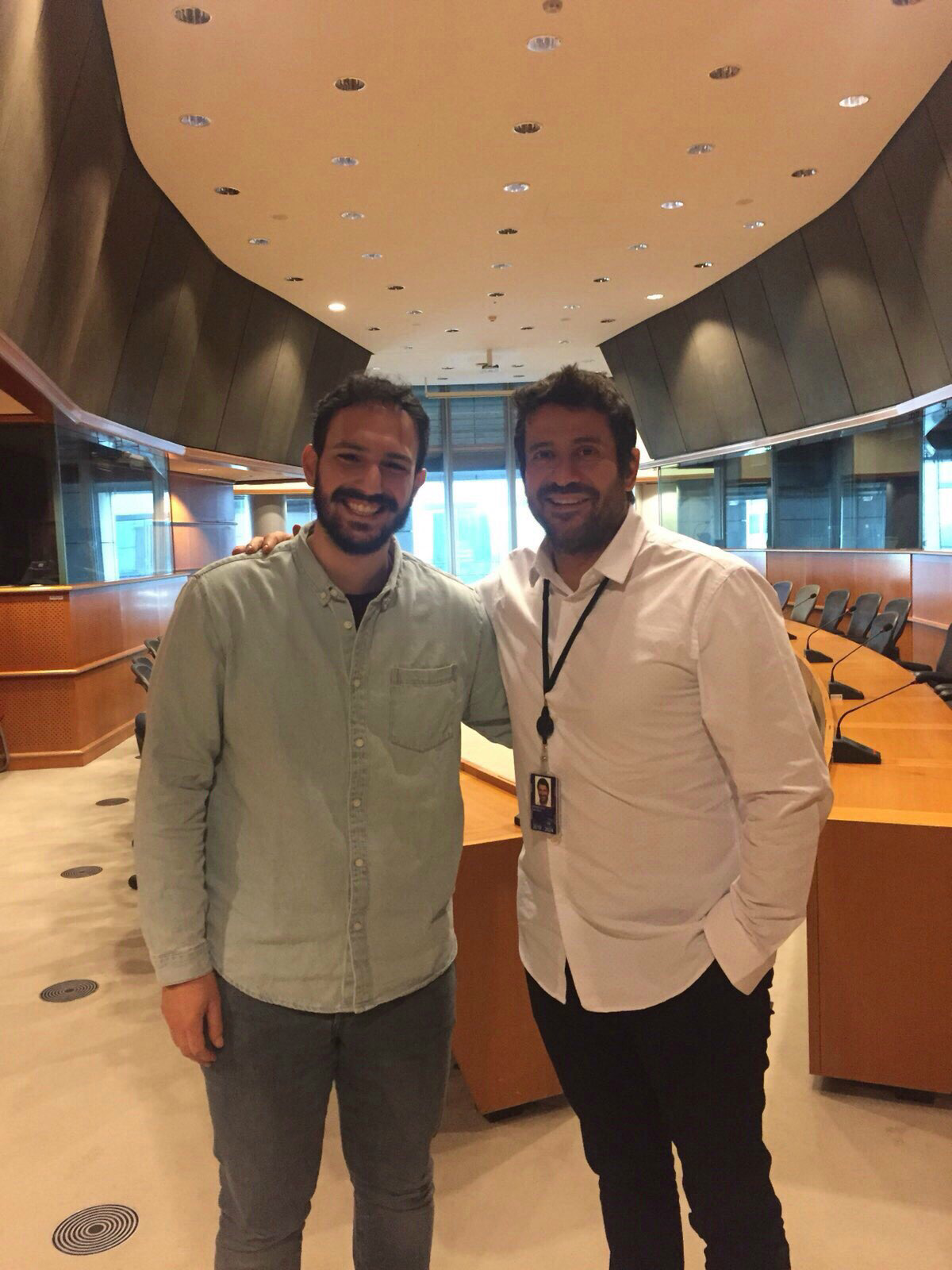
Homo Digitalis meets MEP Alexis Georgoulis and his team at European Parliament
On October 2, 2019 Homo Digitalis had the great honour and pleasure to meet Mr. Alexis Georgoulis, Member of the European Parliament (MEP) and his team lead at the EP, Mr. Manos Kalaintzis.
The discussion was very productive and we had the chance to get informed about updates on the question of the use of the application FaceApp raised by MEP Georgoulis earlier in July 2019 and the official response he received a few days ago by Commissioner Jourová on behalf of the European Commission.
We also talked about the actions and goals of Homo Digitalis and the importance in raising the awareness of Greek public regarding the protection of their personal data and privacy during the current digital age.
At the centre of the discussion was the new business model of the tech giants of on-line services, whose income come largely from targeted advertising based on the collection of personal data as well as the monitoring conducted by ad network providers and intermediaries and the use of cookies.
Finally, we talked about Freedom Not Fear 2019 and the annual meeting of activists regarding the protection of personal data and privacy, which will take place between 8 – 11 November in Brussels.
We remind you that registrations are still open and you can apply for travel allowances. Very few seats are available. You can learn more on our website here (in Greek).
We would like to wholeheartedly thank MEP Alexis Georgoulis and Manos Kalaintzis for the interesting, constructive and productive discussion and meeting. It is satisfying and encouraging to notice that MEPs and their teams have such a strong interest in the protection of Human Rights in the modern digital era and we would be delighted to stay in contact in the near future.
We would be delighted to meet other MEPs and their teams in order to discuss and exchange ideas! ‘Freedom not Fear 2019’ appears to be a good occasion as many of our members will be in Brussels between 8-11 November 2019. You are more than welcome to contact us on info@homodigitalis.gr
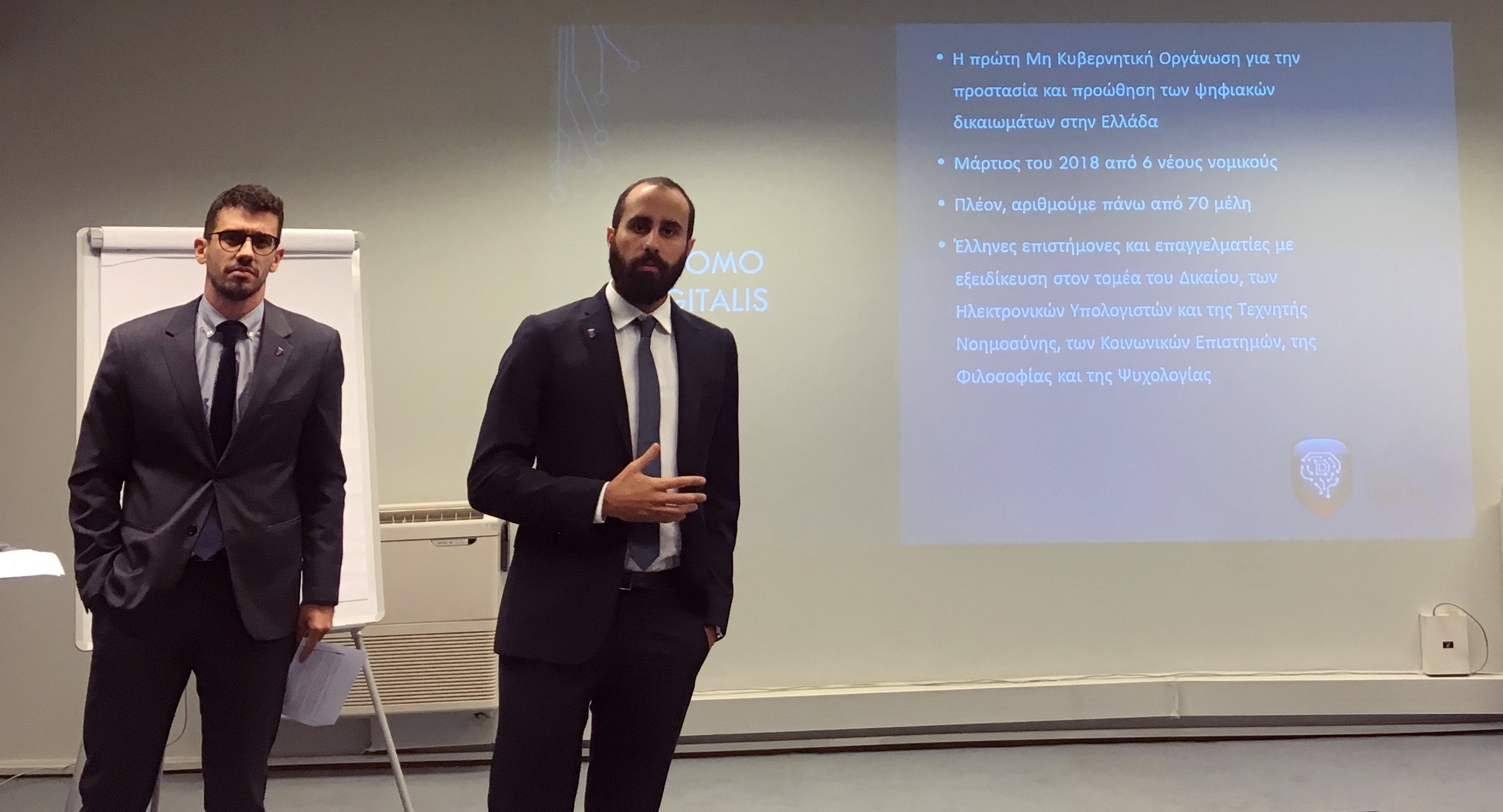
Homo Digitalis’s Presentation at Hellenic (ISC)² Chapter
On September 26, 2019, Homo Digitalis’s Konstantinos Kakavoulis and Emmanouil Tzivieris attended the OTE Academy premises in Maroussi of Attica region, invited by the Hellenic (ISC)² Chapter and its President, Mr. Dimitrios Patsos.
They made a presentation to the members of the Hellenic (ISC)² Chapter and discussed Homo Digitalis’s interesting activities, as well as the new Greek law 4624/2019 regarding personal data processing.
After the presentation, discussion was held with the members of Hellenic (ISC)² Chapter.
The (ISC) 2 is the international professional association for information security.
We would like to wholeheartedly thank Mr. Patsos and all the members of the Hellenic (ISC)² Chapter for their invitation.
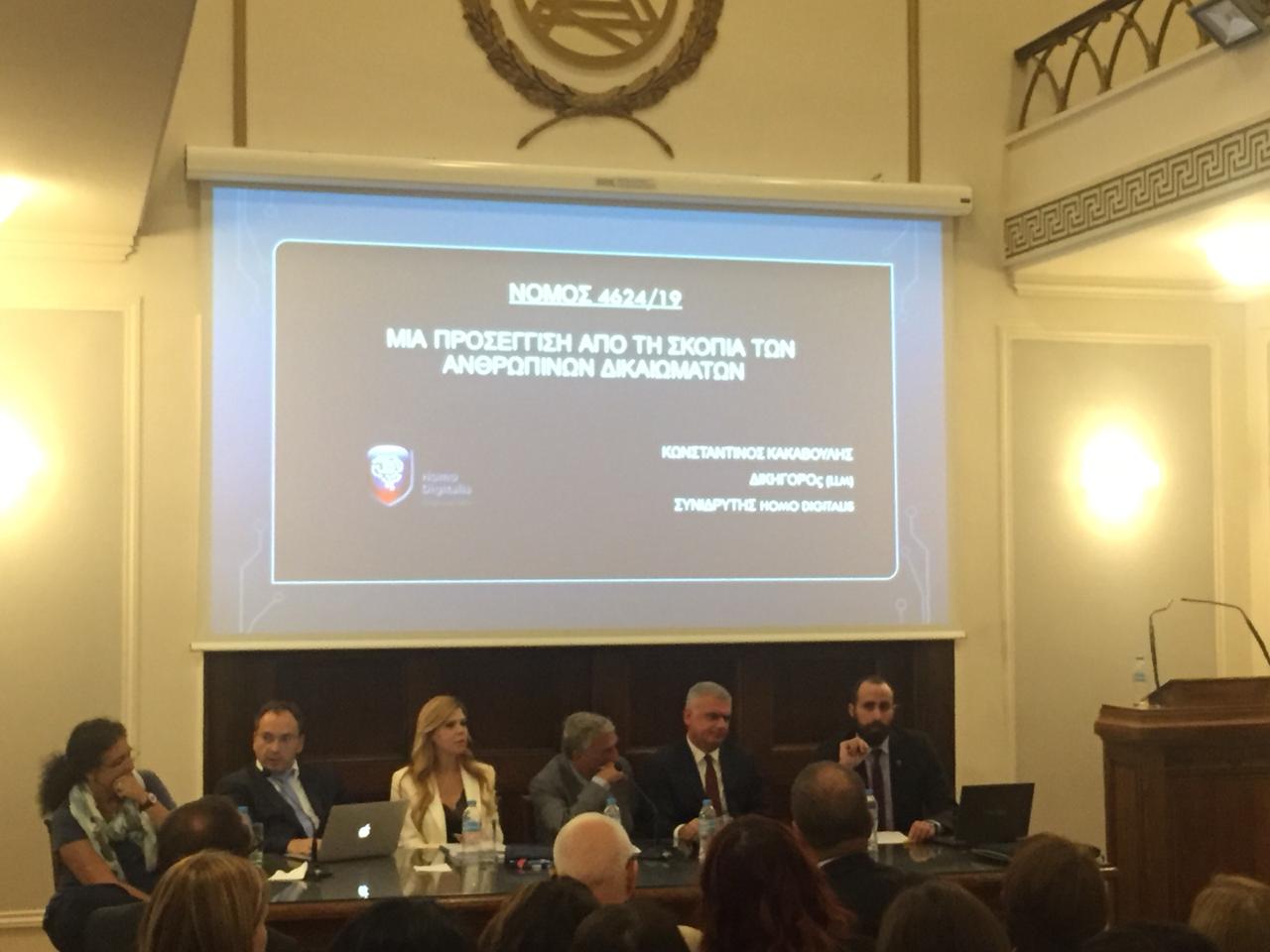
Homo Digitalis on a seminar discussion regarding Law 4624/2019
On September 24, 2019 Mr. Konstantinos Kakavoulis represented Homo Digitalis in a seminar about the initial discussion regarding the newly adopted Law 4624/2019 on personal data.
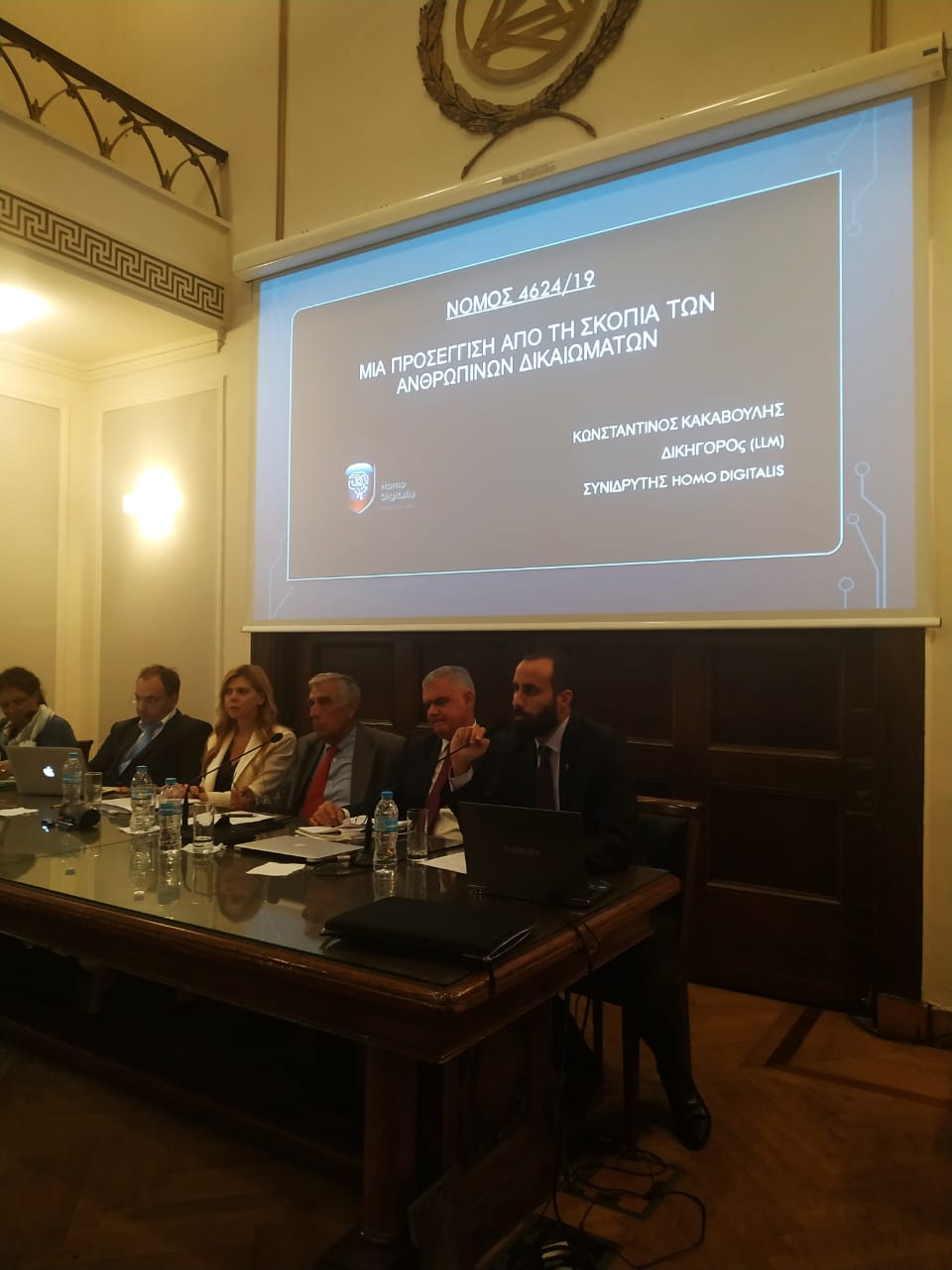
Mr. Konstantinos Kakavoulis during his presentation and speech
The event was held by the Institute for Privacy Law, Data Protection, and Technology, established by the European Public Law Organization (EPLO) and the Athens Bar Association.
Athens Bar Associations’ events venue was full of professionals and people who wanted to get informed on this new legislation and the audience was highly engaged in the discussion.
Mr. Kakavoulis’s speech was focused on human rights violation, which may result from the newly adopted law.
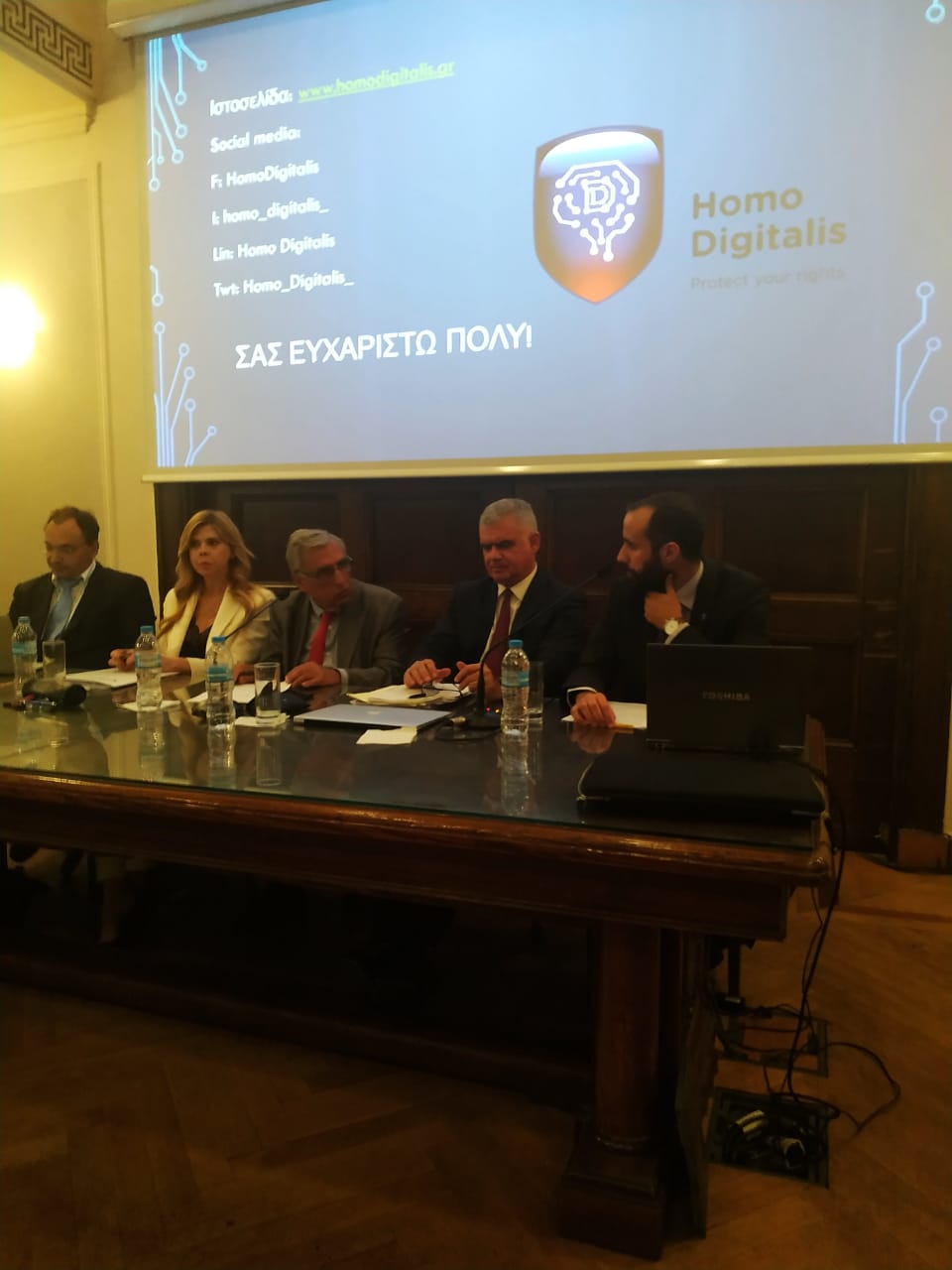
A discussion followed, the coordinator of which was the President of the Hellenic Data Protection Authority, Mr. Konstantinos Menoudakos
Homo Digitalis at Researcher’s Night 2019!
After the successful conclusion and Homo Digitalis’s participation in the Researcher’s Night 2018 in Athens, our organization is delighted to participating in the Researcher’s Night 2019 in Heraklion of Crete!
The event will take place on Friday 27 September 2019 from 17:00 p.m. to 23:00 p.m. in the premises of the Foundation for Research and Technology – Hellas (“FORTH”) and the entrance is free of any charge.
We want to wholeheartedly thank Papaki and Top.Host for the collaboration in preparing this event.
You are more than welcome to come to this interesting event and meet with Homo Digitalis team and enjoy a night of awareness and knowledge. Your presence is highly appreciated!
For more information on Researcher’s Night 2019 and other events in Greece during the Researcher’s Night 2019 click here.
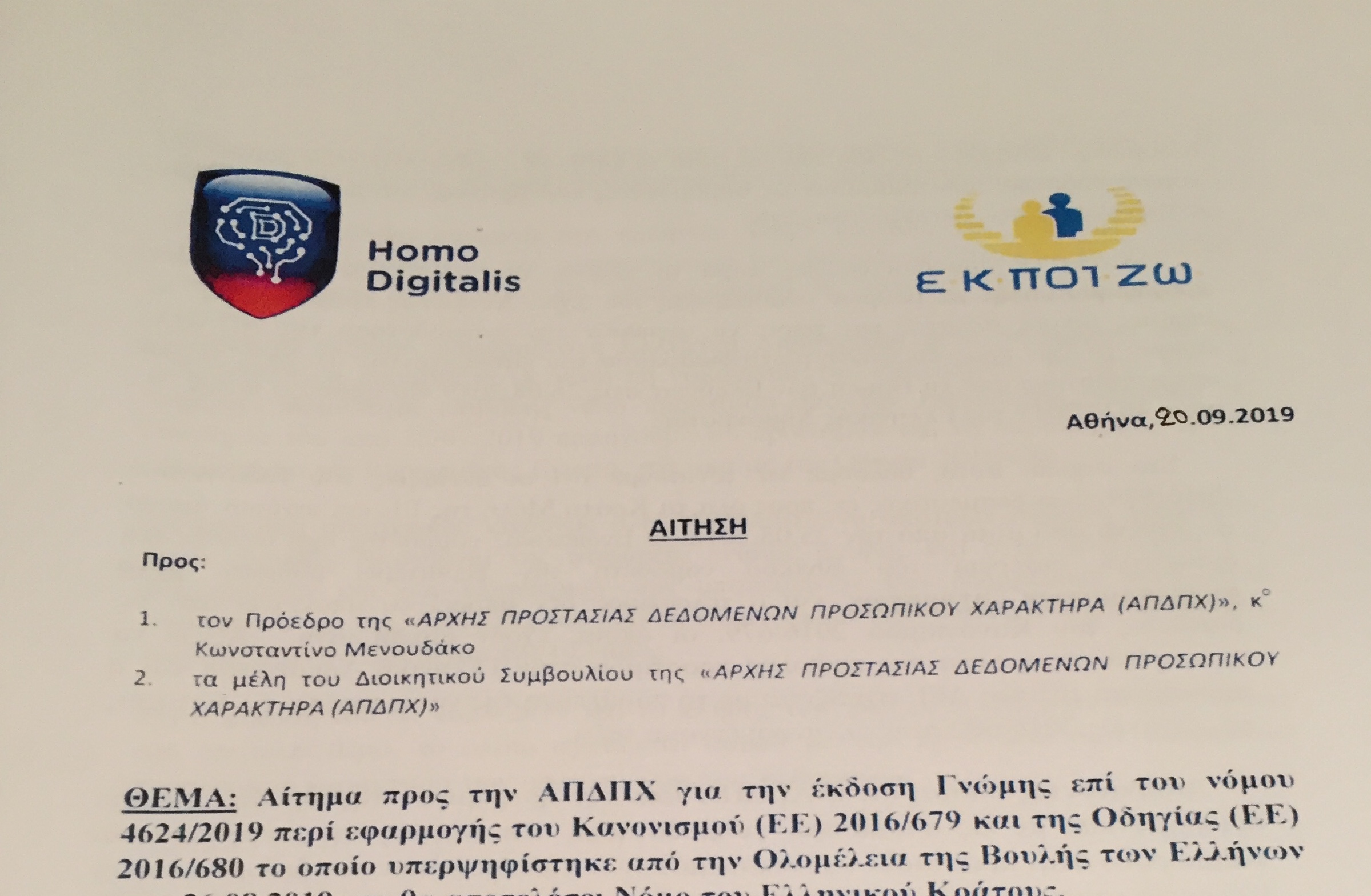
Official Request to the Hellenic Data Protection Authority for the issuance of legal opinion on Law 4624/2019
Today, Homo Digitalis and the Consumer Association “Quality of Life” (Ε.Κ.ΠΟΙ.ΖΩ), filed a request jointly before the Hellenic Data Protection Authority in order the Authority to issue a legal opinion regarding the newly adopted Law 4624/2019 implementing the Regulation (EU) 2016/679 (GDPR) and Directive (EU) 2016/680.
The Data Protection Authority has played an active and crucial role in protecting the rights of Greek data subjects with the issuance of many decisions, opinions and guidelines, and we believe once again, they will exercise their supervisory, advisory and investigative powers.
Ηowever, in the light of Article 58 GDPR, and in order to highlight the omissions of the mentioned national law, we officially filed a request today in order the Authority to issue an opinion on the consistency of Law 4624/2019 compared to the provisions of Regulation 2016/679 and Directive 2016/680.
You can view the full text of our joint official request (filing no: 6354 / 20.09.2019). The text is accessible in Greek here.
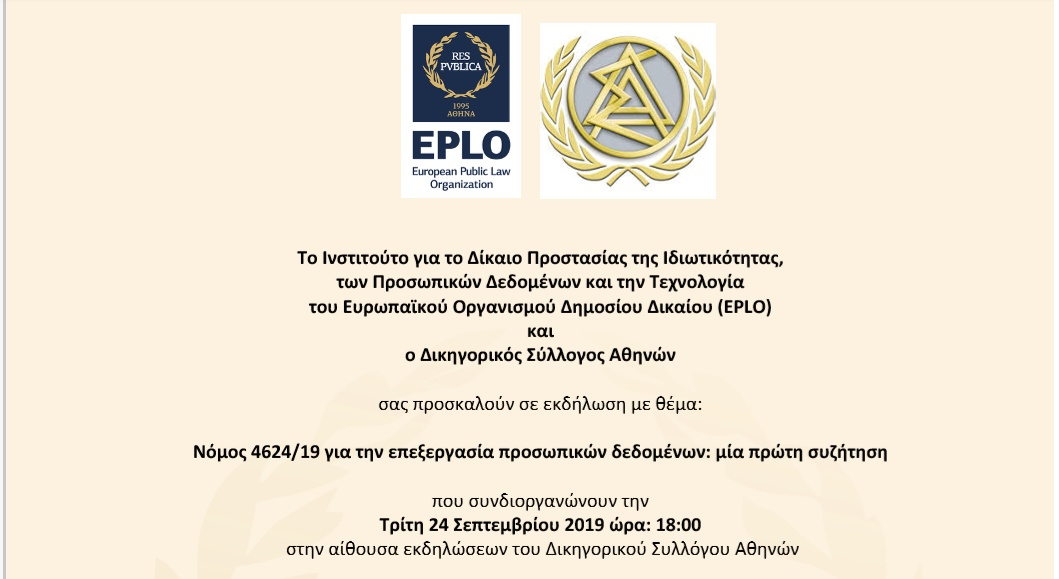
Law 4624/2019 on personal data: An initial discussion
On Tuesday the 24th of September 2019 at 6 p.m. the Institute for Privacy Law, Data Protection, and Technology, established by the European Public Law Organization (EPLO), and the Athens Bar Association are holding an event under the name:
‘Law 4624/2019 on personal data: An initial discussion’
at Athens Bar Associations’ events venue.
As the keynote speaker,representing Homo Digitalis, Mr. Konstantinos Kakavoulis will commence a discussion regarding personal data, along with distinguished academics and professionals in the personal data sector in our country.
Participating in the event will be free of charge, but due to limited spacing you are kindly requested to make a reservation by sending an email to: afiumi@eplo.int .
Detailed Events Programme:
Greeting:
Dimitrios Vervessos, Head of Athens Bar Association.
Speakers:
–Lilian Mitrou: Professor of Privacy and Information Law University of the Aegean (Dept. of Information and Communication Systems Engineering)
–Ioannis Iglezakis: Law Professor at Aristotle University of Thessaloniki
–Hara Zerva: Lawyer, D.E.A., GDPR expert, DPO,
–Konstantinos Kakavoulis: LLM – Lawyer, Homo Digitalis
–Panagiotis Perakis: Lawyer, B.O.D. member of Athens Bar Association.
Mr. Konstantinos Menoudakos, President of Hellenic Data Protection Authority (HDPA), Honorary Chairman of the Council of State, will be the events’ coordinator.
Discussion will be held afterwards.
It should be mentioned that the event will be recorded, and the proceedings will be transcribed on a later stage for their publishing. Finally, pictures will be taken.