

Report by 9 Homo Digitalis members gets accepted at CSCS 2020
We are very happy to announce that a paper by 9 Homo Digitalis members, entitled “Autonomous Vehicles: Data Protection and Ethical Considerations”, got accepted at the “4th ACM COMPUTER SCIENCE IN CARS SYMPOSIUM (CSCS 2020)”. The Conference will take place in Ingolstadt, Germany.
The paper is a result of hard work by professionals with the same passion for law, new technologies and the influence they have on our everyday lives.
The full paper shall be made available at our website in a few days.
The team consisted of: Ioannis Krontiris, Kalliopi Terzidou, Marina Zacharopoulou, Foteini Baladima, Kalliroi Grammenou, Konstantinos Kaouras, Mariliza Baka, Marina Tsikintikou and Chrysi Sakellari.
Bravo to all!

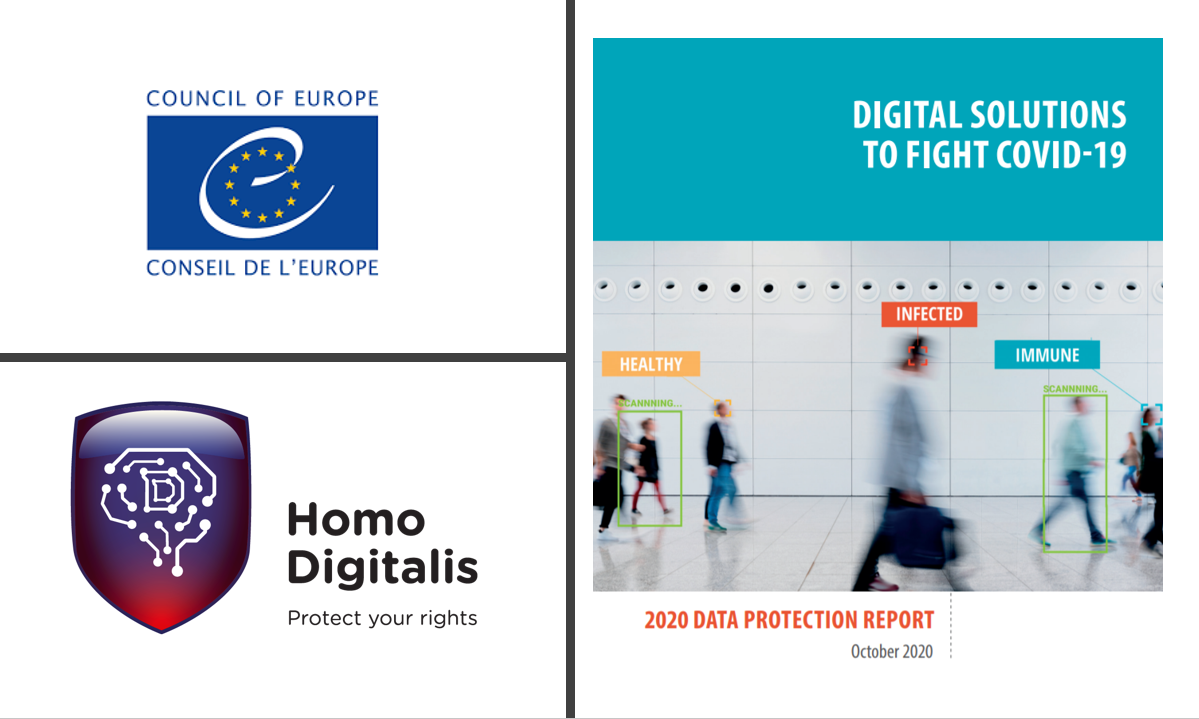
Reference to the activities of Homo Digitalis in a study by the Council of Europe
On 12th October, the Council of Europe published its study on the use of new technologies by its Member States in order to tackle the various challenges that came up during the pandemic.
On page 11 of the study, the Council of Europe is referring to the activities of our organisation as regards the use of drones by the Greek Police.
It is a great honor and joy for our organisation, the fact that our activities have drawn the attention of international organisations such as the Council of Europe.
You may read the study here.
We would like to remind you that direct reference to the activities of our organisation have been made in the past from different well-known organisations in the field of human rights, such as the two studies of the Fundamental Rights Agency (FRA).

"Technology-led Policing: Between Privacy & Security" was a big success
The event “Technology-led Policing: Between Privacy & Security”, organized by Homo Digitalis, was concluded. The main message of the event was the need for the better protection of human rights while the police authorities use new technologies. The event took place on Wednesday 30 September at Technopolis, City of Athens. Unfortunately, the audience could not attend the event with physical presence, due to coronavirus restrictions. However, the event was publicly available through live stream on YouTube.
The event was part of the Digital Ri.Se (Digital Rights & Security) project, which is being funded by the Active Citizens Fund of EEA Grants.
Prominent speakers exchanged views on the use of new technologies by the Greek Police and the legal framework in place, regarding the processing of personal data and the metadata retention.
The event focused at informing the public for the current situation and the challenges arising from it. Furthermore, the event’s aim was to enforce communication and cooperation between all stakeholders.
The event was a big success, since:
- Firstly, all the subject matter stakeholders spoke all together for the first time since 2014. The emerging need for a new legal framework was their main conclusion, if police authorities intend to use new technologies in the fight against crime. New technologies may be used only in a way, which respects human rights and freedoms. It must be noted that even though the Greek Police was not present at the event, it showed great interest for its conclusions and showed great enthusiasm for this Homo Digitalis initiative. Representatives of the Ministry of Digital Governance, the Data Protection Authority, the Authority for Communication Privacy and Security, members of the judiciary, academics, civil society representatives from Greece and the EU and journalists took part in the discussion. They all showed great enthusiasm for the level of discussion and wait for it to be continued, with a view to drafting a firm legal framework.
- Secondly, more than 750 citizens watched the event on live stream. The event is now available to watch on YouTube, with the interest on it constantly increasing.
The conclusions of the event shall also be available soon.
As Homo Digitalis, we state that this event marks only the beginning of our efforts to protect human rights, while the Greek Police successfully combats crime. in the digital era.
We warmly thank Active Citizens Fund and EEA and Norway Grants, as well as the Bodossaki Foundation and Solidarity Now. Without them, Digital Ri.Se. could not have been organized.

Homo Digitalis participates in the first CAHAI PDG meeting
The first Ad Hoc Committee on Artificial Intelligence (CAHAI) Policy Development Group (PDG) meeting took place online on 21 and 22 September.
Homo Digitalis is a CAHAI observer-member and PDG member. Our organization actively participates in discussions and the drafting of the final report, which will be presented at the end of 2020 to the Committee. Mr. Eleftherios Chelioudakis, co-founder and Secretary of the Board of Directors of our organization, represents Homo Digitalis at the PDG.
Ηοmo Digitalis takes part in the drafting of chapters 3,7 and 8 of the report.
Chapter 3 examines the challenges and opportunities for human rights arising from AI applications. You may read our proposal for Chapter 3 here.
Chapter 7 underlines the main features of an AI legal framework. You may read our proposal for Chapter 7 here.
Chapter 8 makes recommendations for the legislative framework, which will be endorsed by the Council of Europe. You may read our proposal for Chapter 8 here.
You may check out more on the report being drafted and the other members of these PDG meetings here.
The next PDG meeting will take place on 15-16 October.

AlgorithmWatch report on automated decision-making technologies for COVID-19 is here
In the beginning of September, AlgorithmWatch published its new report on the use of automated decision-making technologies in the fight against COVID-19. The report covers 16 European countries.
Homo Digitalis co-founder, Eleftherios Chelioudakis, contributed to the report, covering the situation in Greece.
The report is available here.
A new AlgorithmWatch report entitled “Automating Society II”, which will also cover Greece will soon be made available. Stay tuned!

Participation of Homo Digitalis in the proposals of the European Partnership for Democracy
The joint proposals of 29 organizations focusing on improving transparency in the field of AdTech were published on September 8th. This action was organized on the initiative of the European Partnership for Democracy.
You can find the proposals here.
Homo Digitalis in the DSA public consultation
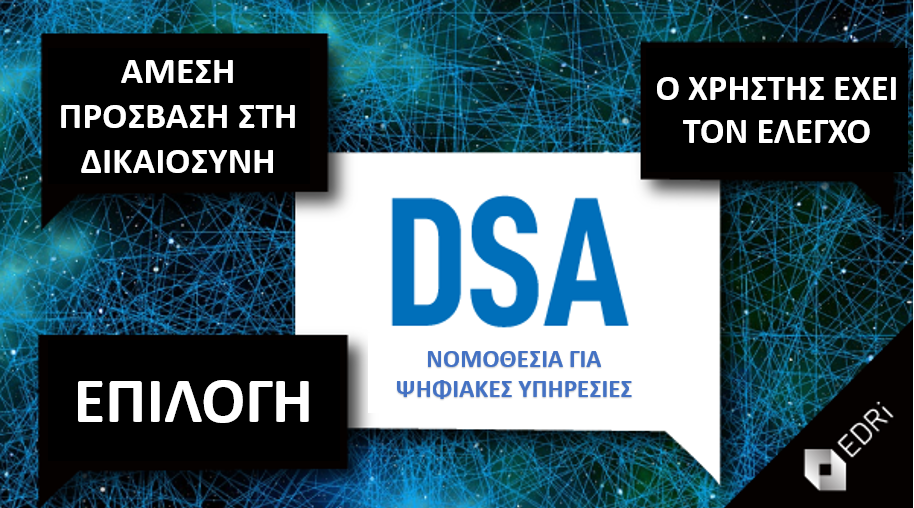
Following its input to the European Commission in June, Homo Digitalis filed extra proposals in the DSA public consultation
Our organization is very active in the field, since the new legislation will mark important developments in contemporary digital services.
You may read our answers to the Commission’s questionnaire here. You may also read our extra comments here.
European Digital Rights (EDRi) also filed its comments to the European Commission. Homo Digitalis endorsed these comments. EDRi’s input is available here.

Open Event: “Technology–led Policing: Between privacy and security”
Greek Police may currently use drones to enhance its efficiency in fighting against crime. In 2021, it is expected to receive smart devices with facial recognition software; these devices are expected to be used by police officers on patrol to process citizens’ biometric data (fingerprints and photos), in order to identify them.
Moreover, a Presidential Decree on the use of CCTV in public areas is expected soon. The media are also reporting legislative initiatives on the use of body worn cameras by certain police officers.
Despite all these developments, the Greek State has not yet revised its legislation on electronic communications’ data retention and police access to them, according to the guidelines issued by the Court of Justice of the European Union (CJEU) in 2014. It is notable that a law drafting committee was formed in 2014, but has not publicized any result until today.
A new CJEU ruling on the topic is expected in fall 2020. Prominent civil rights organizations, such as Privacy International and La Quadrature du Net play an important role in the case. Electronic communications’ metadata retention provides for the possibility of important conclusions regarding people’s privacy.
Such conclusions refer to daily activities, permanent or temporary living locations, usual transport, activities, social relations, etc.
Homo Digitalis, taking into account these developments, holds an open event in Technopolis, City of Athens on Wednesday 30 September. The purpose of this event is to inform the public on the current situation and potential challenges on human rights, but also to bring together the various stakeholders and enhance cooperation between them, with a view to ameliorating the legal framework on the topic.
Representatives by the Greek Police, the Greek Data Protection Authority, the Authority for Communication Security and Privacy, the EU Fundamental Rights Agency, as well as academics and civil society will participate in the event.
Τhe event will be available on live stream and will also be filmed and will be available online.
If you want to watch the event on live stream, please register below.
The event is part of the Digital Ri.Se. (Digital Rights & Security) project by Homo Digitalis, which takes place under the auspices of the “Active Citizens Fund”. The funding of the project comes from the EEA countries (Iceland, Lichtenstein, Norway).

Interview with Prof. Chris Brummer on cryptocurrencies and international regulatory cooperation
In recent years, cryptocurrencies have significantly grown in popularity, demand and accessibility. New “stablecoins” have emerged as a relatively low-risk asset category for institutional investors, whereas new “altcoins” have attracted retail investors due to their availability on popular fintech platforms.
These developments have amplified some of the risks inherent in the decentralized and immutable nature of the blockchain technology on which cryptocurrencies rely. Indicatively, sunk costs associated with volatility, loss of private keys or theft have become higher, whereas the financing of illicit activities has increasingly been channeled through cryptocurrencies.
We asked Chris Brummer, Professor of International Economic Law at Georgetown University*, to reflect on the importance of international regulation, standardization or regulatory cooperation in mitigating the above risks, and the challenges entailed in seeking to align or harmonize domestic regulatory approaches.
Prof. Brummer began by noting that the major risk of cryptocurrencies from an investment standpoint lies in their relative complexity — “what they are, how they operate, and the value proposition, if any, that any particular cryptoasset provides. Because of this complexity, they are difficult to price, and unscrupulous actors can exploit the relative ignorance of many investors”, Prof. Brummer explained.
As cryptoassets are inherently cross-border financial products, operating on digital platforms, the mitigation of the risks entailed in their increasing circulation and use requires international coordination.
“This could take place through informal guidelines and practices which, though not “harmonizing” approaches, should at least ensure that reforms are broadly moving in the same direction”, Prof. Brummer notes.
Countries have very different risk-reward appetites—which are defined largely by their own experiences
Achieving even a minimal degree of international consensus may nonetheless prove challenging given the existence of significant regulatory constraints at the domestic level. As Prof. Brummer explains, “for one, although the tech may be new, regulators operate within legacy legal systems. And national jurisdictions don’t identify crypto assets in the same way, in part because they identify just what is a “security” differently, and also define key intermediaries differently, from “exchanges” to “banks.” And these definitions can be difficult to modify — in the U.S. it’s in part the result of case law by the Supreme Court, whereas in other jurisdictions it may be defined by national (or in the case of the EU, regional) legislation. Coordination can thus be tricky, and face varying levels of practical difficulty.”
Apart from key differences in existing domestic regulatory structures, there may also be a mismatch in incentives across different jurisdictions. “Countries have very different risk-reward appetites—which are defined largely by their own experiences”, Prof. Brummer explains. “Take for example how cybersecurity concerns have evolved. Japan was one of the most crypto friendly jurisdictions in the world. Its light touch regulatory posture, began to change when its biggest exchange, Coincheck, was hacked, resulting in the theft of NEM tokens worth around $530 million. Following the hack, Japanese regulators required all the exchanges in the country to get an operating license. In contrast, other G20 countries like France have been more solicitous, and have even seen the potential for modernizing their financial systems and gaining a competitive advantage in a fast-growing industry, especially as firms reconsider London as a financial center in the wake of Brexit. Although not dismissive of the risks of crypto, France has introduced optional and mandatory licensing, reserving the latter for firms that seek to buy or sell digital assets in exchange for legal tender, or provide digital asset custody services to third parties.”
Users in different jurisdictions may face different regulatory constraints or enjoy varying degrees of regulatory protection
Another limiting factor of international coordination is the proliferation of domestic and international regulatory authorities. Prof. Brummer observes that “international standard-setters don’t always agree on crypto approaches, and neither do agencies within countries. International standard-setters and influencers themselves have until recently espoused very different opinions, with the Basel Committee less impressed, and the IMF—committed to payments for financial stability, more intrigued. And even within jurisdictions, regulatory bodies can take varying views. In the US, for example, the SEC has at least been seen to be far more wary of crypto than the CFTC; similarly, from an outsider’s perspective, the ECB’s stance has appeared to be more cautious than, say ESMA’s.”
For the time being, international regulatory cooperation appears to be evolving slowly, in light of the limitations listed above by Prof. Brummer. Users in different jurisdictions, even within the EU, may therefore face different regulatory constraints or enjoy varying degrees of regulatory protection. The Bank of Greece, for one, has issued announcements adopting the views of European supervisory authorities warning consumers of the risks of cryptocurrencies, but has yet to adopt precise guidelines. Yet, as stablecoin projects popularized by established commercial actors gain popularity, we may soon begin to see a shift in international regulatory pace, possibly toward a greater degree of convergence.
* Chris Brummer is the host of the popular Fintech Beat podcast, and serves as both a Professor of Law at Georgetown and the Faculty Director of Georgetown’s Institute of International Economic Law. He lectures widely on fintech, finance and global governance, as well as on public and private international law, market microstructure and international trade. In this capacity, he routinely provides analysis for multilateral institutions and participates in global regulatory forums, and he periodically testifies before US and EU legislative bodies. He recently concluded a three-year term as a member of the National Adjudicatory Council of FINRA, an organization empowered by the US Congress to regulate the securities industry.
** Photo Credits: Jinitzail Hernández / CQ Roll Call