Homo Digitalis successfully participated in the Digital World Summit Greece 2025
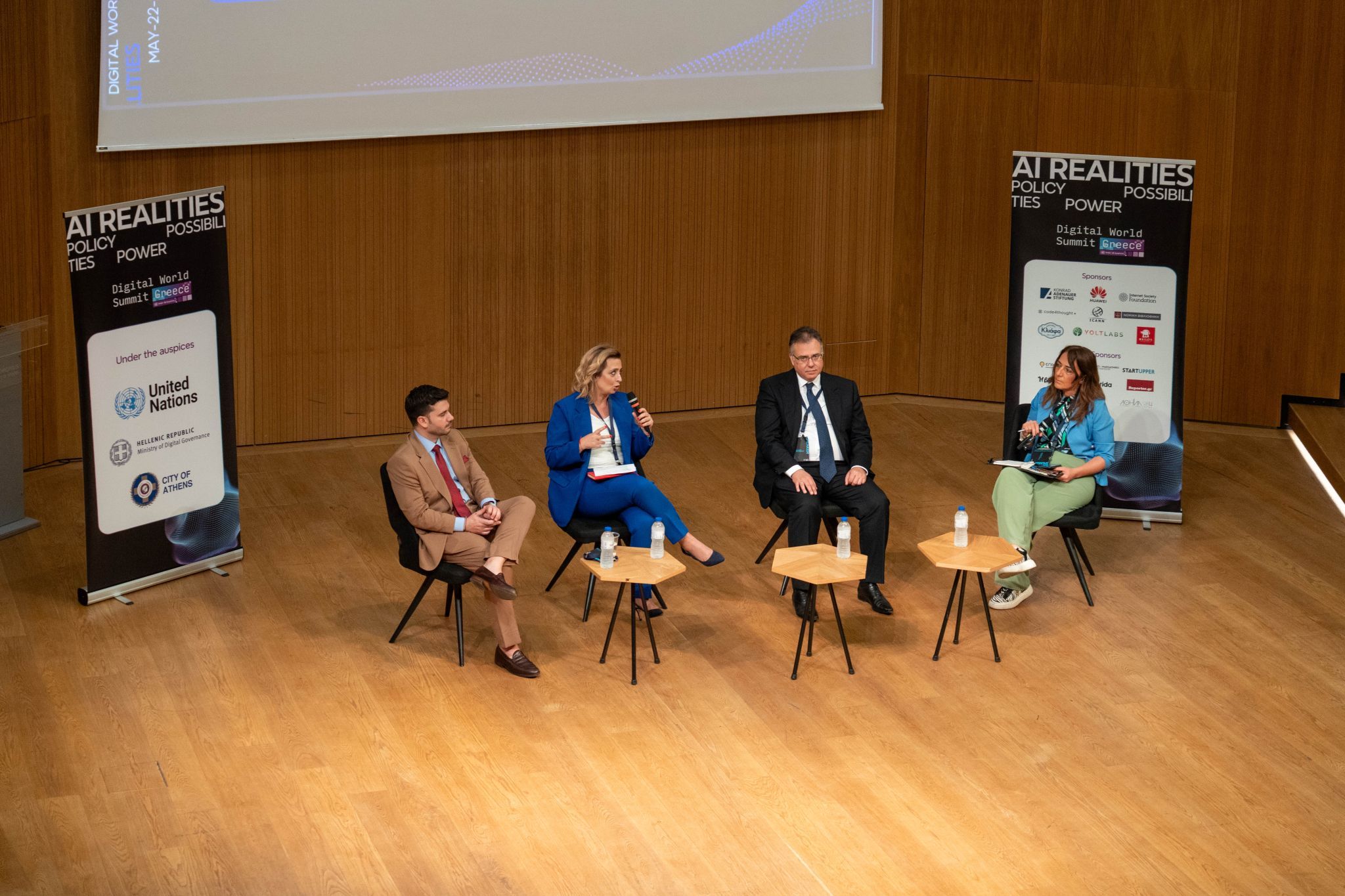
Last week, the Co-Founder of Homo Digitalis, Stefanos Vitoratos, spoke at the Digital World Summit Greece about the next steps in the evolution of Artificial Intelligence, what we can expect over the next decade, and best practices that can help create a safer environment.
“Artificial Intelligence is not going to wipe out human labor; as in every phase of technological transition, what changes is not the need for work, but the environment and the way it is carried out. What is required is adaptation and active participation in the new reality,” he emphasized.
You can watch highlights from the speech in the video here.
We warmly thank the organizers for this opportunity to collaborate, as well as the fellow speakers and the panel moderator for the fruitful discussion!

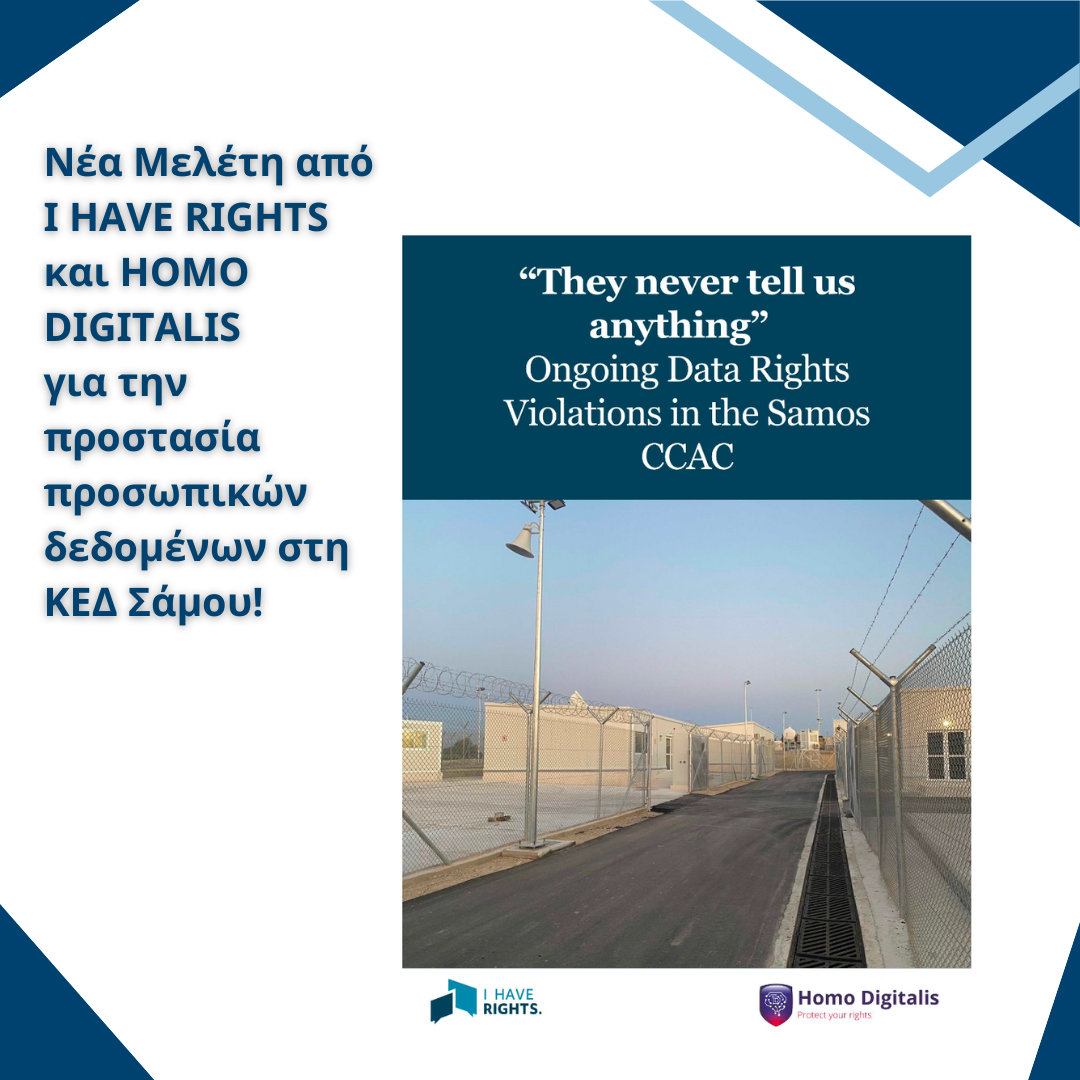
I HAVE RIGHTS and Homo Digitalis Publish Report on the Situation in the Samos Closed Controlled Access Centre (CCAC) One Year After the Fine Issued by the Hellenic Data Protection Authority for KENTAURUS and HYPERION Systems
The Hellenic Ministry of Migration (MoMA) continues to violate data protection rights of asylum seekers in the Samos Closed Control Access Centre (CCAC), I Have Rights and Homo Digitalis said in a report released today.
The report, titled “They Never Tell Us Anything”: Ongoing Data Rights Violations in the Samos CCAC analyses the implementation of a compliance order issued by the Hellenic Data Protection Authority (HDPA) in April 2024. In this historic ruling, the HDPA had found that MoMA’s use of surveillance technologies in reception facilities across Greece, including biometric access systems and surveillance infrastructure tools violates EU data protection laws (GDPR).
Ten months after the passing of the implementation period in July 2024, the report finds that MoMA has failed to comply with the order. “The ongoing violations of data protection rights in the Samos CCAC are emblematic of a system where control and surveillance are prioritised over the rights of those seeking protection” said Réka Rebeka Rósa, Legal and Team Coordinator at I Have Rights. “The European Union should press Greek authorities to address prevailing rights violations. Otherwise, these violations risk becoming a blueprint for further (digital) rights abuse of people on the move across Europe.”
The Samos CCAC opened in September 2021 as the first of the now existing five facilities in Greece, following an agreement between the European Commission and the Greek Government in 2020. Since its opening, NGOs, international human rights experts and people held in the facility have consistently raised concerns about the facility’s securitised infrastructure, de facto detention practices, and inadequate living conditions.
These concerns are exacerbated by the overall lack of transparency in the Greek asylum procedure and opaque surveillance system in the Samos CCAC.
As one client explained about the intransparency of biometric data collection: “No, no one explains it. They only take fingerprints and take us from one place to another, and we do it without knowing why. There is no person to explain what is happening.”
Greece has legal and moral obligations to uphold fundamental rights and data protection rights of asylum seekers, as enshrined in the European Charter of Fundamental Rights and GDPR. The European Union, in particular the European Commission – given its central role in conceptualising, financing, operating, and monitoring the CCACs in Greece – bears responsibility to ensure that these standards are fully respected. “The continued lack of GDPR compliance, in terms of transparency and accountability in the deployment of the Centaur and Hyperion surveillance systems, at the Samos CCAC reflects a disturbing erosion of the fundamental rights. By failing to meet even the basic requirements of data protection in practice, MoMA is reinforcing a dangerous trend of surveillance-driven border management that dehumanizes people on the move” said Eleftherios Chelioudakis, Executive Director at Homo Digitalis.
Homo Digitalis Successfully Participates in TEDxPatras Representing NGI TALER
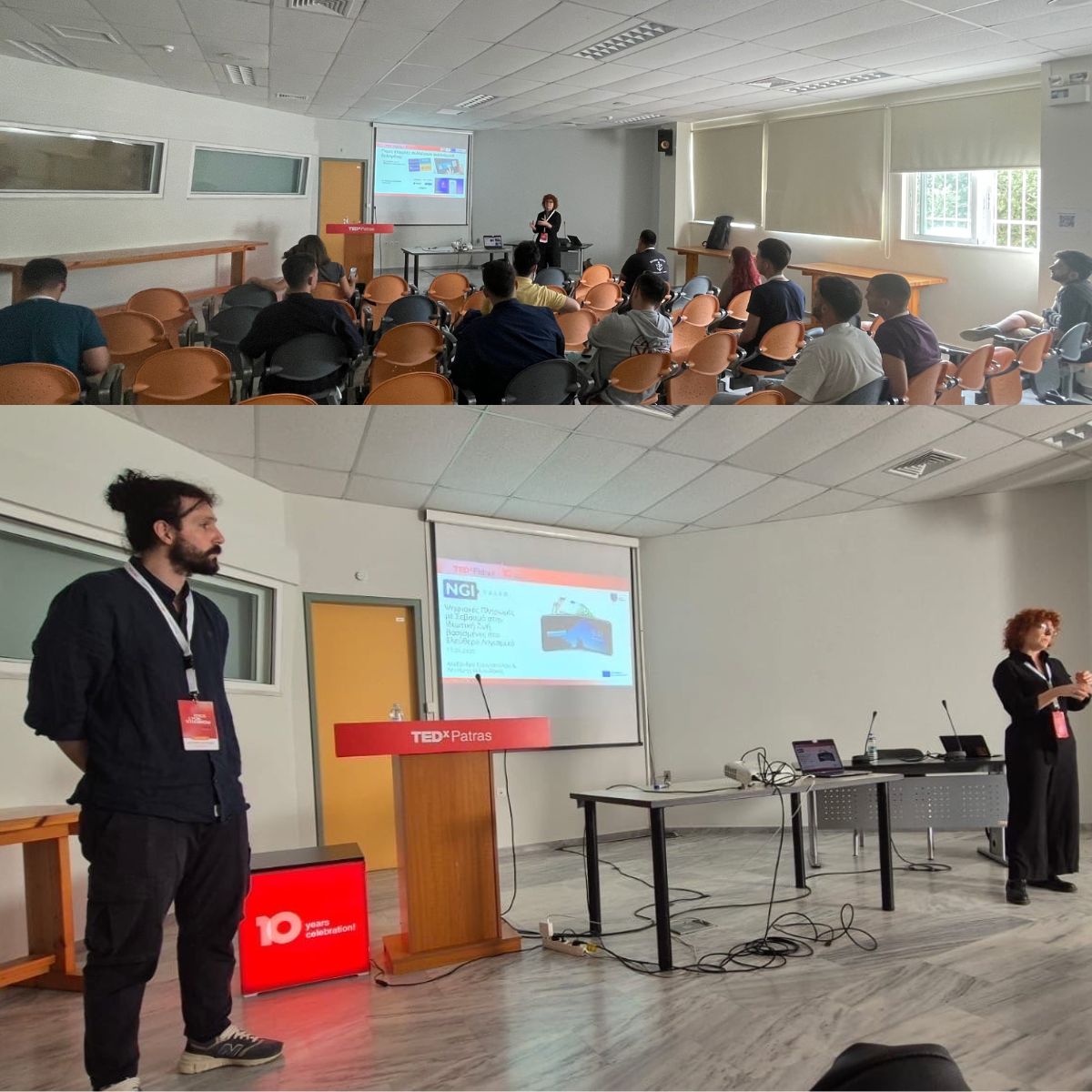
On May 17, Homo Digitalis had the great honor of participating in TEDxPatras at the Conference and Cultural Center of the University of Patras, proudly representing NGI TALER!
We delivered a 40-minute workshop, during which we had the opportunity to discuss digital payments, business models that track consumer behavior for profit, the relevant legal framework, and the importance of reshaping the future of digital payments with a focus on privacy protection and promoting free software solutions like GNU TALER (Taler Systems S.A.).
Our presentation also highlighted the ongoing funding calls under the NGI TALER project, as well as the academic materials that have been developed and are freely available on the NGI TALER website.
Alexandra Giannopoulou and Eleftherios Chelioudakis represented Homo Digitalis at this event.
We warmly thank the organizers for the opportunity to participate!
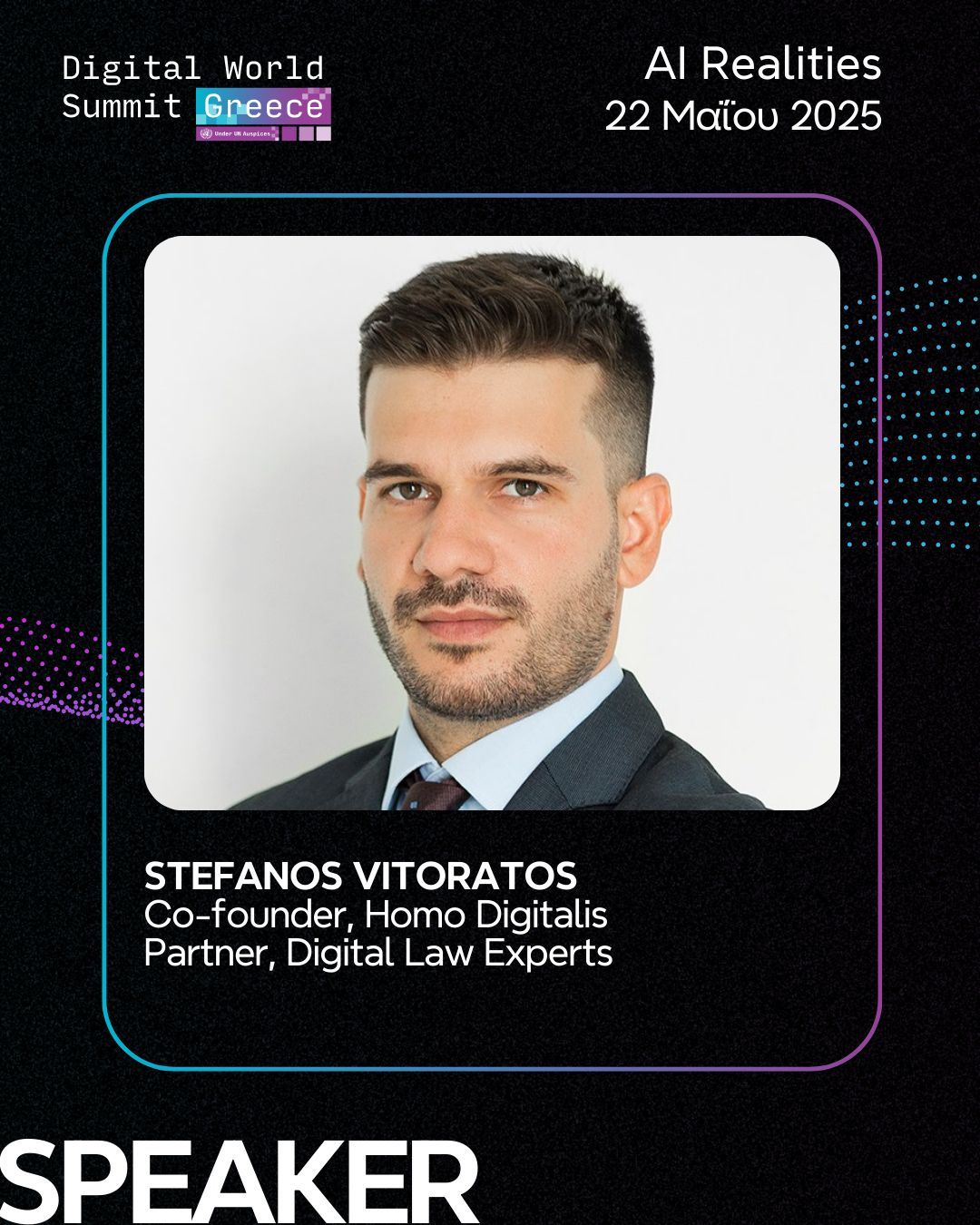
Homo Digitalis speaks at Digital World Summit Greece
Speaker Announcement | Digital World Summit Greece 2025 – 22/05/2025
We are pleased to announce that Stefanos Vitoratos will represent Homo Digitalis as a speaker on the second panel of Digital World Summit Greece 2025, titled:
“The Future of Artificial Intelligence: The Next Decade in AI Development and Best Practices.”
Register here to attend the conference for free, either in person at Technopolis City of Athens or online.
Stefanos Vitoratos is a Co-founder of Homo Digitalis and Managing Partner at Digital Law Experts (DLE), specializing in data protection compliance, cybersecurity, and artificial intelligence.
He is a member of the European Data Protection Board (EDPB) Pool of Experts for Greece, Co-Chair of the Hellenic Knowledgenet Chapter of the International Association of Privacy Professionals (IAPP), and has been awarded the title Fellow of Information Privacy (FIP) by IAPP, holding both CIPP/E and CIPM certifications.
He is also a member of the Research Group of the Center for AI & Digital Policy (CAIDP) and collaborates with the European Commission as an Ethics Expert for funded projects. In the past, he has served as a consultant for leading companies in Greece as well as at the Permanent Representation of Greece to NATO.
In parallel, he is pursuing his academic path as a PhD Candidate in the Department of Public Administration at Panteion University, focusing on AI in public administration and public-private cooperation in relevant projects. He holds a Law degree from the National and Kapodistrian University of Athens, and two Master’s degrees from City, University of London and Panteion University.
He frequently delivers professional seminars, publishes scholarly articles, and participates in academic conferences as a speaker or moderator.
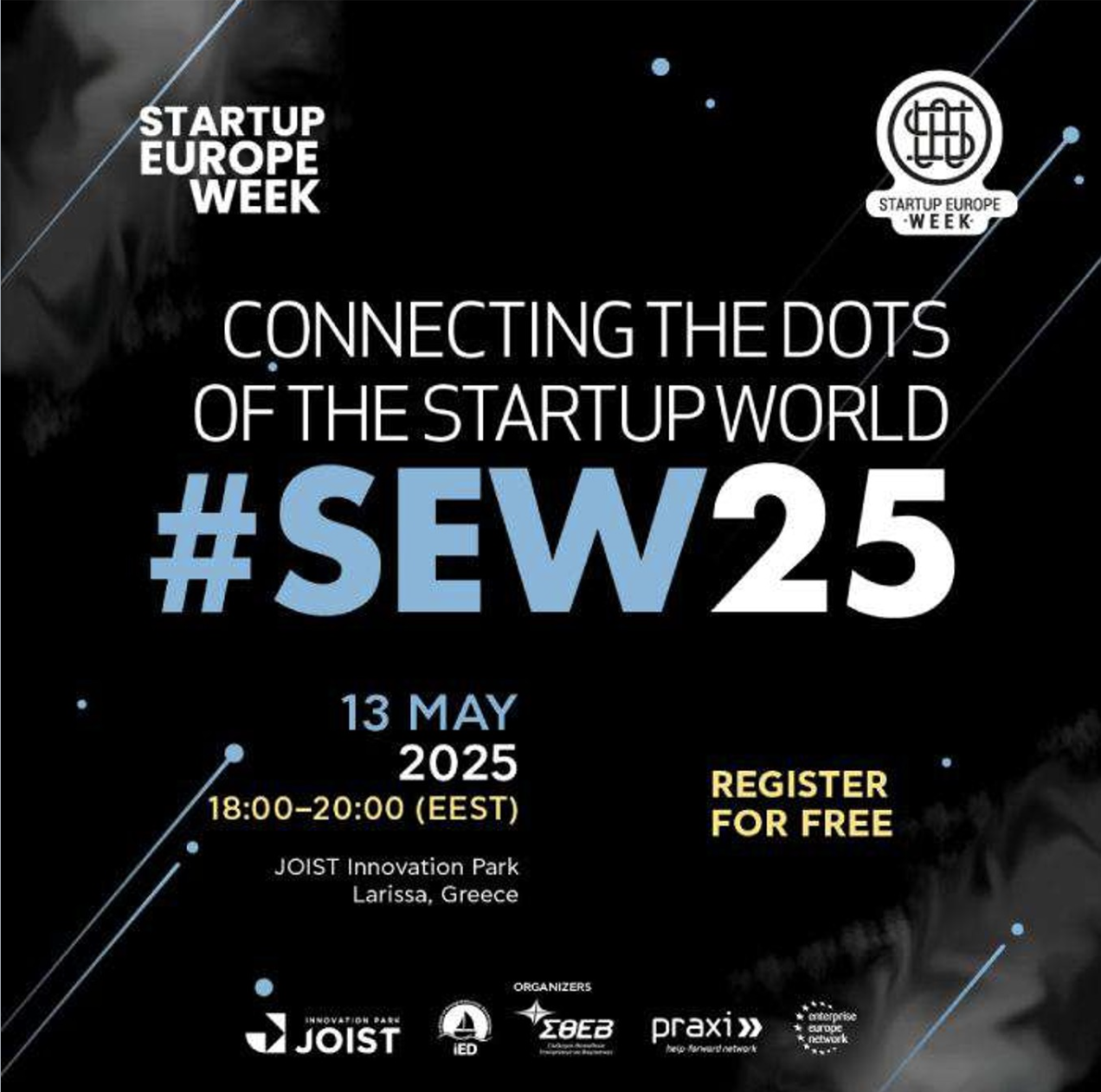
Homo Digitalis at Startup Europe Week 2025 of JOIST Park
Στις 13 Μαΐου, σε περιμένουμε στο JOIST Innovation Park, εκεί όπου η καινοτομία συναντά τις ευκαιρίες.
Το φετινό event συγκεντρώνει πρωτοπόρους στην τεχνητή νοημοσύνη, την κυβερνοασφάλεια, την επιστημονική έρευνα και την επιχειρηματικότητα χωρίς σύνορα – για μια ημέρα γεμάτη τολμηρές ιδέες και ουσιαστικό αντίκτυπο.
Τι περιλαμβάνει το πρόγραμμα;
AI, Cybersecurity, and the Future of Startups
• Λαμπρινή Γυφτοκώστα – Homo Digitalis
• Αναστάσιος Αραμπατζής – Ειδικός Κυβερνοασφάλειας
• Παναγιώτης Πιέρρος – TicTac S.A.
Bridging the Gap: Turning European Scientific Research into Startups
• Ιωάννης Κουρούτζης – Πανεπιστήμιο Θεσσαλίας
• Φώτης Τέκος – Foodoxys / Olea Fortius
• Κέλλυ Παπαδοπούλου – Pi tech
• Κωνσταντίνος Ακρίβος – Indeex
Scaling Startups Across Borders in Europe
• Λάμπρος Κούρτης – Επενδυτής & Μέλος VC
• Manuel Seuffert – IMP³ROVE Academy
• Αχιλλέας Μπαρλάς – Enterprise Europe Network Hellas
Είσαι έτοιμος να συνδεθείς με το ευρωπαϊκό startup οικοσύστημα;
Κάνε εγγραφή εδω.
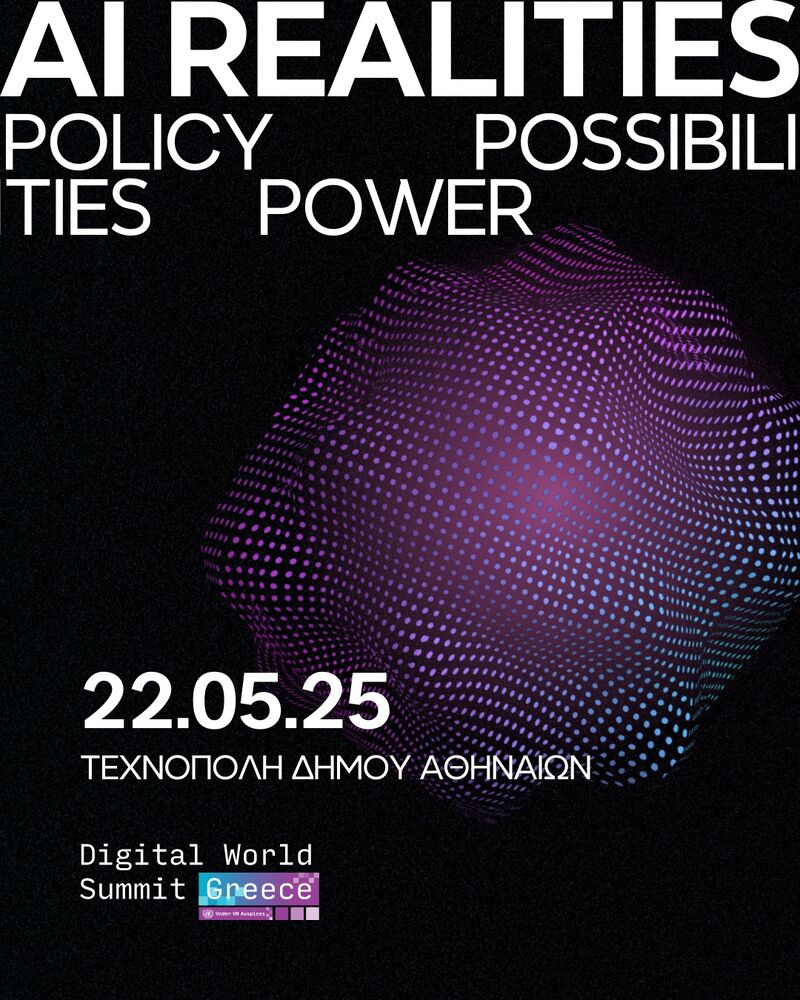
Homo Digitalis is once again participating in the Digital World Summit Greece "AI Realities: Policy, Possibilities, Power"
The Digital World Summit Greece returns in 2025, taking place in Athens on Thursday, May 22, to shape the ongoing discussion around the developments and realities of Artificial Intelligence at a technological, political, social, and cultural level.
This year’s conference focuses on three key pillars:
Opportunities and challenges for Greece as a hotspot of technological advancement
The next steps in AI evolution and best practices
Safe development and use of Artificial Intelligence
Renowned speakers and representatives from the government, private and public sector, civil society, as well as the technical and academic community, will gather to discuss and propose solutions regarding crucial aspects of AI use and governance at national, European, and global levels.
The event will conclude with networking drinks.
Thursday, May 22 | 10:00–18:30 at Technopolis City of Athens– “Miltiadis Evert” Amphitheatre & Online
Free admission (registration required). Secure your spot and help shape the Future of Artificial Intelligence here.
Stay tuned to Digital World Summit Greece‘s channels for more updates on themes and speakers!
Article 77 of the AI Act: 6 months after the designation of the Fundamental Rights Authorities
On the first official deadline set by the Artificial Intelligence Regulation (AI Act), it required member states to appoint one or more authorities in accordance with Article 77 for the protection of fundamental rights by November 2, 2024.
Today, May 2, 2025 — six months after the deadline — 25 out of the 27 European countries have appointed a total of 210 authorities, a number that seems staggering and at the same time sends a strong message about how seriously these countries take the issue of fundamental rights. But does it reflect reality?
With this brief study, we aim to provide answers to the following questions:
What is the purpose of Article 77 of the AI Regulation?
Which authorities have been appointed by the member states to date?
What powers does the AI Regulation actually grant to these regulatory authorities, and what obligations arise from Article 78 of the AI Regulation regarding the confidentiality of information?
Who are the four national authorities that have taken on this role, what are their existing and new powers under the AI Regulation?
Through a case study, our Director on Fundamental Rights and AI, Lamprini Gyftokosta, attempts to explore how these authorities will cooperate, while also raising some questions that will undoubtedly concern us over time.
You can read our study here (EL).
Homo Digitalis at TEDx Patras
TEDxPatras returns for its 10th anniversary edition, bringing to the forefront powerful ideas, innovative approaches, and experiences that reshape the way we view the future, under the theme “Once Upon Tomorrow.”
On Saturday, May 17, 2025, the Conference and Cultural Center of the University of Patras will host the largest TEDxPatras event to date, featuring a unique program that includes renowned speakers, interactive workshops, networking hubs, and original experiences for all participants.
Homo Digitalis is proud to participate in this year’s event as a Community Partner, and we are excited to be hosting a dedicated workshop presenting the mission of NGI TALER!
The goal of the workshop is to explain the challenges in digital payments and the solutions offered by the NGI TALER payment tool, as well as to highlight funding opportunities available through the NGI – Next Generation Internet programs.
Our representatives at the event will be Eleftherios Chelioudakis and Alexandra Giannopoulou.
We warmly thank the organizing team for the kind invitation and the great collaboration!
Book your ticket here.
More information about the workshop available here.
We publish our 4th Study on the AI ACT – Comparative overview of the provisions on the rights of affected individuals
Today, April 11, 2025, Homo Digitalis publishes its fourth study on the provisions of Regulation 2024/1689 on Artificial Intelligence (AI), widely known as the AI Act.
This study focuses on the right to explanation and the right of individuals not to be subject to automated decision-making.
Specifically, the use of artificial intelligence systems for making automated decisions is continuously expanding in both the public and private sectors, with significant impacts on the individuals subjected to them.
Therefore, this study examines the legal remedies available to individuals affected by decisions made through the use of AI. The analysis focuses on the right to an explanation of individual decision-making as provided in Article 86 of Regulation 2024/1689. However, since the protection of affected individuals is not limited solely to these provisions, the analysis extends to the right to contest individual decision-making, which—under appropriate interpretation—is based on Article 22 of Regulation 2016/679, known as the GDPR.
The study’s authors are two distinguished legal professionals and volunteer members of Homo Digitalis: Maria-Evangelia Konstantopoulou and Stratygia-Danai Skevi (listed alphabetically).
You can read our 4th study here.
We remind you that we have published three previous studies on Regulation 2024/1689 and its transposition into the Greek legal order: in October (impact assessment on fundamental rights), November (AI governance and competent supervisory authorities), and December (prohibited practices) of 2024, respectively.
This intensive effort aims to contribute constructively to the public dialogue in Greece and at the EU level in the field of artificial intelligence, and it is the result of significant support from the European Artificial Intelligence & Society Fund.