Homo Digitalis successfully participated in a scientific online event on the Digital Omnibus package
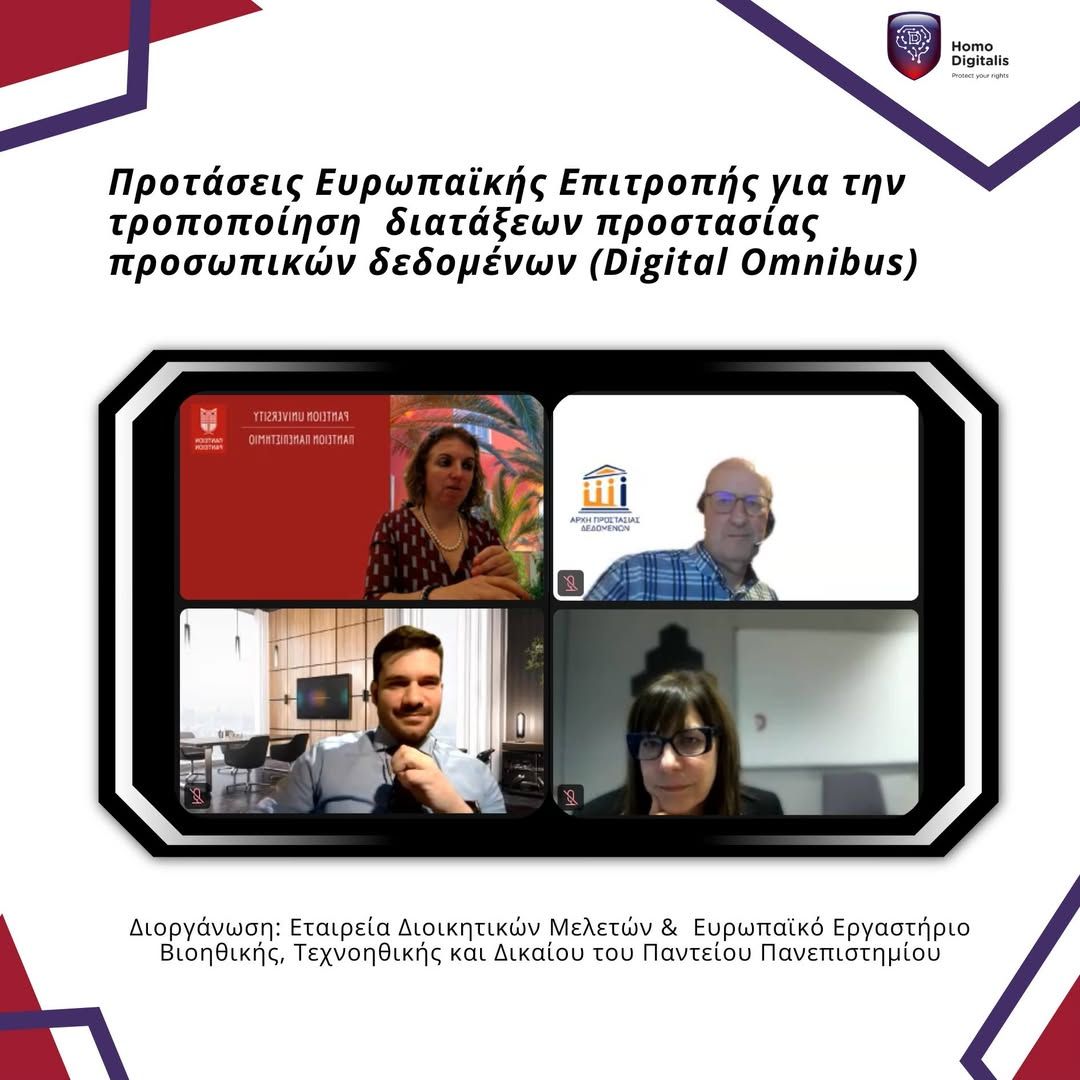
On Thursday, February 26, 2026, Homo Digitalis had the honor of delivering a presentation at a scientific online event organized by the Society of Administrative Studies in collaboration with the European Laboratory for Bioethics, Technoethics and Law of Panteion University, on the topic of the European Commission’s proposals to amend provisions on personal data protection (Digital Omnibus).
Homo Digitalis was represented by Stefanos Vitoratos, while presentations were also delivered by Dr Giorgos Rousopoulos (Hellenic Data Protection Authority) and Dr Zoe Kardasiadou (Official at the European Commission, Directorate-General for Justice and Consumers).
The discussion was moderated by Dr. Fereniki Panagopoulou-Koutnatzi, Associate Professor at Panteion University, while opening remarks were delivered by Dimitrios Skaltsounis, President of the Society of Administrative Studies and former President of the Council of State.
We express our warm thanks to the organizers for the honorable invitation and for the opportunity they offered us to participate in a fruitful dialogue and a meaningful exchange of arguments and views.

Homo Digitalis successfully completed its participation in the AI & Ethics Conference
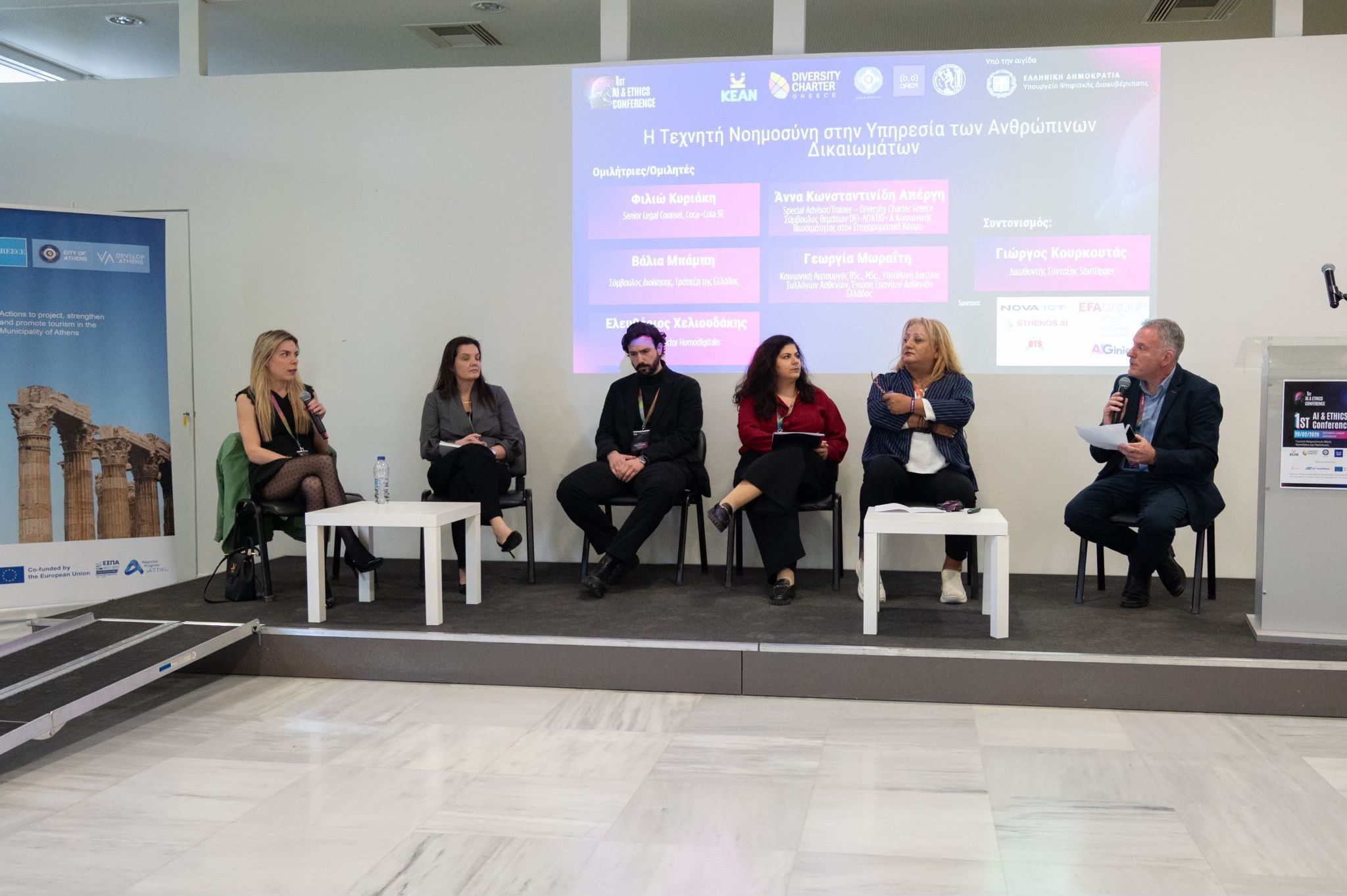
On Friday, February 20, Homo Digitalis had the great pleasure of speaking at the AI & Ethics Conference!
The conference panels sparked discussions with a critical perspective, while public institutions, the academic community, the market, and civil society exchanged ideas and views on how artificial intelligence can remain human-centered while also being compatible with the protection of Fundamental Rights.
We would like to warmly thank the organizers for their kind inclusion, KEAN – Cell of Alternative Youth Activities, as well as Raina Melissinou and Konstantinos Kechagias for their gracious invitation. Our team was represented by our Executive Director, Eleftherios Chelioudakis.
Open Call on AI, Intellectual Property, and Culture
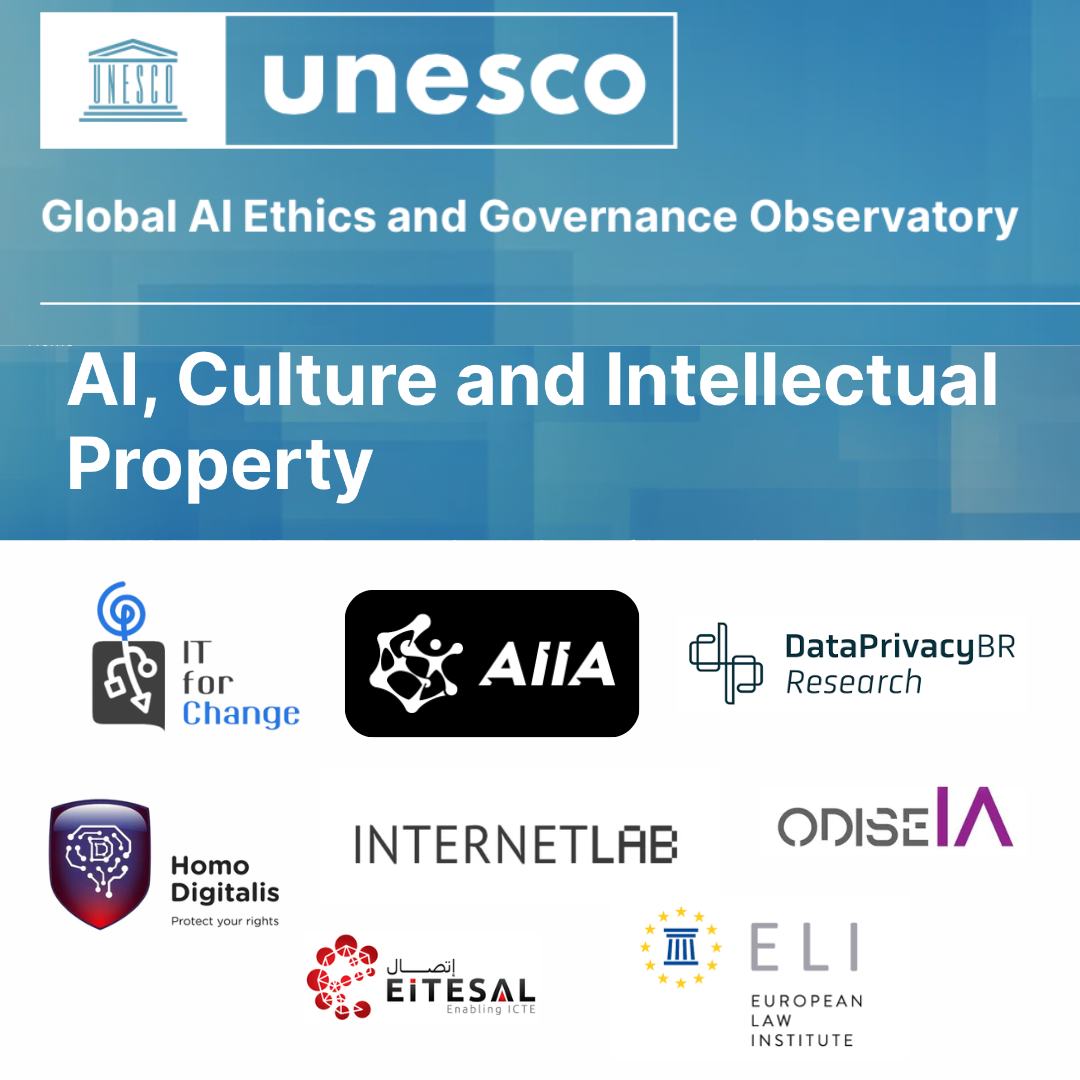
In the context of the UNESCO’s Global AI Ethics and Governance Observatory, the Subgroup on AI, Culture and Intellectual Property has launched an open call for contributions to co-design a civil-society-led Repository on AI, Intellectual Property and Culture.
The initiative aims to strengthen responsible AI governance by supporting CSOs, artists and cultural organizations working at the intersection of AI, cultural rights and knowledge commons. Broad participation is essential to ensure the repository is inclusive, rights-based and grounded in real-world practice.
Submission Deadline is: March 16th, 2026 (11:59 PM ET). You can find more information and apply here.
The subgroup is composed of IT for Change, AI Impact Alliance, Data Privacy Brasil, Homo Digitalis, InternetLab, OdiseIA, EITESAL NGO and European Law Institute (ELI).
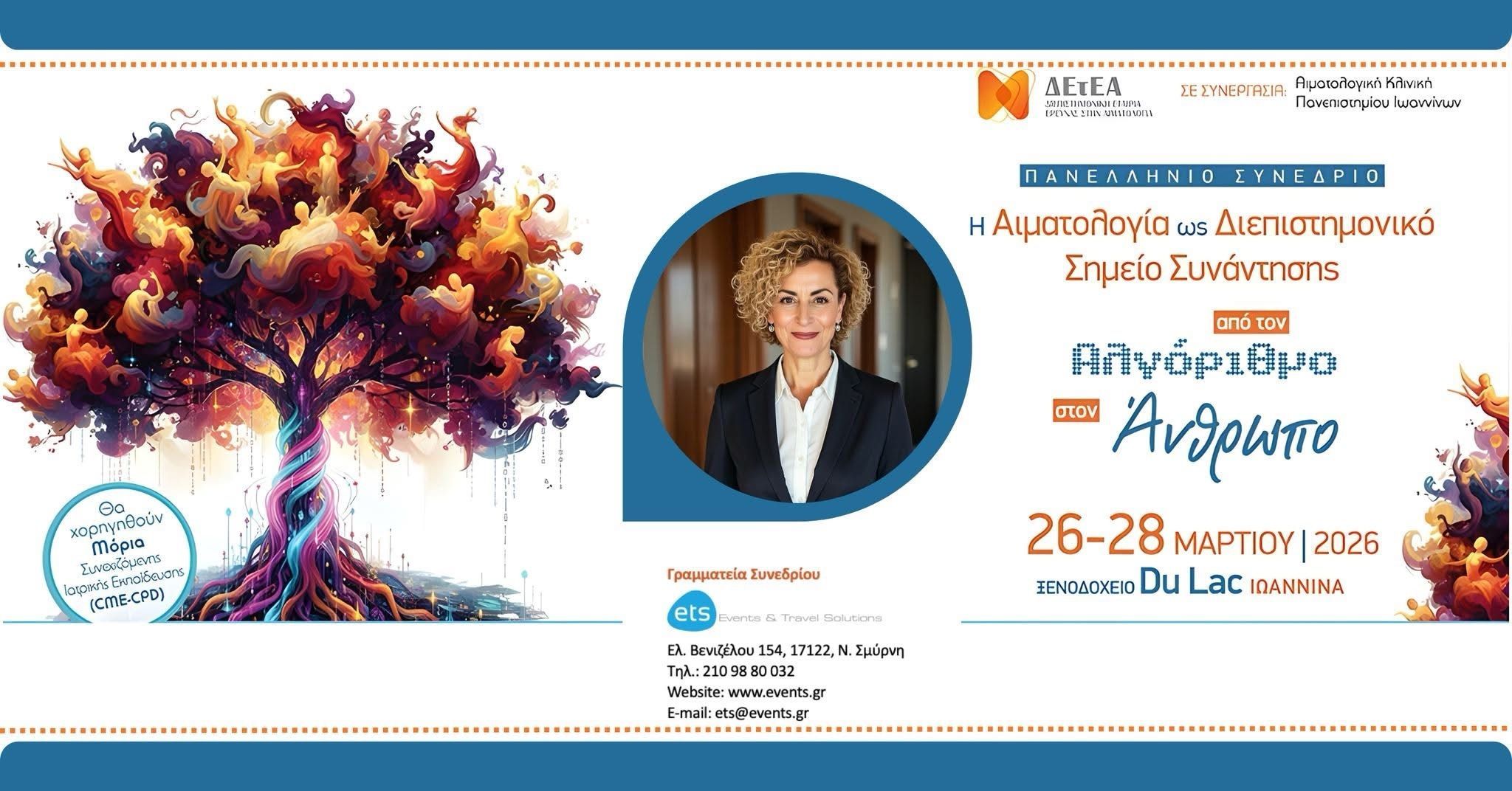
Homo Digitalis participates in the Panhellenic Conference “Hematology as an Interdisciplinary Meeting Point: From the Algorithm to the Human”
What does it mean to put the Human above the Algorithm? This question lies at the heart of the Panhellenic Conference “Hematology as an Interdisciplinary Meeting Point: From the Algorithm to the Human”, organized by the Interdisciplinary Society for Research in Hematology on March 26–28, 2026, in Ioannina.
Three days of free debates, AI workshops, interdisciplinary sessions, and open discussions on topics that are rarely spoken about openly — from toxic behavior in hospitals to patients’ rights in the age of data.
We warmly thank hematologist and Associate Professor of Hematology at the School of Health Sciences, Department of Medicine, University of Ioannina, Eleftheria Chatzimichail, for the honorable invitation to Homo Digitalis and other members of the Greek AI Network (GAIN) to participate.
Our member, Dimos Kostoulas, will represent Homo Digitalis at the event.
The countdown has begun, and we look forward to seeing you there!
Free registrations: https://ets.betterevents.live/form/diep2026
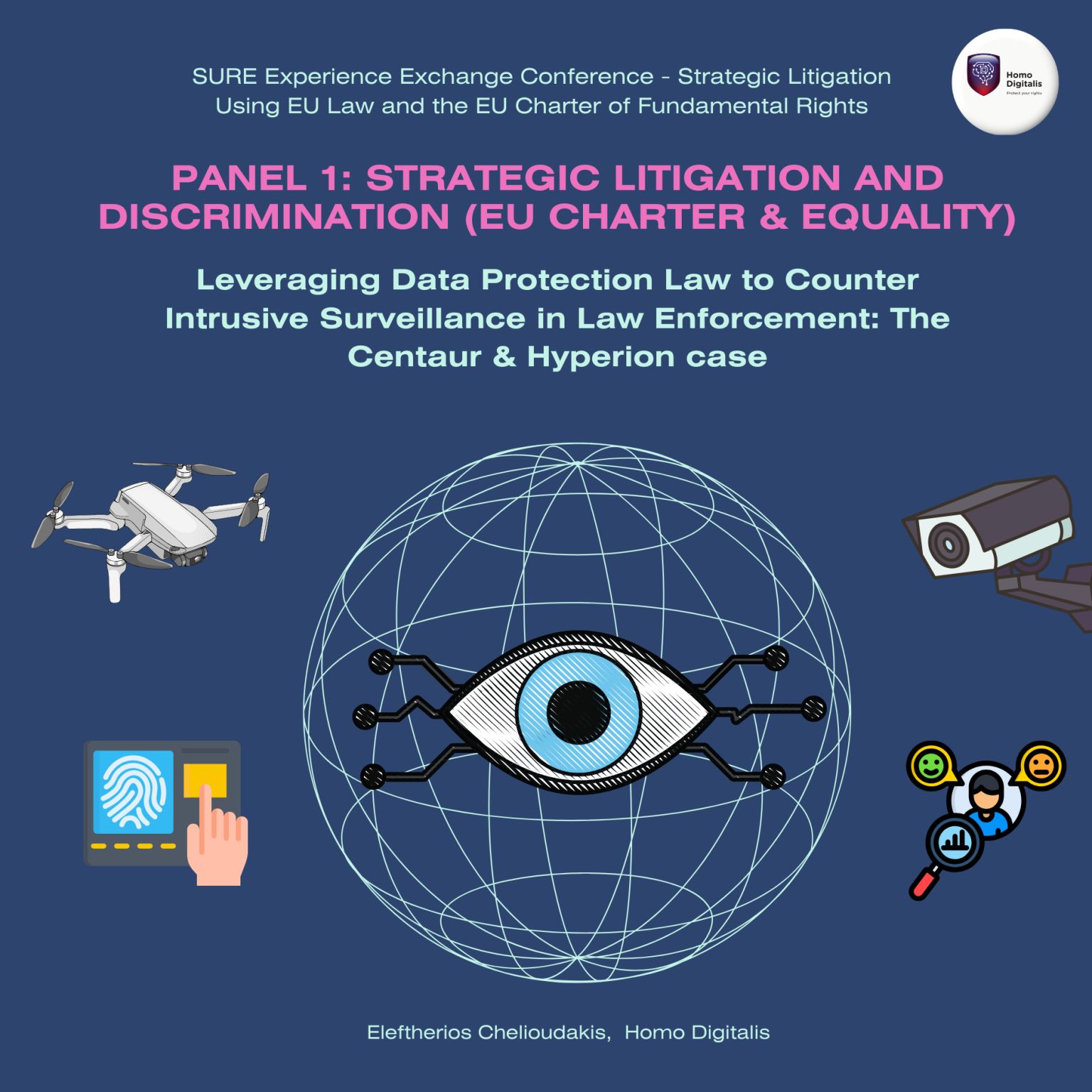
The presentation by Homo Digitalis was successfully completed as part of the SURE program
On February 16, Homo Digitalis delivered an educational presentation as part of the program “SURE – Strategies for Using Rights and Achieving Equality” and the conference “Experience Exchange Conference – Strategic Litigation Using EU Law and the EU Charter of Fundamental Rights”.
The conference was organized by the Centre for Peace Studies (Centar za mirovne studije), Human Rights House Zagreb, and Green Action / Friends of the Earth Croatia, in collaboration with the Croatian Ombudswoman (Pučka pravobraniteljica) and the Justice and Environment network.
Our organization was represented by our Executive Director, Eleftherios Chelioudakis, who spoke about the case concerning the KENTAVROS and HYPERION systems.
We warmly thank the organizers, especially Cvijeta Senta and Ivan Novosel for their kind invitation, as well as Itxaso Domínguez de Olazábal and European Digital Rights for the opportunity to participate.
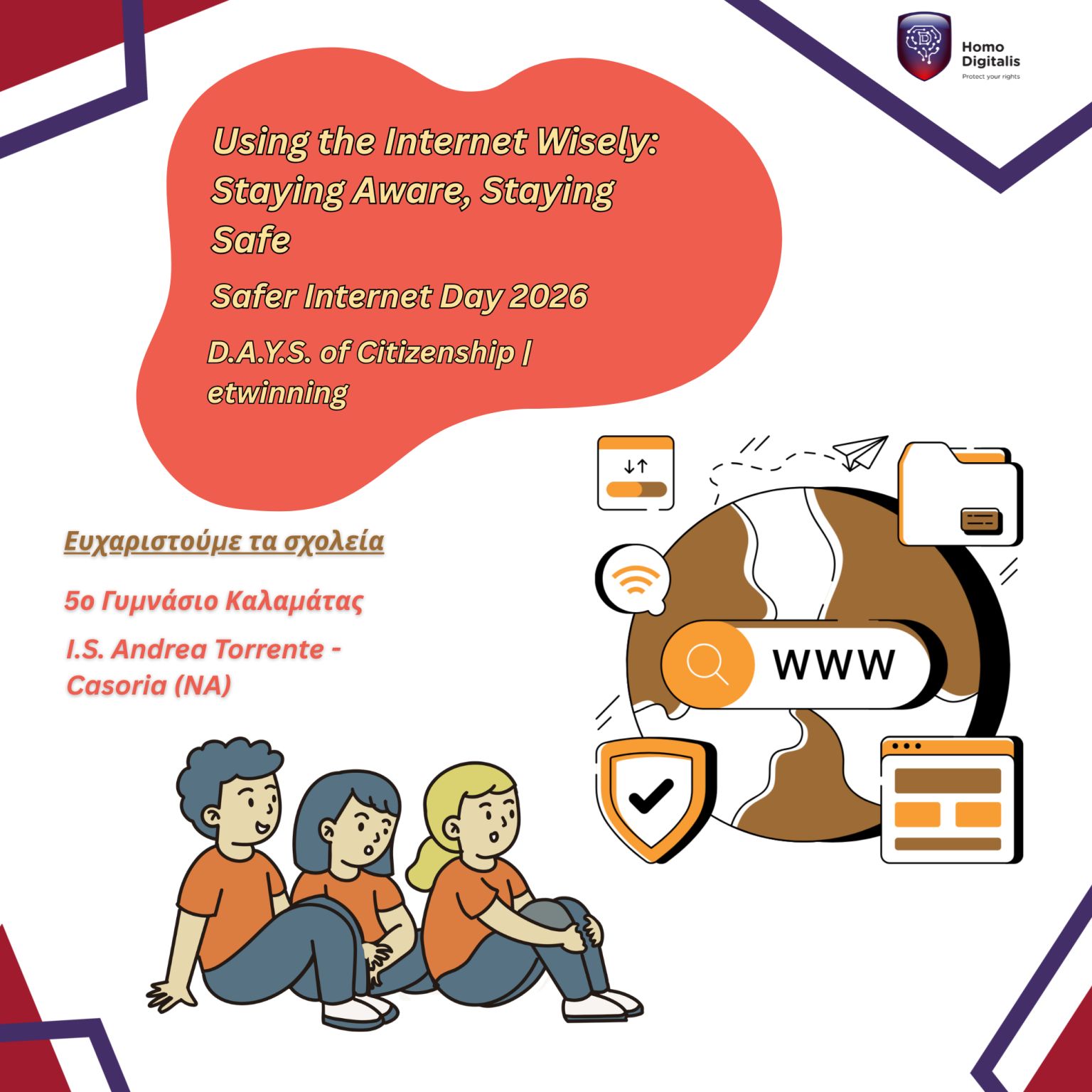
We celebrate Safer Internet Day with students
On February 10, we celebrated Safer Internet Day 2026 together with students from different countries, including Greece, Italy, and Turkey!
As part of the eTwinning project “D.A.Y.S. of Citizenship,” founded by the 5th Gymnasium of Kalamata and co-founded by the Italian school I.S. Andrea Torrente – Casoria (NA), we held an online discussion on:
▪️ social media and the way they are designed to capture the attention of both young people and adults, often leading to addiction,
▪️ the use of Artificial Intelligence to create deepfakes and the risks they entail,
▪️ cyberbullying, as well as the tools and practices available to help us protect ourselves effectively.
At the end of the presentation, we also played an educational quiz, putting into practice what we learned!
We warmly thank the teacher of the 5th Gymnasium of Kalamata, Tzina Mouselimi, for the kind invitation, as well as all the teachers who participated for their collaboration.
Homo Digitalis was represented by Eleftherios Chelioudakis.
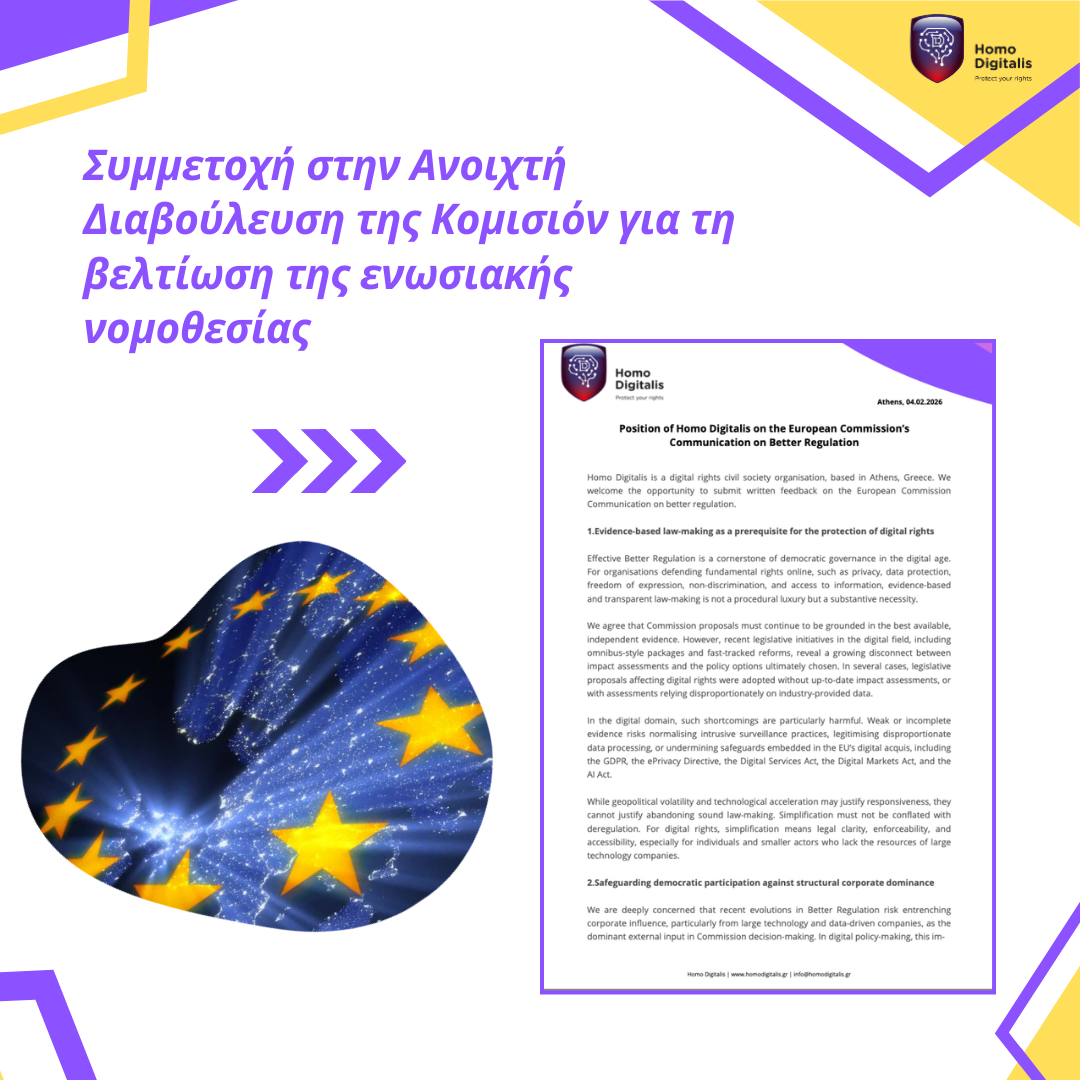
Homo Digitalis participates in the European Commission’s open public consultation on improving EU legislation
Yesterday, 4/2, marked the conclusion of the submission process for contributions to the European Commission’s open public consultation on the “Better Regulation” initiative.
In our detailed submission, we emphasize that evidence-based, data-driven, and participatory lawmaking is a prerequisite for the digital future of Europe and its market.
While we recognize the need for rapid responses in a rapidly evolving technological environment, we highlight a steadily widening gap between evidence-based analyses and final legislative choices. This phenomenon is particularly evident in recent horizontal initiatives of the Omnibus type, as well as in fast-tracked reforms that are launched on uncertain and unclear foundations.
Read here our submission on the Commission’s website.
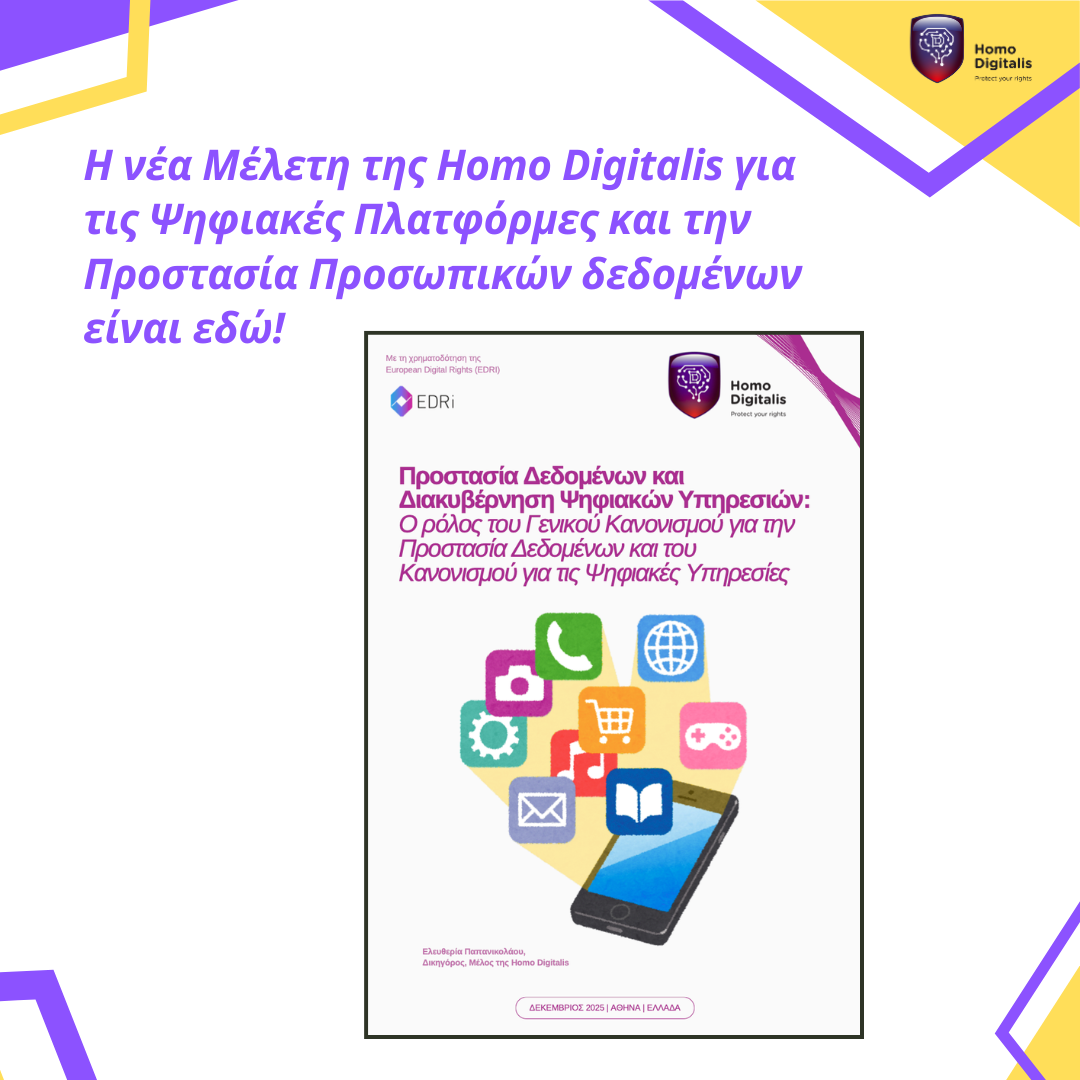
Homo Digitalis published its new Report on GDPR & DSA
This study examines two key pillars of European digital law: the General Data Protection Regulation (GDPR) and the Digital Services Act (DSA).
In simple terms, the GDPR sets the rules for how our personal data is collected and used, placing emphasis on transparency, lawfulness, and the rights of individuals. At the same time, the DSA regulates how digital platforms (such as social media) operate, introducing obligations aimed at greater transparency, safety, and accountability.
The study highlights how these two legal frameworks interact in practice and how they affect critical aspects of our everyday online lives, such as targeted advertising, user profiling, and the protection of minors.
The analysis shows that, although the GDPR and the DSA have different roles, they operate in a complementary way. The GDPR establishes the basic limits for the use of personal data, while the DSA introduces additional obligations for platforms, effectively strengthening user protection in practice.
Their interaction is particularly evident in areas such as targeted advertising and the protection of minors, where European law becomes both stricter and more substantive.
Overall, these two frameworks contribute to creating a safer, more transparent, and more accountable digital environment. However, their effectiveness will depend on their consistent implementation and on the cooperation between competent authorities, in order to strike the right balance between innovation and the protection of individuals’ rights.
The full study is available here (in EL).
The author of the study is Eleftheria Papanikolaou, Lawyer and Member of Homo Digitalis.
The study was conducted with the support of European Digital Rights (EDRi).
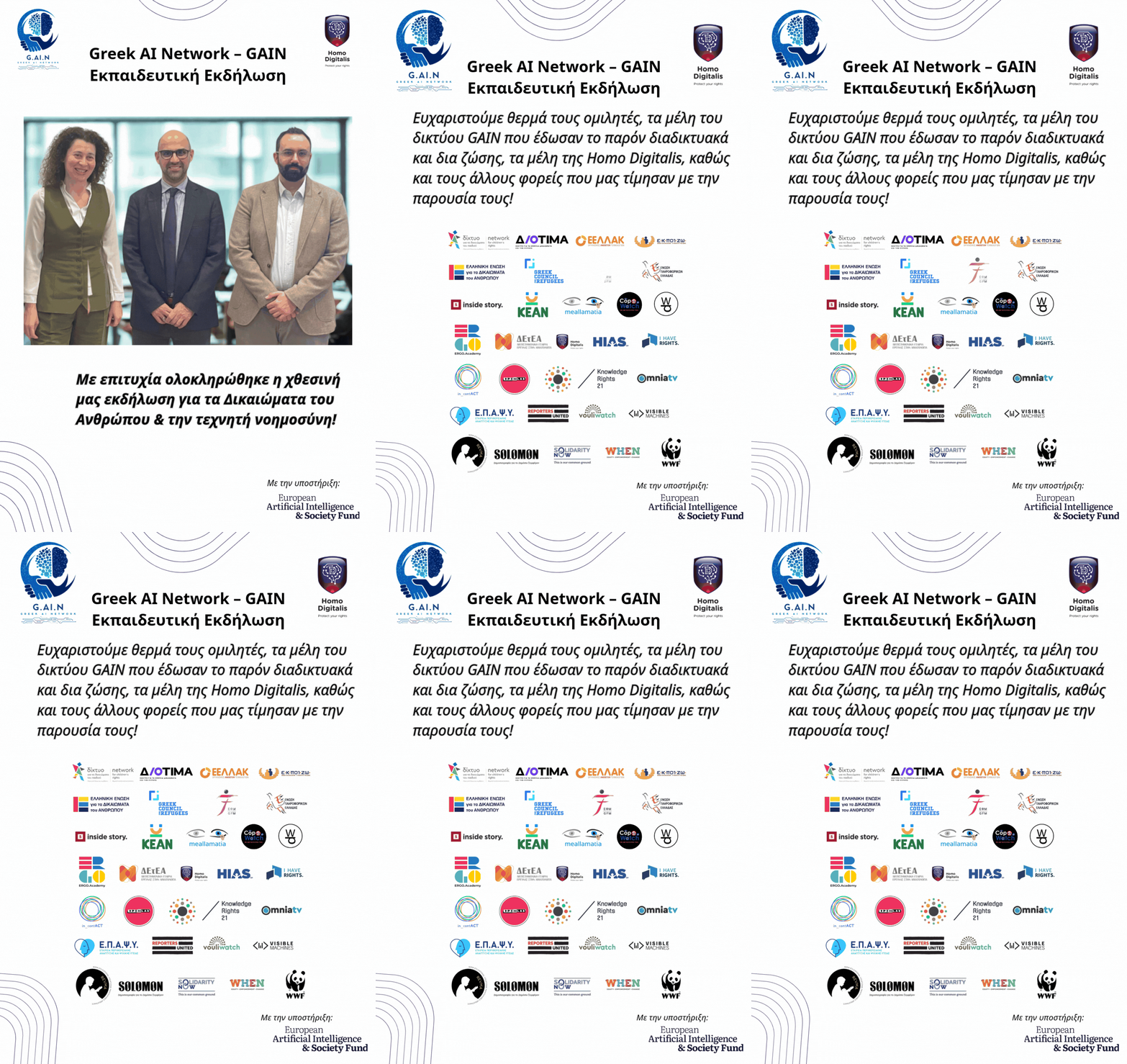
Our GAIN event with the supervisory authorities of Article 77 of the AI Act was successfully concluded
Yesterday’s event, which we co-organized with the civil society network Greek AI Network – GAIN at the offices of network member WHEN Hub, was successfully completed.
The event opened with a welcoming address by our Co-founder and Treasurer of the Board, Konstantinos Kakavoulis. This was followed by educational presentations from representatives of two fundamental rights authorities under Article 77 of the AI Act, namely Dr. Efrosyni Siougle from the Hellenic Data Protection Authority and Dr. Christos Tsevas from the Greek National Commission for Human Rights.
Finally, during the Members in the Spotlight Session, our member and DPO Executive / GDPR Expert, Dimos Kostoulas, delivered an educational presentation on the processing of personal data in the healthcare sector and the use of Artificial Intelligence systems in this field.
We warmly thank the speakers, the members of the GAIN network, and the members of Homo Digitalis who joined us both online and in person, as well as the other organizations that honored us with their presence.
The event was held within the framework of the GAIN program, with the support of the European AI & Society Fund.