
The participation of Homo Digitalis in the 4th In-House Lawyers Forum was successfully completed
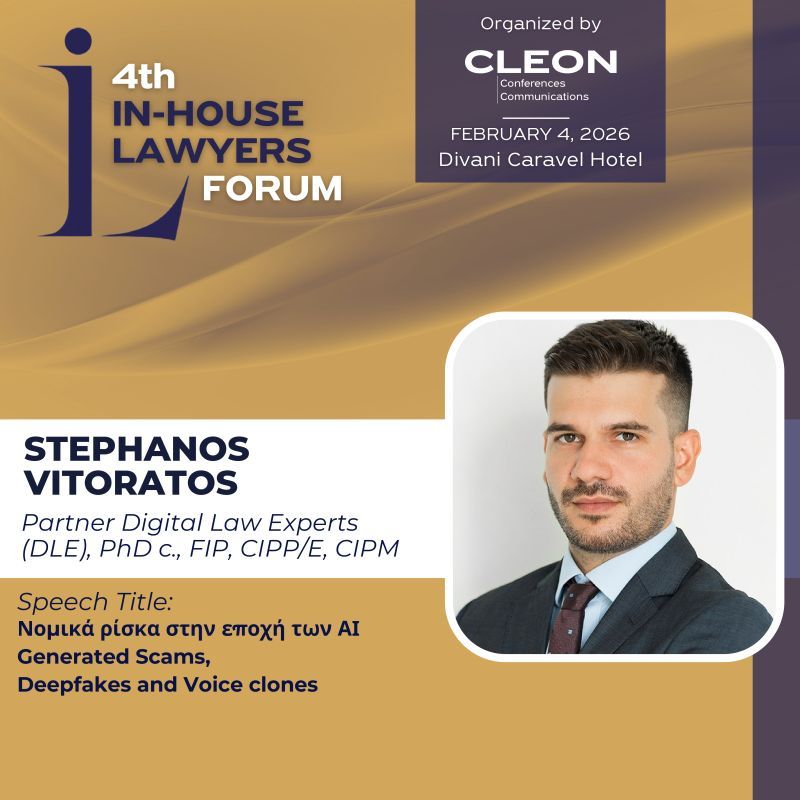
The participation of Homo Digitalis in the 4th In-House Lawyers Forum was successfully completed. The event took place on February 4 at the Divani Caravel Hotel and was organized by CLEON Conferences & Communications. The organization was represented by its Co-Founder, Stefanos Vitoratos.
The Forum brought together leading legal minds to explore the evolving role of legal professionals and tackle key topics shaping in-house practice today, from cutting-edge legal issues and AI adoption to cyber resilience, well-being, and leadership perspectives in the corporate setting.
Stefanos talked about ΑΙ Generated Scams, Deepfakes and Voice clones.
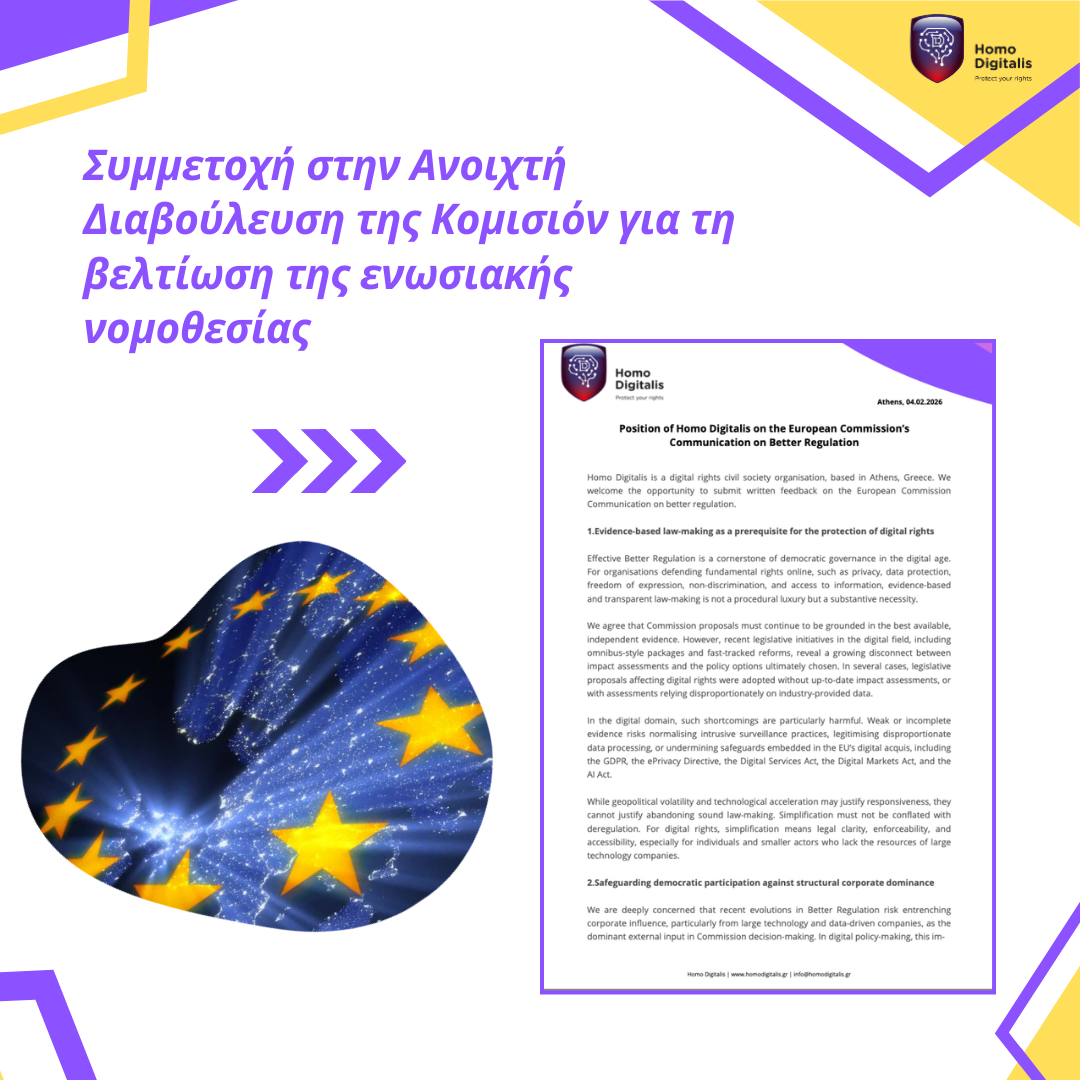
Homo Digitalis participates in the European Commission’s open public consultation on improving EU legislation
Yesterday, 4/2, marked the conclusion of the submission process for contributions to the European Commission’s open public consultation on the “Better Regulation” initiative.
In our detailed submission, we emphasize that evidence-based, data-driven, and participatory lawmaking is a prerequisite for the digital future of Europe and its market.
While we recognize the need for rapid responses in a rapidly evolving technological environment, we highlight a steadily widening gap between evidence-based analyses and final legislative choices. This phenomenon is particularly evident in recent horizontal initiatives of the Omnibus type, as well as in fast-tracked reforms that are launched on uncertain and unclear foundations.
Read here our submission on the Commission’s website.

The participation of Homo Digitalis in an event on the DNA and CAIDA was successfully completed
On January 19, we were invited by Amazon Web Services (AWS) to attend an event focused on legislative initiatives concerning digital policy issues, such as the Digital Networks Act (DNA) and the Cloud and AI Development Act (CAIDA), alongside representatives from institutional bodies and law firms.
During the event, we had the opportunity to express our strong concerns regarding the then-upcoming proposed provisions of the DNA and to put forward the positions of our network. You can read a related commentary on the proposed provisions by epicenter.works here.
The organization was represented by Lefteris Chelioudakis and Konstantinos Kakavoulis. We would like to sincerely thank the organizers for the inclusion and for the opportunity to present our views.
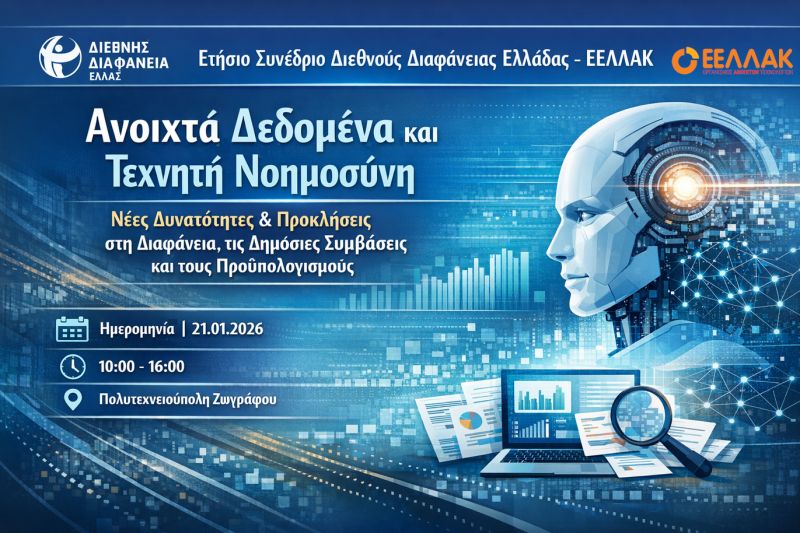
The speech of Homo Digitalis was successfully completed at the Annual Conference of Transparency International Greece and EELLAK.
The participation of Homo Digitalis in the Annual Conference, organized by Transparency International Greece and EELLAK on January 21, was successfully completed. The conference was titled “Open Data and Artificial Intelligence: New Opportunities & Challenges in Transparency, Public Procurement and Budgets.”
Our organization was dynamically represented by our member, Tania Skrapaliοri, who took part in the 3rd panel of the conference entitled “Transparency in Practice: Proposals and Innovation Transforming Governance.”
We would like to warmly thank the organizers for this excellent event and for the opportunity for Homo Digitalis to participate.
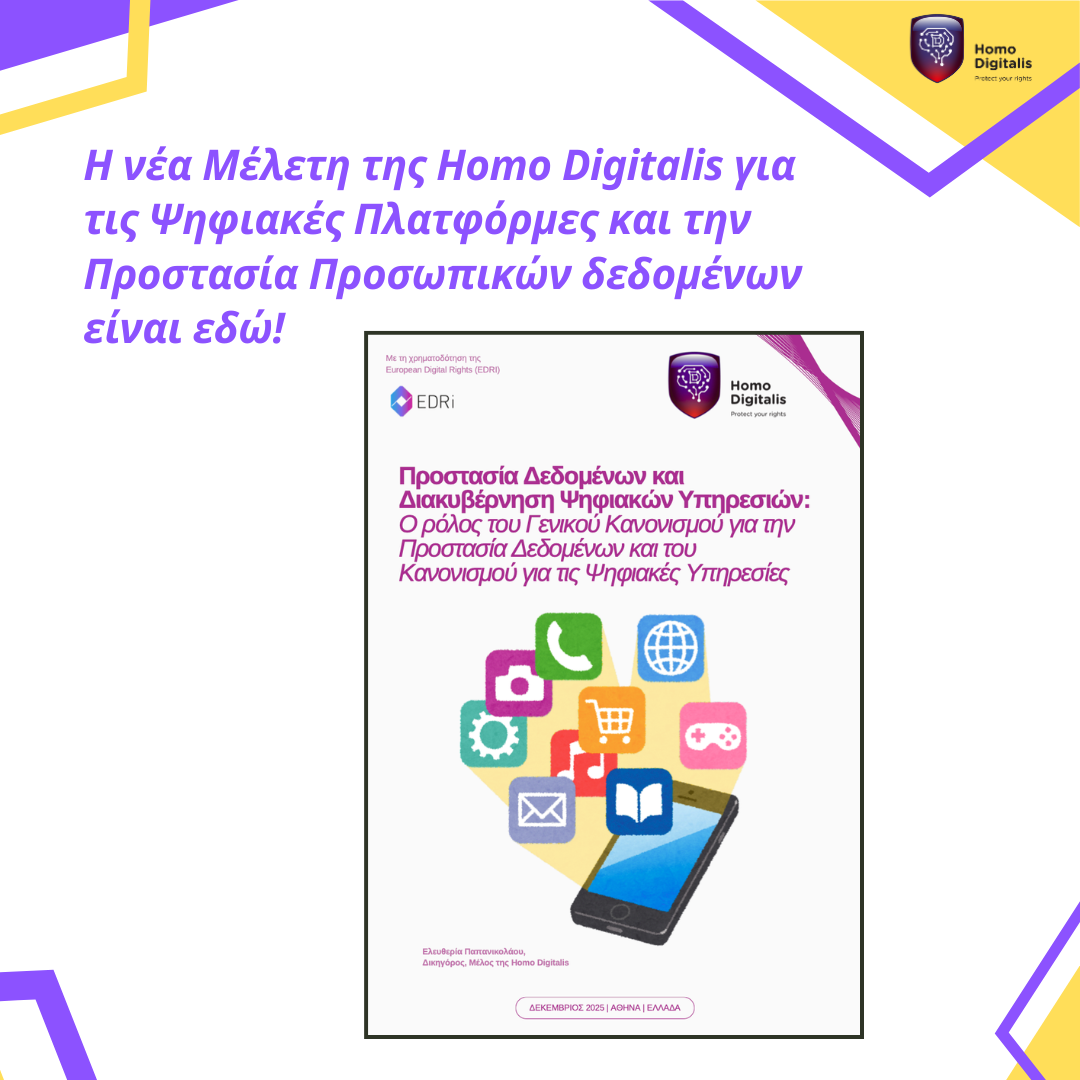
Homo Digitalis published its new Report on GDPR & DSA
This study examines two key pillars of European digital law: the General Data Protection Regulation (GDPR) and the Digital Services Act (DSA).
In simple terms, the GDPR sets the rules for how our personal data is collected and used, placing emphasis on transparency, lawfulness, and the rights of individuals. At the same time, the DSA regulates how digital platforms (such as social media) operate, introducing obligations aimed at greater transparency, safety, and accountability.
The study highlights how these two legal frameworks interact in practice and how they affect critical aspects of our everyday online lives, such as targeted advertising, user profiling, and the protection of minors.
The analysis shows that, although the GDPR and the DSA have different roles, they operate in a complementary way. The GDPR establishes the basic limits for the use of personal data, while the DSA introduces additional obligations for platforms, effectively strengthening user protection in practice.
Their interaction is particularly evident in areas such as targeted advertising and the protection of minors, where European law becomes both stricter and more substantive.
Overall, these two frameworks contribute to creating a safer, more transparent, and more accountable digital environment. However, their effectiveness will depend on their consistent implementation and on the cooperation between competent authorities, in order to strike the right balance between innovation and the protection of individuals’ rights.
The full study is available here (in EL).
The author of the study is Eleftheria Papanikolaou, Lawyer and Member of Homo Digitalis.
The study was conducted with the support of European Digital Rights (EDRi).
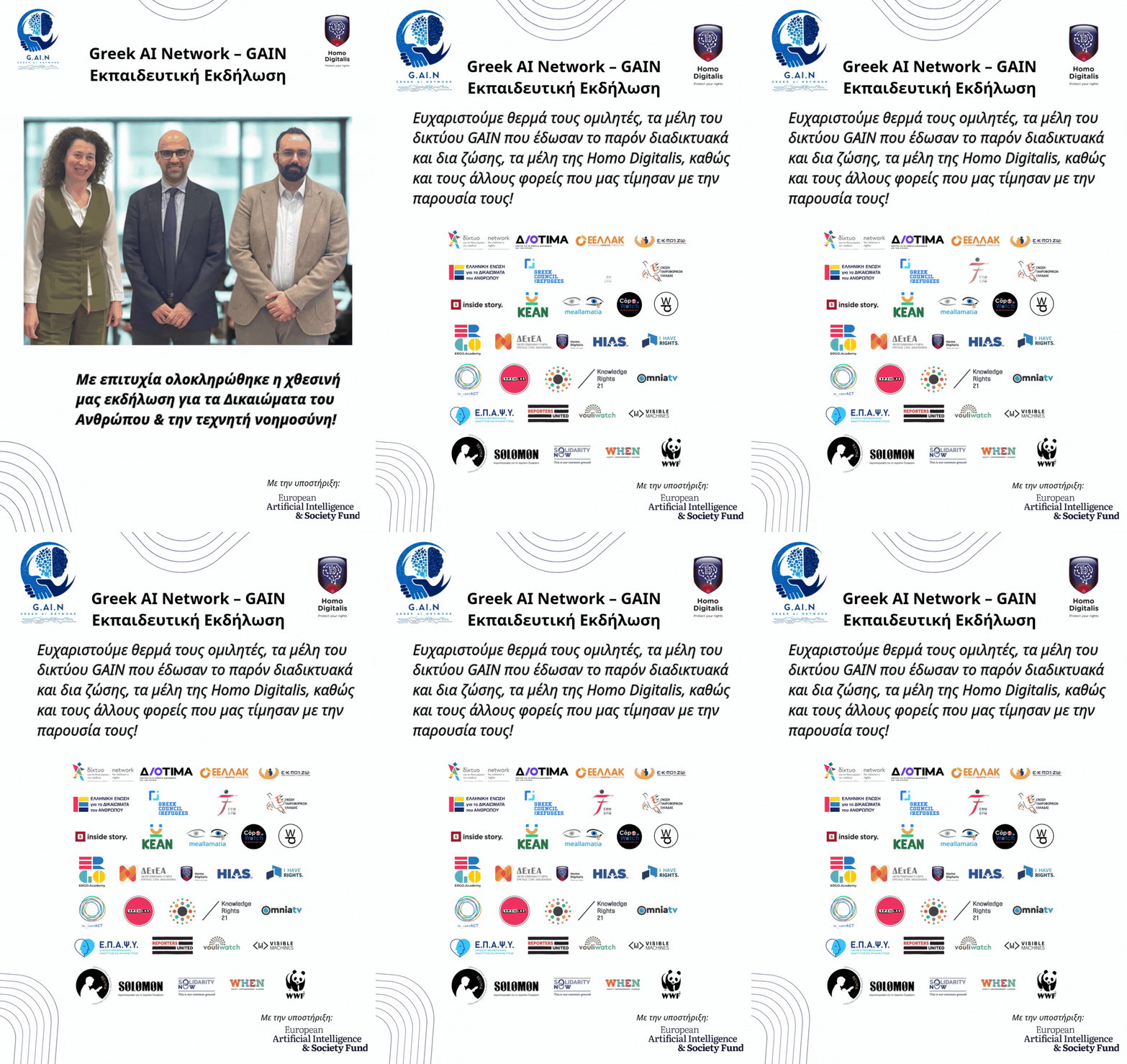
Our GAIN event with the supervisory authorities of Article 77 of the AI Act was successfully concluded
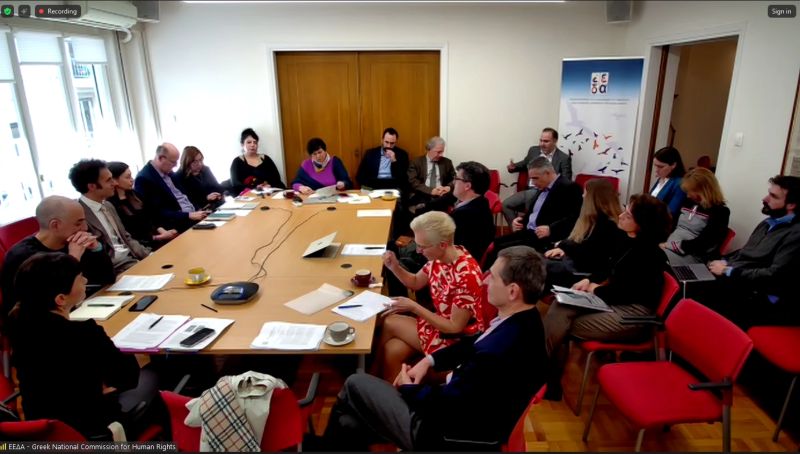
Yesterday’s event, which we co-organized with the civil society network Greek AI Network – GAIN at the offices of network member WHEN Hub, was successfully completed.
The event opened with a welcoming address by our Co-founder and Treasurer of the Board, Konstantinos Kakavoulis. This was followed by educational presentations from representatives of two fundamental rights authorities under Article 77 of the AI Act, namely Dr. Efrosyni Siougle from the Hellenic Data Protection Authority and Dr. Christos Tsevas from the Greek National Commission for Human Rights.
Finally, during the Members in the Spotlight Session, our member and DPO Executive / GDPR Expert, Dimos Kostoulas, delivered an educational presentation on the processing of personal data in the healthcare sector and the use of Artificial Intelligence systems in this field.
We warmly thank the speakers, the members of the GAIN network, and the members of Homo Digitalis who joined us both online and in person, as well as the other organizations that honored us with their presence.
The event was held within the framework of the GAIN program, with the support of the European AI & Society Fund.
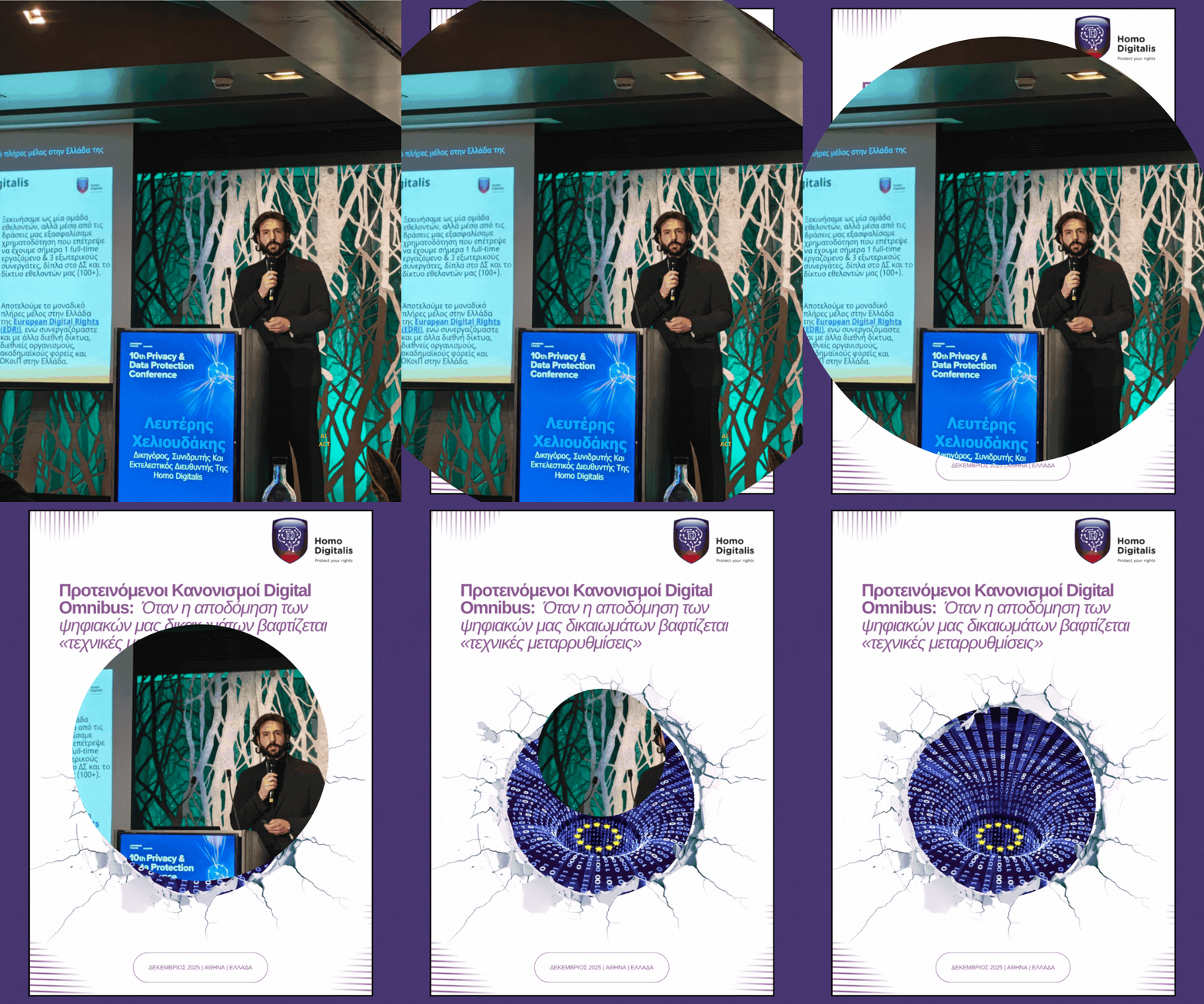
We presented our Study on the Digital Omnibus package at the Privacy & Data Protection Conference
Last Friday, Homo Digitalis was invited to the Privacy & Data Protection Conference, organized by BOUSSIAS.
There, our Executive Director, Eleftherios Chelioudakis, presented our Study on the Digital Omnibus reform packages, highlighting the challenges that the proposed changes pose to our rights in the contemporary digital era.
You can read our Study here.
We would like to warmly thank the conference organizers, and especially Alexandra Varla, for the very honorable invitation. Congratulations as well to all the speakers for their insightful contributions.
.