Social Media
By Emmanouil Mandrakis*
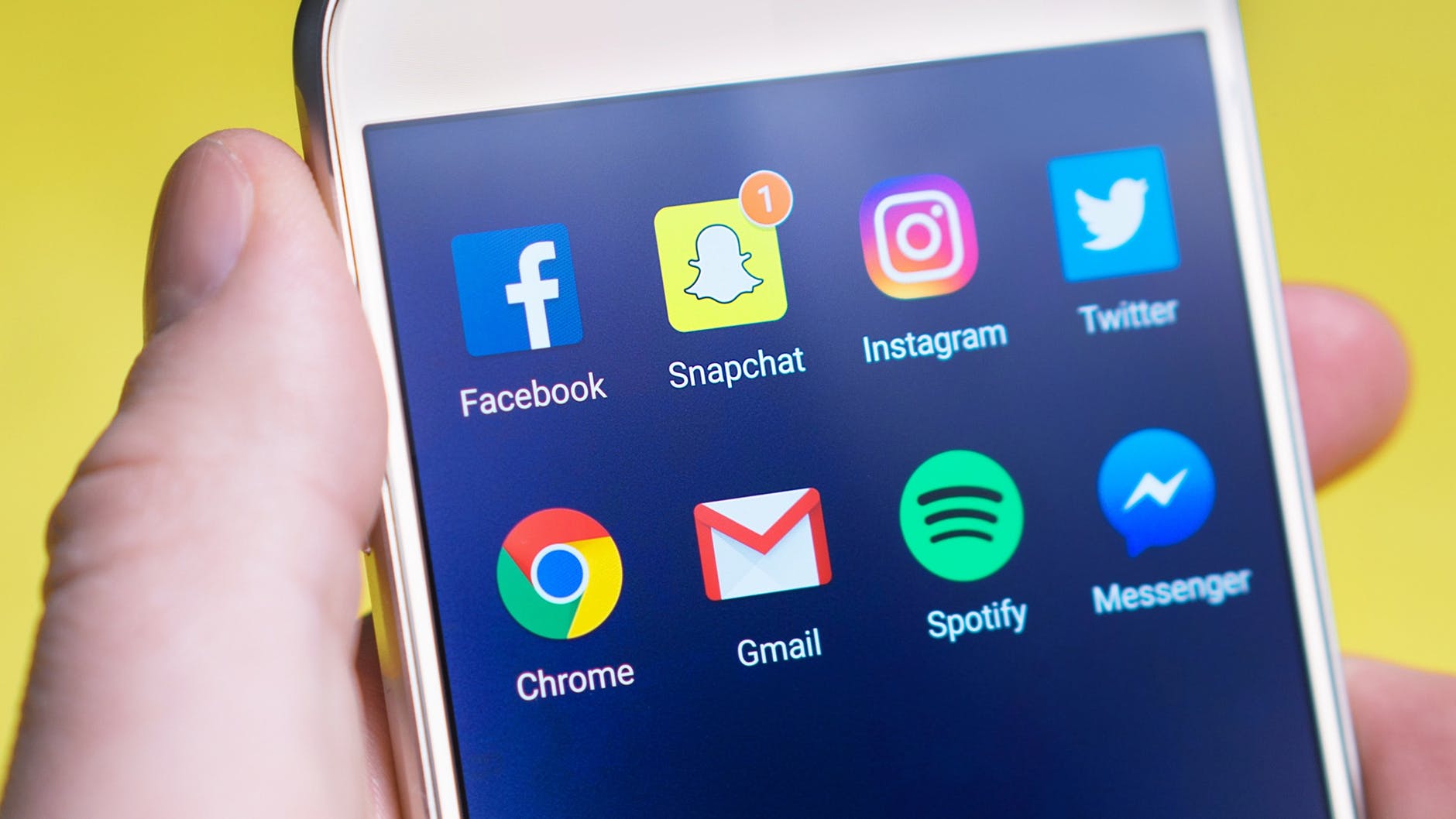
Following the Cambridge Analytica scandal, most social media users, particularly Facebook users, are concerned for the protection of their personal data. Notably, many decided to delete their profiles, either driven by fear or by a need for reaction. A considerable amount of users seem to be indifferent for the violation of their privacy or are not aware of what is happening.
In any case, social media have proven to be useful when it comes to networking and communication. For their users to be able to enjoy these services, without facing the pertinent dangers, they must always get informed. On the other hand, social media and their access in private life must be regulated and monitored.
What happened with the Cambridge Analytica scandal
The Cambridge Analytica scandal came to light when it was disclosed that the personal data of millions of Facebook users were used for political propaganda by the social media company. It is estimated that between 2014 and today (2018), Facebook has gathered personal information by 87 millions users. It has been claimed that this information has been used on a fee for influencing the public opinion in political issues. The users did not know if and how their data were used, while most of them never granted their consent. (Kevin Roose, 2018)
This came out by a Cambridge Analytica employee, who denounced the abuse of the data. The case has been brought to justice. At this point, arises the issue of whether the law has made provision for protecting the users and preventing corporations from violating the Internet users’ privacy. Moreover, the social media users must get informed and learn which conduct might lead them to confronting similar dangers.
Facebook as an entity offered the means for the development of applications for entertainment, briefing and various others objectives, which had access to personal data, in order to be more efficient. Applications such as quizzes requested access to data, which were not actually necessary for the quiz, such as personal data of the users’ friends. In this way, these applications gained access to data of people, who never consented, just because their friends were “careless”.
Can someone get protected?
Social media users must always get informed on how they can get protected. They must be cautious regarding the information they share, particularly when they share sensitive data or even their “digital self”. To begin with, they must be aware that if they decide to share information publicly, this information will be available to everyone.
This includes corporations, which might use this data for some objective, if not for profit. For instance, for most users, the profile photo is public and clearly depicts their face. This gives the opportunity to everyone to create a huge database with name, surname and biometric characteristics for face-recognition applications. The “Likes” made by the users in pages and posts provide sufficient information for someone that has access to them to know the users’ preferences and desires.
Apart from the obvious use for marketing purposes, it must not be underestimated that the social circle of a person might criticize it based on its “likes”, something that leaves considerable ground for stereotype-making. In the following table are illustrated the steps, that anyone can follow to protect this information.
Furthermore, social media users can control with who they share other sensitive information such as posts and location. Notably, the latter is used by insurance companies in order to avoid compensations for burglaries. (Pleasance, 2015) Therefore, users must post responsibly, particularly when they choose their post to be public.
The commodities of social media
Social media have undoubtedly earned their role in everyday life. They have brought communication and networking to a new dimension, in which a person can keep in touch with another from a long distance or remain in contact with its old schoolmates much more easily than in the past. As far as corporations are concerned, it has made product promotion easier and much more targeted.
This is not necessarily negative; we should bear in mind that the marketing cost is paid by the consumer in any case. Social media constitute a source of information but also misinformation. One must always crosscheck his sources. Social media are a commodity which is taken for granted and is offered for free, with the only price paid being the users’ personal data.
Consequently, users must always check what they pay each time for the services they enjoy and decide if it is worth it. They must be hesitant when an application requests access to irrelevant information. It is normal for a weather application to ask for the user’s location, but not for access to photos or “likes”.
* Emmanouil Mandrakis is an Electrical and Computers Engineer, specializing in Nanotechnology. He works in CSEM (Swiss Center for Electronics and Microtechnology) in Switzerland. He is interested in current affairs and credible information. He works on new technologies issues.

Digital Single Market and Geography: Towards the Abolition of Geo-Blocking
By Stefanos Vitoratos
“Twenty-five years after the establishment of the European single market, European consumers earn their place in it.” The Regulation 2018/302 of 28 February 2018 against the “territorial exclusion” on E-commerce and services (or «geo-blocking» as it is commonly known) is here and aims to tackle discrimination in access to goods and services by putting an end to regulatory asymmetries between member countries.
The new regulation significantly reduces several often restrictions and in these terms is one of the major steps towards a true single market for consumers. However, this arrangement could be seen as fragmentary, since restrictions are not completely eliminated.
What is Geo-Blocking?
But let’s take them in turn: What do we mean by “Geo-blocking”?
It is a form of technological protectionism that restricts access to web content based on the user’s geographic location. The exact location of the user is detected using geolocation techniques, such as checking the IP address, thus allowing the system to approve or deny access to specific content.
Geo-blocking is mainly associated with restrictions on access to multimedia content such as movies, TV shows or even songs due to intellectual property and licensing purposes. How many of you have not gotten the message “This content is not available in your country”? But this is only a certain aspect of it, since geo-blocking is even used for price discrimination in online stores. There are phenomena, where users buy online products from foreign sites at much higher prices than domestic users of the same sites. It is even likely that the site accepts a bank card only from its home country or even redirects you to an online store in your own country.
Why is it an important step?
As early as May 6, 2015, the European Union announced the adoption the “digital single market” strategy . The rationale was that many Europeans are still not able to use online services that are available in other EU countries without any explanation, or perhaps, speaking of trade, they could be transported to a domestic website with different prices. These phenomena are not in line with the idea of a single market.
From the above mentioned, we understand that the idea is simple: the consumer has access to the same prices in all products in all countries without any geographic distinction for commercial purposes. There are neither restrictions depending on nationality or permanent residence, nor does it mean to impose different pricing depending on the country of origin of the user.
The idea is correct, however the final text of the Regulation, tackles only three very specific geo-blocking cases, and more specifically:
i) Digital services, such as cloud and web-hosting, which must be accessible to customers from all over Europe.
(ii) Services provided in a particular physical location, such as car rental, which must be available to everyone regardless of location.
(iii) The sale of goods, irrespective of the Member State from which the user accesses the site.
What is left to be done?
However, as you may observe, digital services that include copyright are excluded.
Restrictions regarding digital media are not included in this round of “construction” of the EU’s single digital market and this is due to the intense pressure from the industry of intellectual property rights and the respective protective behavior of many national governments. Products such as movies, series, e-books, video games and music were excluded from the scope of the regulation. What does this mean practically? That a Belgian site subscriber providing series and movies may have different access to content from the respective Greek user of the same site. This deduction from the scope of the Regulation allows suppliers to continue excluding geographically the electronic services that contain copyrighted content.
The consolation is that the legislator agreed on a “review clause” of this issue in two-years time, that is the end of 2020. Until then, the new political circumstances that will have been formed, since a new European Parliament and a new European Commission will have taken up duties, might be able to break the resistance of industry.
Undoubtedly, this regulation, which will come into effect from December 3rd, 2018, is perhaps one of the most important steps towards a true single market for consumers. Thus, It will add to other achievements from 2017, such as the termination of roaming charges for mobile phones and cross-border portability for online subscriptions.
The EU has been working for a long time in the direction of the digital single market, promoting equality, pluralism and diversity, and this has been seen in practice. But who will win the final tug of war with the industry?

Anonymity in the Internet
Enhancing factor or threat to freedom of expression?
By Konstantinos Kakavoulis
Anonymity constitutes a founding element for democracies, which respect and promote freedom of expression and dialogue. The right to anonymous speech enhances the citizens’ willingness to express their views publicly, regardless of their courage or the popularity of their views. Anonymous speech enhances civic participation. Thus, minority views and opinions, which come in opposition to the authority or criticize it, are more easily expressed. A democracy requires critique in order to function properly. The value of anonymous speech becomes much more obvious when it comes to non-democratic or non-liberal regimes. The restoration of democracy is frequently based on texts, books and proclamations of unknown creators, which question the current authoritarian regime and demand its replacement.
Of course, it is not necessary that we reach such extreme circumstances to appreciate the value of anonymous speech. Living in a democratic society, we have to be able to understand its value. It is important to mention that the protection of freedom of expression includes anonymous speech.
Expression in the Internet is usually anonymous. Certainly, anonymity does not only safeguard speech of good quality, namely speech which promotes democracy and dialogue. It also protects false, illegal, unethical and insulting speech. Either concerning political, economic, social or artistic discussions, such examples of speech of bad quality are widespread in the Internet. The security provided by anonymity pushes many Internet users to use vulgar, insulting or false speech. Cyber-bullying stems –among others- from the possibility of the Internet users to hide their real identity. But let us not forget that Internet was created by people for the people. Its self-regulation and its good use lie with its users.
The use of anonymity for the promotion of illegal activities is of course alarming, but it can be confronted. The police and judiciary can trace any user who has committed such acts and bring him to justice. This might not always be easy, but it is always possible. Even the users who use the most modern and efficient encryption tools, can be uncovered.
The use of false and insulting speech under the veil of anonymity is something which can be confronted by the very nature of the Internet and its users. Firstly, the promptness and interactivity of the Internet ensure that the person in concern has immediate access to the content, which insults him. He also has the right to respond immediately. Notably, these rights are free of charge, a possibility which is not guaranteed by any other means of communication in such a wide scale. All persons who had access to the initial content –if not more- have also access to the response of the person insulted. Third persons who are interested in unveiling the truth may also act in the same way or contribute in the endeavour of the person insulted. Practically, everything that is published in the Internet is accessible by everyone. This means that everyone can check and comment on its precision.
Secondly, the credibility of the Internet ensures that an anonymous form of expression must have a serious content. If someone wishes to publish something anonymously, he must at least make sure that the content is true and sincere, if he wants his publication to be considered credible. An anonymous publication will not easily become as popular as a publication in a website, which has become widely known for not disclosing untrue information. Thus, a post from an anonymous blog will not be able to challenge a post by the Guardian or Le Monde, if it does not have a true and sincere content. The credibility of the Internet in this way ensures that false content is delimited and its untrue nature is unveiled.
Anonymity in the Internet entails that everyone may express his opinion publicly and be heard by an audience of billions of people. However, it also entails that billions of people may check and comment on this opinion. Anonymity ensures that many and different voices are heard in the Internet. As long as all of us, as Internet users, adopt a critical stance to the information communicated to us, we have nothing to fear from anonymity. Freedom of expression is not possible without the protection of anonymous speech.
When you use the Internet, always remember that you may read, think, doubt, search – and most importantly express your opinion. The Internet is the best means that exists in order to fully achieve freedom of expression. The extent to which we achieve it, is in our hands.
EU: Censorship on the internet? The first step is done
The European Union made the first step for the adoption of the directive that limits the freedom of expression on the Internet
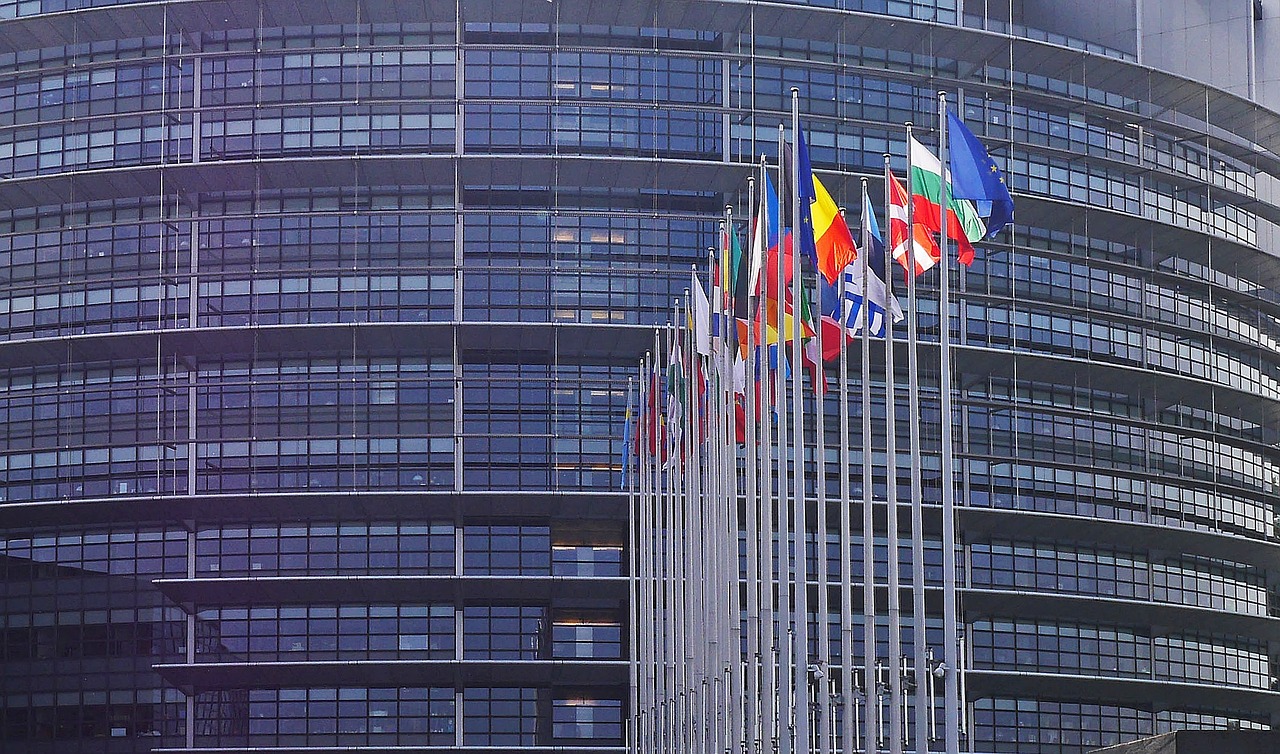
On the 20th of June 2018 the Legal Affairs Committee of the European Parliament voted in favour of the adoption of the Proposal for a Directive on Copyright in the digital single market.
Before the voting process of this proposed directive, Homo Digitalis had contacted Mr. Chrysogonos, the only Greek representative in the Legal Affairs Committee, suggesting that he should examine in detail the Article 13 of the directive.
The Article 13 in detail:
The use of content from service providers of the society of information who save and provide access to a great bulk of material that is uploaded by the internet users.
The service providers of the society of information who save and provide access to a great bulk of material that is uploaded by the internet users, are getting, in collaboration with the beneficiaries, measures in order to ensure the function of the agreements which are appended with the beneficiaries for the use of their creations and other owned material or the deterrence of their availability again in collaboration of the two sides. The aforementioned measures, for example the use of effective technologies of content identification, are suitable and proportional. The service providers provide the beneficiaries with sufficient information concerning the usage and application of the measures, whereas, wherever needed, they file reports for the recognition and use of the material.
The Member States ensure that the service providers referred in paragraph 1 are establishing mechanisms of complaints and compensation available to users in case of any difference with the application of measures as referred in paragraph 1.
The Member States facilitate, on a case-by-case basis, the cooperation between the service providers of the society of information and the beneficiaries, hosting dialogue between the stakeholders, in order to clarify the best practices, such as the use of suitable and proportional content identification technologies, considering among others the nature of each service, the technology availability and their effectiveness in consideration of the technological advancements.
Specifically Homo Digitalis highlighted that article 13 may change the Internet as we know it.
– Creativity and freedom of speech will be severely harmed, because algorithms are not always in the position to identify the difference between the legal and illegal use of material, which is subject to copyrights and which is used in research, commenting or criticism and parody. If the use of all this material is managed by automatic systems which decide based on the letter and not the spirit of the law, then creativity and freedom of speech will be limited inevitably.
-There are no suitable technical tools for the application of the Article 13. There is no existing technology of recognition/identification, which can efficiently inspect all the kind of material that is referred in the proposed directive, which include “content, audio material, video material, images and software”. Therefore, it is irrational to expect from the courts of the 27 Member States to decide on which are the most efficient technical tools and means for the application of the directive in each case.
– The entities that provide Internet services should not be responsible for the application of the copyright law, as the Article 13 provides. In order to ensure their compliance and avoid fines and penalties, the companies will become all the more protective concerning copyrights, greatly limiting the freedom of expression. The provision of the right to proceed in deleting content as a result of copyrights violation, will overpower those companies, because there is no possibility provided to the users to challenge such deletions, even if the content was legal.
Mr. Chrysogonos proposed its amendment during the voting session. Unfortunately, his proposal was denied and the text was adopted by the committee of Legal Issues. However, this was only the first stage from where this proposed Directive had to pass until it becomes a part of the EU legislation.
It is highly possible that in the beginning of July, a voting session of the plenary of the EU Parliament will occur for this text, for which the committee voted in favor of. Finally, the European Parliament will be called to vote if this proposal will become a directive. This is expected to occur possibly either on December 2018 or January 2019.
It is obvious that that we are still in the beginning of the road for the adoption of this controversial directive. Homo Digitalis will continue to inform you on any news or advancements in this case, while concurrently fighting with all its means to ensure that the Internet remains a means of free expression and sharing of ideas.