
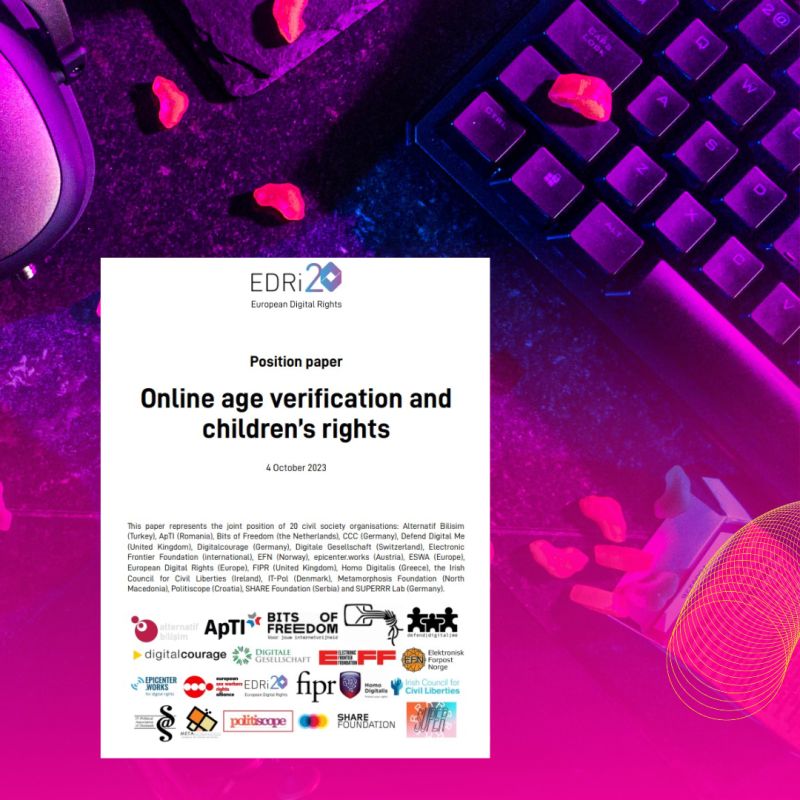
We published a joint study with EDRi on age verification online
Age verification is the process of predicting or confirming a person’s age online. Increasingly we hear from governments and technology companies that age verification is a tool we should use to ensure the safety of children online.
For example, in the EU, the draft regulation establishing rules to prevent and combat child sexual abuse (CSAR) proposes to enforce age verification forms for private messaging services (e.g. WhatsApp, Signal) and app stores operating in the EU, as well as to provide strong incentives to use this tool on all other digital platforms and services, such as social media.
The European Digital Rights network, including Homo Digitalis, has prepared a relevant study with a rich analysis of more than 30 pages, freely available here.
It is important to ensure that our children have access to age-appropriate online content. However, quick technological ‘fixes’ such as age verification online will not make a difference or really solve the complex problems we face. On the contrary, the adoption of age verification systems can have serious human rights implications, especially for the children they are intended to protect.

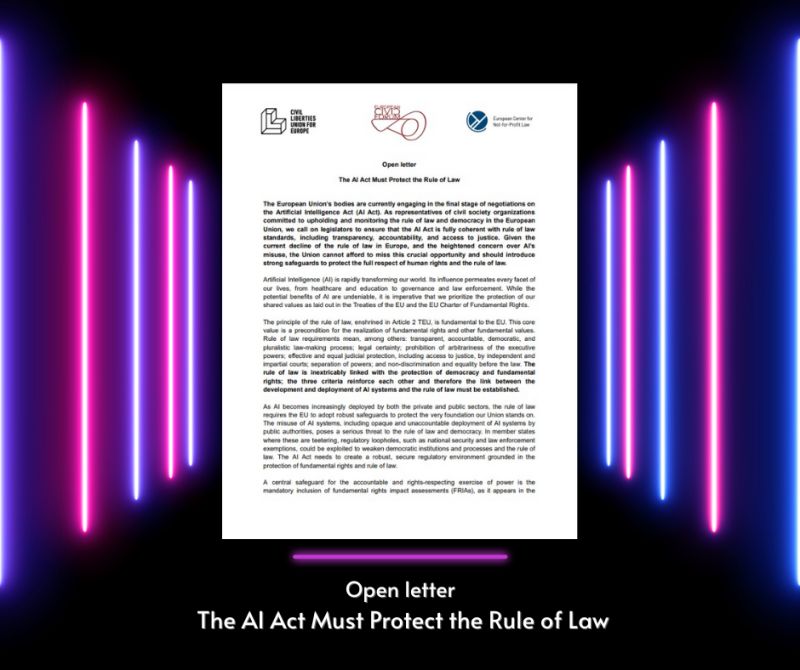
We call on European legislators to ensure full consistency with the principles of the rule of law in the AI ACT
We continue the actions of co-shaping political decisions at European level for the proposed European regulation on Artificial Intelligence (AIAct)!
Together with the Civil Liberties Union for Europe, European Center for Not-for-Profit Law Stichting, European Civic Forum and 60 other CSOs, we call on EU-level legislators to ensure that the proposed provisions are fully consistent with the principles of the rule of law, including transparency, accountability and access to justice. You can read our joint letter here.
Action is also coming at national level!
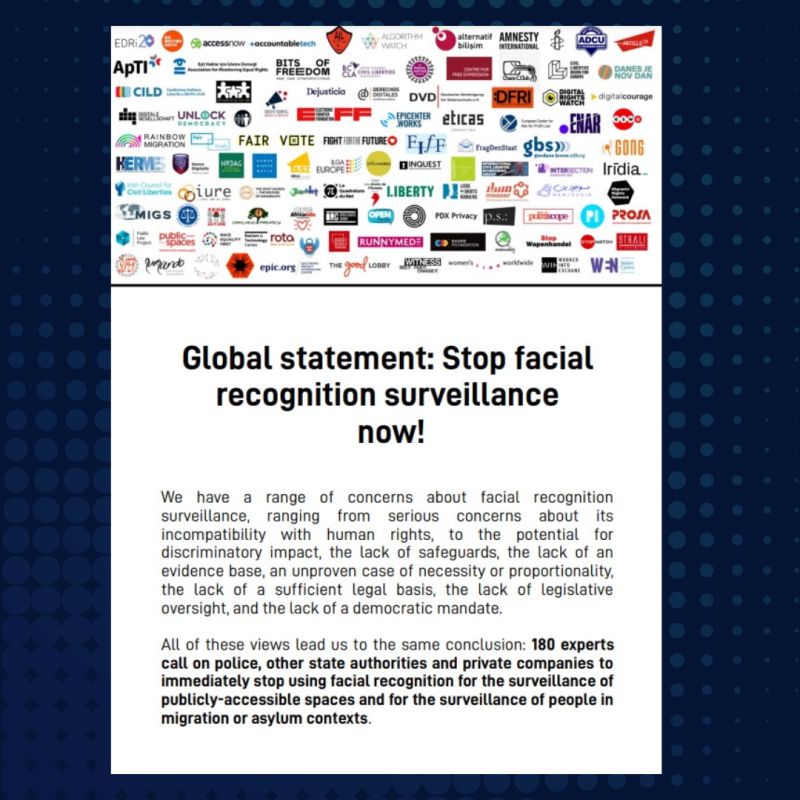
We demand an end to the use of mass biometric surveillance technologies by law enforcement authorities in public places
Today, 120 civil society organisations and 60 academics, scientists and other experts on new technologies are joining forces to stop the use of mass biometric surveillance technologies by law enforcement authorities in public places.
It is a great honour for Homo Digitalis to be part of this initiative. Already since 2020 with European Digital Rights we have been involved in the #ReclaimYourFace campaign, in which more than 250,000 people across the EU signed our petition to ban these practices.
You can read the joint statement here.
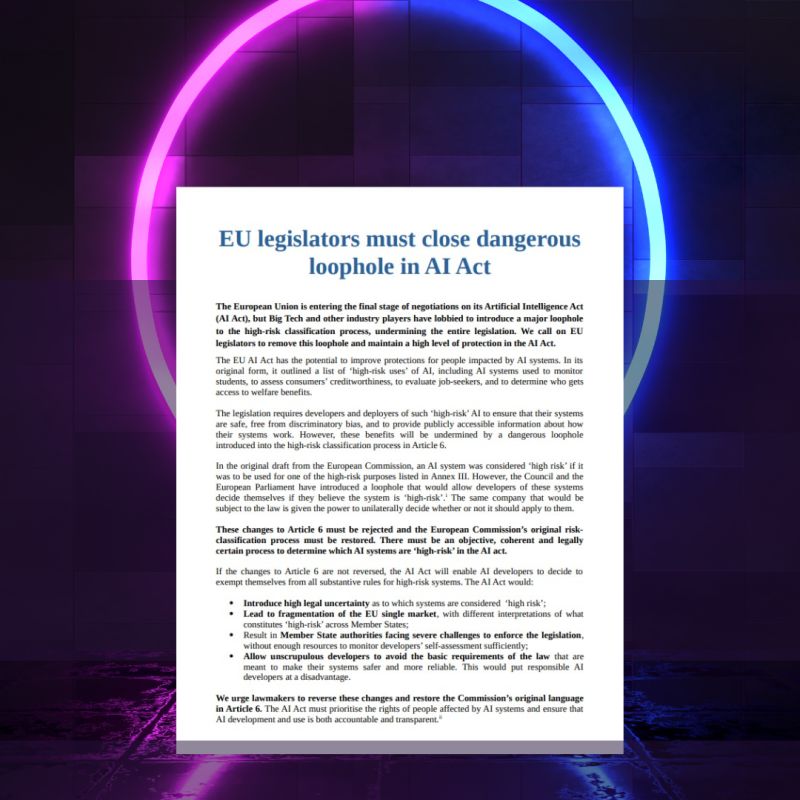
We express our concerns about Article 6 of the proposed AI legislation
As the European Union enters the final stage of trilateral negotiations on the proposed AI legislation, more than 150 civil society organisations, including Homo Digitalis, are concerned about a major loophole regarding the classification process for high-risk systems in Article 6!
Big tech companies have managed to convince the European Parliament and the Council to adopt proposed provisions that essentially leave them to decide for themselves whether the system they develop should be considered “high-risk” or not!
Read our joint statement to learn more about the challenges involved here.
We call on the European Parliament, the European Commission and the Council of the EU to prioritise fundamental rights over profits
As the EU institutions move forward in “trilogue” negotiations, the last stage for the adoption of the proposed EU legislation on AI #AIAct, we are taking a stand again!
150 civil society organisations, including Homo Digitalis, are calling on the European Parliament, the European Commission and the EU Council to put people and their fundamental rights ahead of profits!
In the coming period we intend to take initiatives in this regard at national level as well! You can read our letter here.
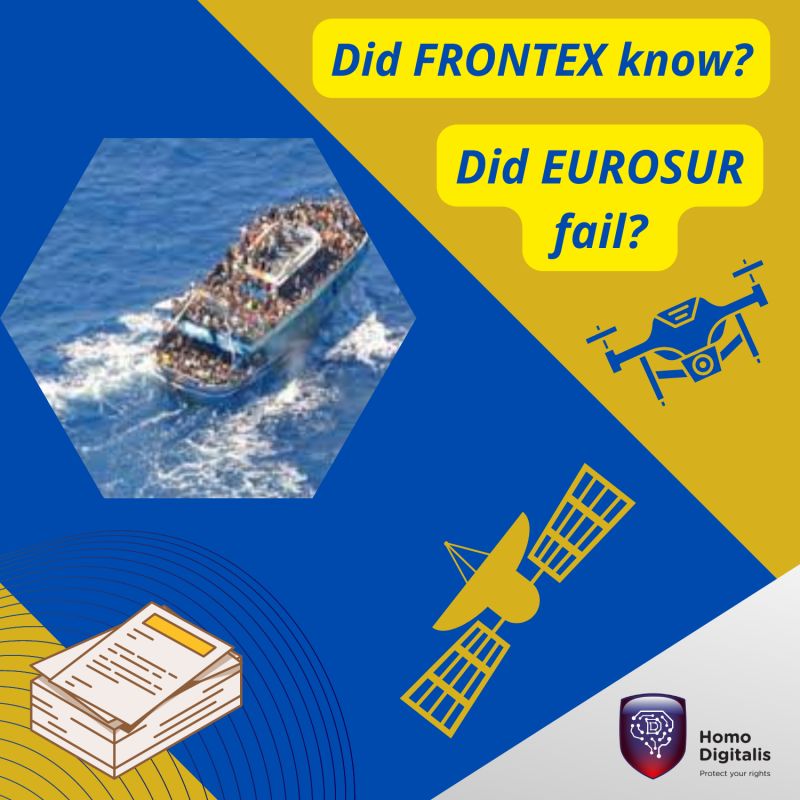
Homo Digitalis submitted a request for access to documents before FRONTEX on the deadly shipwreck off Pylos
In the early hours of June 14, an old steel fishing trawler, reportedly carrying up to 750 people, capsized southwest of Pylos, Greece. More than 80 people have been confirmed dead, more than 100 people have been rescued and hundreds of people are still missing.
According to reports, the boat started its journey from Libya on Friday 9/6, and had already been travelling for more than 4 full days in the Mediterranean, when on Tuesday 13/6 morning, the Italian authorities were informed of its existence by an activist. They then contacted the Greek authorities.
The EU has put in place an expensive surveillance system, called EUROSUR, which consists of satellites and drones. The aim of this system is to allow FRONTEX to monitor the EU’s external borders in order to help protect people’s lives, particularly in the Mediterranean Sea. FRONTEX has the obligation to share the information collected by satellites and drones with Member States in order to enable timely rescue operations.
Yesterday, Homo Digitalis submitted a request for access to the documents before FRONTEX, in which we ask this EU agency for answers to the following questions:
1) Were there any EUROSUR drones and/or satellites operating in the area where the vessel in question was travelling from 9/6 to 13/6?
2) Was Frontex aware of the existence of the vessel in question before Tuesday 13/6, from EUROSUR technologies?
2a)If Frontex was aware, when did it inform the Greek and Italian coastguard of the situation, as required by the EUROSUR Regulation, so that further monitoring of the vessel could be carried out and rescue operations organised?
2b) If Frontex was not aware, what are the reasons for the failure of the EUROSUR system, which is presented as a solid solution for monitoring the EU’s external borders in the Mediterranean region and protecting human lives?
You can read our request in detail here:

Joint report with noyb on the implementation of GDPR
Tomorrow marks 5 years since GDPR came into force! Noyb.eu has prepared a feature on the challenges of implementing its provisions in many countries in Europe, with Homo Digitalis covering Greece!
In this feature we highlight how:
-Despite the high specialization of the scientific staff of the DPAA, it remains low paid and has limited human and financial resources,
This results in a significant impact on the speed of processing of the cases under examination, with long delays both in decision-making and even in their finalisation and publication!
In addition to Greece, the feature covers countries such as Austria, Belgium, France, Germany, Ireland, Spain, Italy, Luxembourg, the Netherlands, the Netherlands, Poland and Spain.
Many thanks to noyb.eu for the excellent cooperation!
The feature is available here:
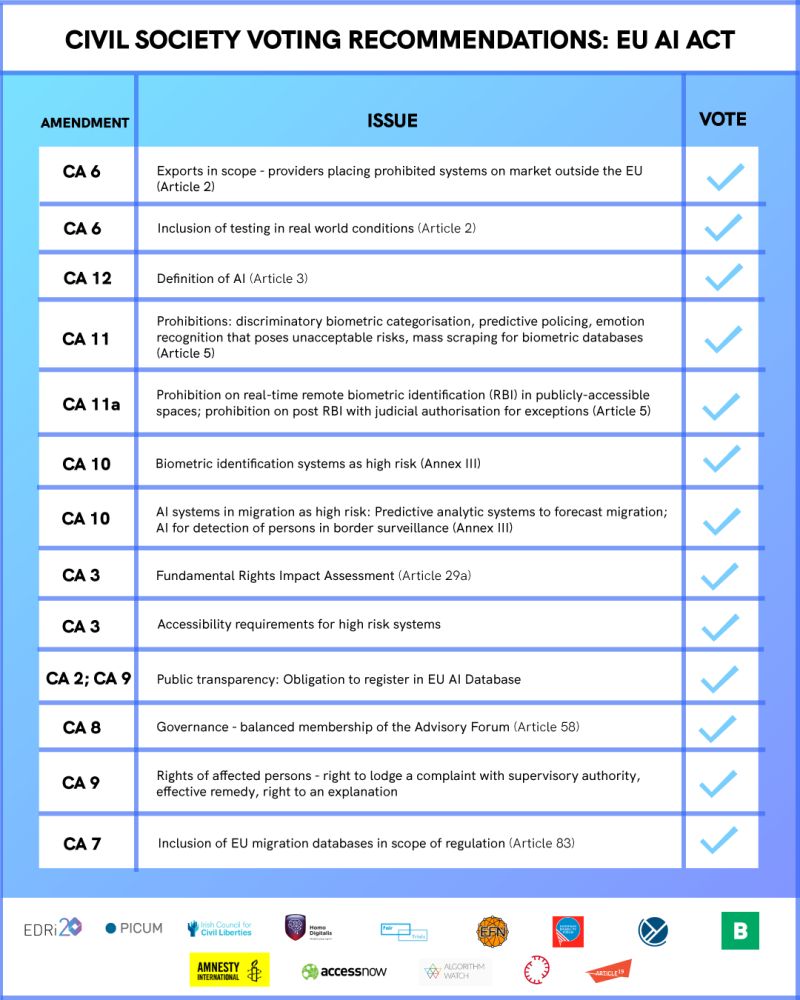
We call on the IMCO & LIBE committees of the European Parliament to end biometric mass surveillance
Thursday (11/5) will be a landmark day for the protection of Human Rights, as the Internal Market and Consumer Protection Committee (IMCO) and the Civil Liberties, Justice and Home Affairs Committee (LIBE) of the European Parliament vote on the provisions of the proposed legislation on Artificial Intelligence (AI Act).
For more than 3 years now, the European Digital Rights network within the ReclaimYourFace campaign together with partners, including Homo Digitalis, have been actively advocating for a ban on mass biometric surveillance.
Today, we are one step closer to realising our demands and we call on Committee members to vote with the protection of everyone’s rights in mind!!
You can read more about our positions here.

We express our concern about the introduction of a mechanism providing for direct payments from content providers and technology companies to major European telecom companies.
In February 2023, the European Commission presented a series of actions to transform the EU’s connectivity sector, including an exploratory consultation on the future of the connectivity sector and related infrastructure.
Today, 48 organisations, including Homo Digitalis, published a joint statement expressing our collective concern about calls at EU level for a mechanism to provide for significant direct payments (“network contribution”, “network fee”, “fair share”) from content providers and technology companies to large European telecoms companies.
We call on EU policy makers and Member States to resist the imposition of direct payment obligations in favour of the largest telecom operators! Six MEPs support our stand!
You can read our joint statement in English and the MEPs’ joint support here.
You can read the relevant EU Press Release here.